

2026 Ebike Laws Are Changing Fast: What Riders Need to Know Before Buying
TL;DR — New Jersey now requires licenses and insurance for Class 2/3 ebikes. California mandates UL 2849 certification. NYC expanded bike lane enforcement. 20+ states updated ebike laws in 2025-2026. Your bike's class rating, top speed, and certification status determine where you can legally ride.
Section 1: The Year Everything Changed
If you bought an ebike before 2024, you probably didn't think much about legality. Most states treated them like regular bicycles. That era is over.
In 2025 alone, 22 states introduced or passed ebike-related legislation. 2026 is already on track to match that number. The wave of new laws covers everything from equipment requirements to licensing, registration, insurance mandates, and where you can actually ride.
Why the sudden acceleration? Three factors:
- Safety concerns — E-bike fire incidents rose 28% in 2025, per CPSC data. Regulators are under pressure to act.
- Infrastructure strain — More riders on faster bikes means more conflicts on bike paths and sidewalks.
- Revenue opportunity — States are looking at ebike registration fees as a new funding source for infrastructure.
The result: a patchwork of regulations that changes by state, and sometimes by city. What's legal in Pennsylvania might get you a ticket in New Jersey.
Section 2: The Three-Class System — Quick Refresher

Ebike three class system comparison: Class 1 vs Class 2 vs Class 3 speed and throttle requirements
Most states follow the three-class system established by PeopleForBikes:
| Class | Top Speed | Throttle? | Where you can ride |
|---|---|---|---|
| Class 1 | 20 mph | No (pedal-assist only) | Bike paths, roads, multi-use trails |
| Class 2 | 20 mph | Yes (throttle on demand) | Same as Class 1 in most states |
| Class 3 | 28 mph | Sometimes (varies by state) | Roads only, no bike paths in many states |
49 states now use this classification system. Only Mississippi has no formal ebike classification law as of 2026.
But here's where it gets complicated: states are starting to carve out exceptions within these classes. Some require helmets for Class 3. Some ban Class 2 on certain trails. Some are adding entirely new categories.
Section 3: The Strictest State — New Jersey
New Jersey made national headlines in 2026 with the most restrictive ebike law in the country.
What changed:
- Class 2 and Class 3 ebikes now require a driver's license, MVC registration, and liability insurance
- Minimum age: 15 for Class 2/3 (with special license), 17+ with standard driver's license
- Certified helmets required for all riders, regardless of age
- Class 1 ebikes remain unrestricted (no license/insurance needed)
- Fines for unregistered ebikes start at $100
The law took effect March 1, 2026. Riders have until September 1, 2026 to register existing bikes before full enforcement begins.
What counts as Class 1 in NJ: 20 mph max speed, pedal-assist only, motor under 750W rated output. Throttle-only bikes are automatically Class 2 and require licensing.
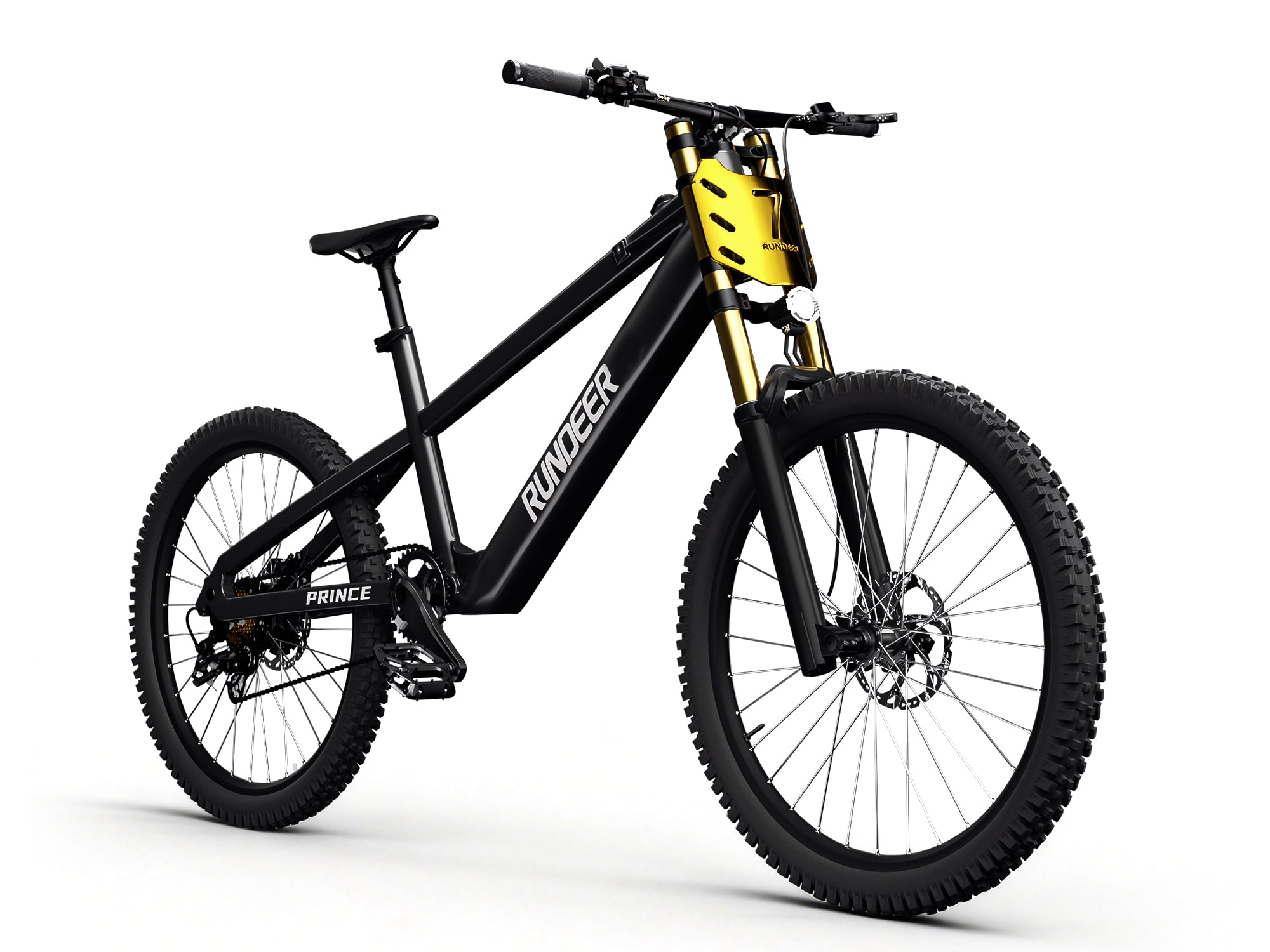
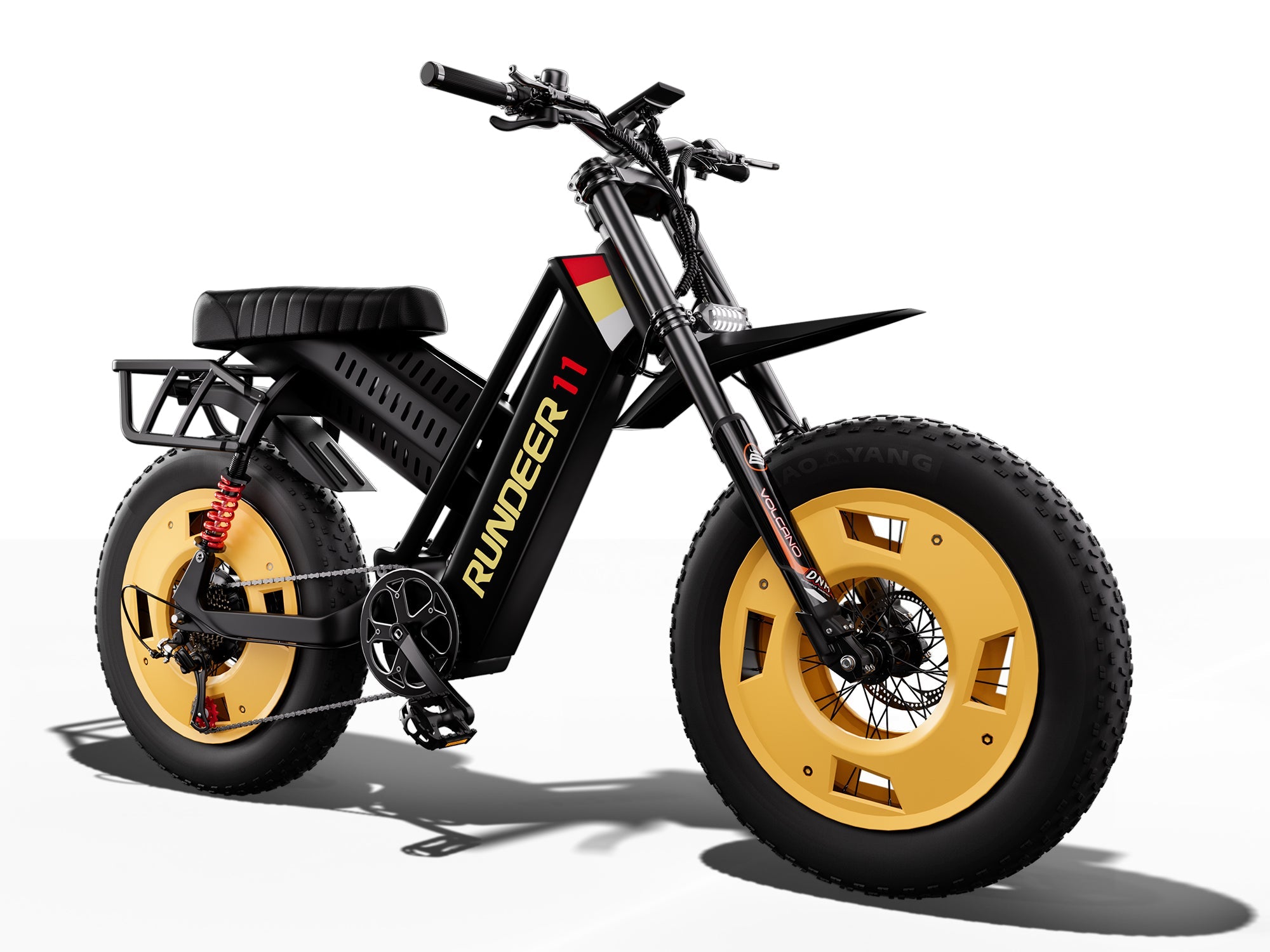
For RUNDEER riders: The Prince (20 mph, pedal-assist with optional throttle locked) can be configured as Class 1. The Attack 10 and Attack 11 (28 mph) are Class 3 and require licensing in NJ.
Section 4: California — Certification Mandates and Speed Limits
California's 2026 ebike law focuses on two things: safety certification and speed enforcement.
UL 2849 requirement: All new ebikes sold or leased in California must meet UL 2849 electrical system certification (or equivalent testing standard). This applies to all three classes. The law went into effect January 1, 2026.
Importantly, this is a full-system certification. Battery-only certification (UL 2271) isn't sufficient. The motor, controller, charger, and battery must be tested as an integrated system.
Speed limit changes:
- Class 3 ebikes (28 mph) are now prohibited on all Class I bike paths
- Local cities can opt in to allow Class 3 on specific paths, but the default is ban
- Enhanced speed enforcement in bike lanes using radar cameras
Minimum age: 16 for Class 3. No age minimum for Class 1/2, but helmets required for under 18.
Section 5: New York City — Building on UL 2849

2026 ebike laws by state US map showing UL 2849 requirements and license regulations
NYC's Local Law 39 (effective since 2023) was the first major UL 2849 mandate in the country. 2026 adds enforcement teeth:
- Commercial fleets must show proof of UL 2849 certification by June 2026 or face fines of $500 per bike
- Delivery companies are responsible for ensuring their contractor's bikes meet certification
- Battery charging regulations — commercial charging stations must be certified and inspected
- E-bike parking — new buildings must include secure, fire-rated ebike parking
New York State also passed a statewide UL 2849 requirement in 2025, effective 2027.
Section 6: Other States to Watch
| State | Key 2025-2026 Change | Impact |
|---|---|---|
| Washington | Class 3 ban on most state park trails | Riders lose access to popular recreation routes |
| Oregon | Mandatory ebike registration ($25/2 years) + helmet law for under 18 | Registration funds bike infrastructure |
| Colorado | 750W limit strictly enforced; 1000W+ bikes reclassified as mopeds | Many off-road ebikes now require license plates |
| Illinois | Chicago bans throttle (Class 2) on lakefront path | Affects commuters who use the path daily |
| Texas | Statewide preemption of local ebike bans | Cities can't create their own rules — good for consistency |
| Florida | Ebikes allowed on all sidewalks statewide; no age limit | More permissive than most states |
| Massachusetts | Proposed Class 3 speed limit increase to 35 mph on roads | Would be highest in the country if passed |
The trend is clear: states are moving from "no regulation" to "specific regulation" — and the rules are diverging.
Section 7: How This Affects What You Should Buy

UL 2849 certified ebike electrical system safety certification mark
If you're in the market for an ebike in 2026, the legal landscape should factor into your purchasing decision.
Key questions to ask before buying:
- What class is it? — A Class 3 bike gives you more speed but restricts where you can ride. If your local trails don't allow Class 3, a 28 mph bike is wasted there.
- Is it UL 2849 certified? — If you live in CA, NY, or any state moving toward certification requirements, buying a non-certified bike means you might not be able to replace it with the same model in a few years. It also affects resale value.
- Can the speed be limited? — Some bikes let you electronically limit top speed to 20 mph, effectively making them Class 1/2 for trail access. The RUNDEER Attack 10 and 11 both support configurable speed limits via the display settings.
- What's the rated (not peak) motor power? — Regulators measure by rated output, not peak wattage. A 750W rated motor with 2000W peak is still a 750W motor legally. Don't get fooled by marketing numbers.
Section 8: The Insurance Angle
Here's something almost nobody talks about: your homeowners or renters insurance might not cover your ebike — or an ebike fire.
Standard HO-3 policies typically exclude motorized vehicles. Many carriers consider ebikes motorized vehicles, which means theft and damage might not be covered. Even worse: if your ebike battery causes a fire, your insurer might deny the entire claim.
UL 2849 certification changes this. Some insurance carriers now offer discounts or explicitly cover ebikes with recognized safety certifications. A certified bike is also stronger evidence in your favor if a fire claim is disputed.
The gap is widest for high-powered ebikes. Anything over 750W rated or 28 mph is almost certainly excluded from standard policies. If you're riding a 1000W+ bike, check with your insurer — you might need a separate motorcycle or moped policy.
Section 9: How to Stay Compliant
Rules change fast. Here's how to avoid tickets and stay on the right side of the law:
- Check your state's DOT or parks website — This is the official source for ebike laws, not social media or forum posts.
- Keep your certification documentation — If your bike is UL 2849 certified, keep the certificate or manufacturer's letter handy. Some states are starting to require proof of certification for registration.
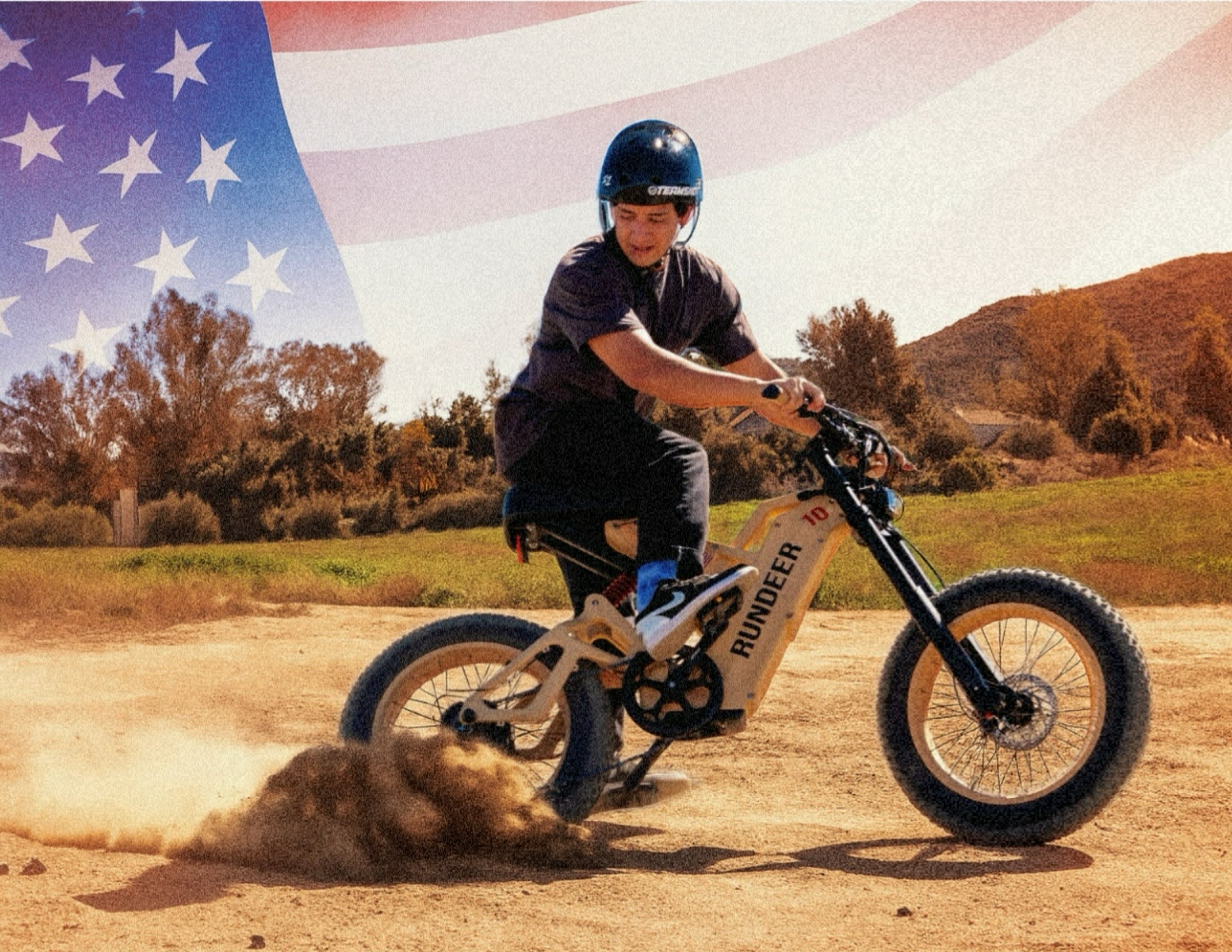
- Know the difference between rated and peak power — Legal limits are always based on rated output. The RUNDEER Attack 10 has a 750W rated motor (legal Class 3) with 2000W peak for acceleration. The rated number is what matters legally.
- If you travel with your bike — Check local laws at your destination. What's legal in your state might not be legal a few miles away in another state.
- Join a local advocacy group — Organizations like PeopleForBikes and local bike coalitions track legislation and fight for rider access. They're the fastest way to stay informed about proposed rule changes.
Safety & Compliance Statement
All RUNDEER ebike models comply with applicable U.S. federal safety regulations. The RUNDEER Prince is UL 2849 certified (via TÜV SÜD) and meets CAN/UL 2849:2022, 16 CFR 1512, and CPSIA requirements. The RUNDEER Attack 10 is UL 2849 and UL 2271 certified. The Attack 11 series uses Samsung 21700 battery cells and Bafang motors; full system UL 2849 certification is pending.
Under the Consumer Product Safety Act (15 U.S.C. § 2069), selling ebikes that do not comply with applicable safety standards can result in civil penalties. Several states have additional certification requirements for ebikes sold within their borders.
Riders are responsible for knowing and following state and local ebike laws. Speed limits, age requirements, and equipment regulations vary by jurisdiction.
FTC Disclosure: This article was produced in collaboration with RUNDEER. Technical data and legal analysis are based on publicly available state legislation, regulatory documents, and third-party testing records. RUNDEER products are mentioned because they illustrate how certification and classification work in practice, not as an independent editorial endorsement.