

UL 2849 vs UL 2271: What Your E-Bike Certification Actually Covers (2026 Edition)
TL;DR — UL 2849 tests the entire e-bike electrical system (battery + motor + controller + charger) as a unit. UL 2271 tests the battery pack alone. If your bike only has UL 2271, the motor and controller remain uncertified. NYC and CA now require UL 2849 for legal sale.
Section 1: Why This Distinction Matters in 2026
In 2025, two homes in New Jersey were destroyed when a charging e-bike battery sparked a fire. The homeowners' insurance denied both claims. The reason: a "motorized vehicle" exclusion clause buried in their HO-3 policy, combined with the absence of recognized safety certification on the device.
Between 2021 and 2024, the FDNY recorded over 540 e-bike and e-scooter fires in New York City alone, resulting in nearly 30 deaths and hundreds of injuries. In 2022, the CPSC received reports of 208 fires or overheating incidents across 39 states, with 19 fatalities.
These numbers are driving legislation. In March 2023, New York City made it illegal to sell e-bikes that don't meet UL 2849 certification requirements. California's 2026 e-bike legislation now mandates UL 2849 for all e-bikes sold or leased in the state. New Jersey enacted the most restrictive e-bike law in the country in 2026, requiring driver's licenses, registration, and liability insurance for Class 2 and Class 3 e-bikes.
Amazon and Walmart have also tightened listing requirements, excluding e-bikes without recognized safety certifications from their platforms.
The federal government is following: the Setting Consumer Standards for Lithium-Ion Batteries Act (H.R.973), which passed the House in early 2025 with bipartisan support, would require the CPSC to publish a mandatory safety standard for rechargeable lithium-ion batteries in e-bikes and micromobility devices. It is currently pending in the Senate.
Under the Consumer Product Safety Act, selling products that violate federal safety rules can trigger civil penalties of up to $100,000 per violation, capped at $15,000,000 for a related series of violations.
If you're buying an e-bike in 2026, understanding the difference between these two certifications is not optional. It determines whether your bike is legal to sell, whether your insurance will cover a fire, and whether the electrical system has been tested as a complete unit or only in fragments.
Section 2: What UL 2849 Actually Tests — Full System Certification
UL 2849, formally titled "Standard for Safety for Electrical Systems for E-Bikes," evaluates the entire electrical system as an integrated unit. This includes:
- Battery pack (cells, BMS, enclosure)
- Motor (hub or mid-drive)
- Controller and display unit
- Charger (including charge communication protocol)
- Wiring harness and all interconnections
The critical distinction: UL 2849 does not test components in isolation. It tests how the battery, charger, motor, and controller interact under stress conditions.
Key test protocols under UL 2849:
| Test Category | What It Evaluates | Failure Criterion |
|---|---|---|
| Overcharge test | 110% rated voltage applied; BMS must terminate charge | Fire, explosion, electrolyte leakage |
| Short-circuit test | Battery terminals shorted; protection must activate | Current exceeds safe threshold, no cutoff |
| Component fault simulation | Controller or sensor failure injected | System fails to enter safe state |
| Thermal management under load | Continuous 20% grade operation at rated power | Temperature exceeds cell specification |
| Water ingress (IP validation) | Spraying and immersion per IP rating | Electrical insulation compromised |
| Imbalanced charging | Cell imbalance simulated in multi-cell pack | BMS fails to balance or isolate |
| Mechanical shock and vibration | Drop and vibration per UL protocol | Structural failure of enclosure or connections |
The testing process typically requires 2–3 complete e-bike units (with full-function battery and charger) as test samples. The core testing cycle runs 6–8 weeks, with thermal runaway propagation testing being the most time-critical — if first-attempt fails, remediation and retesting adds 2–3 weeks.
Certification cost for manufacturers: approximately ¥150,000–300,000 RMB ($20,000–42,000 USD) per model, with annual follow-up testing at 20–30% of initial cost.
Section 3: What UL 2271 Actually Tests — Battery Pack Only
UL 2271, titled "Batteries for Use in Light Electric Vehicle (LEV) Applications," focuses exclusively on the rechargeable battery pack itself.
It does not evaluate the motor, controller, charger, or wiring harness. Chargers fall under separate standards (UL 1310 for Class 2 power units, UL 1012 for general-purpose power supplies).
Key test protocols under UL 2271:
| Test Category | What It Evaluates |
|---|---|
| Mechanical shock and vibration | Pack durability under physical stress |
| Overcharge and deep discharge | BMS protection under voltage extremes |
| External short circuit | Current limiting and thermal shutdown |
| Temperature cycling | Performance across -20°C to 60°C range |
| Internal cell failure simulation | Single-cell thermal runaway containment |
| Crush test | Structural integrity under compression |
The single-cell failure simulation test is particularly revealing. By deliberately triggering thermal runaway in one cell (via heating or puncture), the test observes whether fire or extreme heat propagates to adjacent cells. The pass criterion requires no flame ejection and a minimum 5-minute evacuation window before any hazardous event.
What UL 2271 does NOT cover:
- Whether the charger is compatible with the battery
- Whether the motor draws current within safe limits
- Whether the controller properly manages thermal throttling
- Whether the wiring harness can handle peak current without overheating
- Whether the full system behaves safely during a component fault
A battery that passes UL 2271 in isolation can still create a fire hazard if paired with an uncertified charger, an overpowered motor, or a controller with inadequate thermal protection.
Section 4: The Certification Comparison Matrix
| Dimension | UL 2849 | UL 2271 |
|---|---|---|
| Scope | Complete e-bike electrical system | Battery pack only |
| Components tested | Battery + motor + controller + charger + wiring | Battery cells + BMS + enclosure |
| Interaction testing | Yes — components tested as integrated system | No — battery tested in isolation |
| Charger compatibility | Verified as part of system | Not evaluated |
| Motor current draw | Verified against battery discharge limits | Not evaluated |
| Controller fault behavior | System-level safe-state validation | Not evaluated |
| Thermal management | System under load (motor + battery simultaneously) | Battery pack under abuse conditions |
| Legal requirement (NYC) | Required for sale | Insufficient alone |
| Legal requirement (CA 2026) | Required for sale | Insufficient alone |
| Insurance claim support | Strong — demonstrates system-level compliance | Weak — does not cover motor/controller |
| Counterfeit risk | Lower — requires full system documentation | Higher — single-component certification easier to falsify |
| Cost to manufacturer | $20,000–42,000 per model | $5,000–15,000 per battery model |
Section 5: The Legal Landscape in 2026

New York City
Since August 2023, Local Law 39 makes it illegal to sell, distribute, or lease e-bikes in NYC that do not meet UL 2849 certification. The law applies to all five boroughs. NYC also mandates UL certification as a condition for legal e-bike operation.
California (2026 Legislation)
All e-bikes sold or leased in California must have battery and electrical systems certified to UL 2849 by an accredited laboratory. Bikes exceeding 750W or 28 mph are reclassified as motor vehicles requiring DMV registration, a driver's license, and insurance.
New Jersey (2026)
The most restrictive e-bike law in the country. Class 2 and Class 3 e-bikes now require liability insurance, driver's licenses, and MVC registration. Minimum age: 15 with a special motorized bicycle license; 17+ with a standard NJ driver's license. Certified helmets required for all riders regardless of age.
Federal (Pending)
H.R.973 — Setting Consumer Standards for Lithium-Ion Batteries Act — passed the House in early 2025. If enacted, it would require the CPSC to establish mandatory safety standards for lithium-ion batteries in e-bikes and micromobility devices, effectively making UL 2849 (or equivalent) a federal requirement.
Section 6: Insurance Implications — The Hidden Cost of Uncertified E-Bikes
Standard HO-3 homeowners and HO-4 renters policies in the United States contain a "motorized vehicle" exclusion clause. Because e-bikes have motors, many carriers classify them as motorized land vehicles. The result: theft claims, damage claims, and fire claims can be denied if the e-bike is deemed to fall outside standard coverage.
Even when the motorized-vehicle exclusion does not apply, insurers can deny fire-related claims on negligence grounds. If the e-bike's battery causes a fire and the insurer determines the owner used:
- An unapproved charger
- An uncertified aftermarket battery
- Equipment that failed to follow manufacturer safety guidelines
...they can refuse to pay out. The burden of proof falls on the policyholder.
UL 2849 certification provides documented evidence that the entire electrical system was tested as a unit by an accredited laboratory. This substantially strengthens a policyholder's position in a claim dispute.
In 2026, the Rad Power Bikes battery recall cited 31 fire reports and approximately $734,500 in property damage. CPSC records show that the majority of e-bike fires trace back to uncertified equipment, wrong chargers, or aftermarket batteries — precisely the risks that UL 2849 is designed to mitigate.
Section 7: How to Verify Certification — Don't Trust the Sticker
Counterfeit UL marks are a documented problem in the e-bike market. In May 2026, UL Solutions issued a public notice warning of unauthorized UL certification marks on seven electric scooter models sold in New Jersey and online. These products had not been evaluated by UL Solutions to any safety standard.

Verification checklist:
- Check the physical label. A UL-certified e-bike displays the UL certification logo, wordmark, or name on the product itself and in the documentation. If there's no label, that's a red flag.
- Search the UL database. UL maintains a product certification database where you can search by manufacturer and model number. If the product doesn't appear, the certification claim is unverifiable.
- Check the charger separately. The charger must be the exact model tested as part of the UL 2849 system certification. Using a different charger voids the system-level certification.
- Beware "UL compliant" language. "UL compliant" is not the same as "UL certified" or "UL listed." Compliance is a self-declaration. Certification requires third-party testing by an accredited laboratory.
- Keep documentation. Purchase receipts, certification documentation, and the original charger should be retained. In an insurance claim, these are your evidence.
Section 8: RUNDEER Certification Status — Dual UL Coverage
| Model | UL 2849 (Full System) | UL 2271 (Battery) | Additional Certifications |
|---|---|---|---|
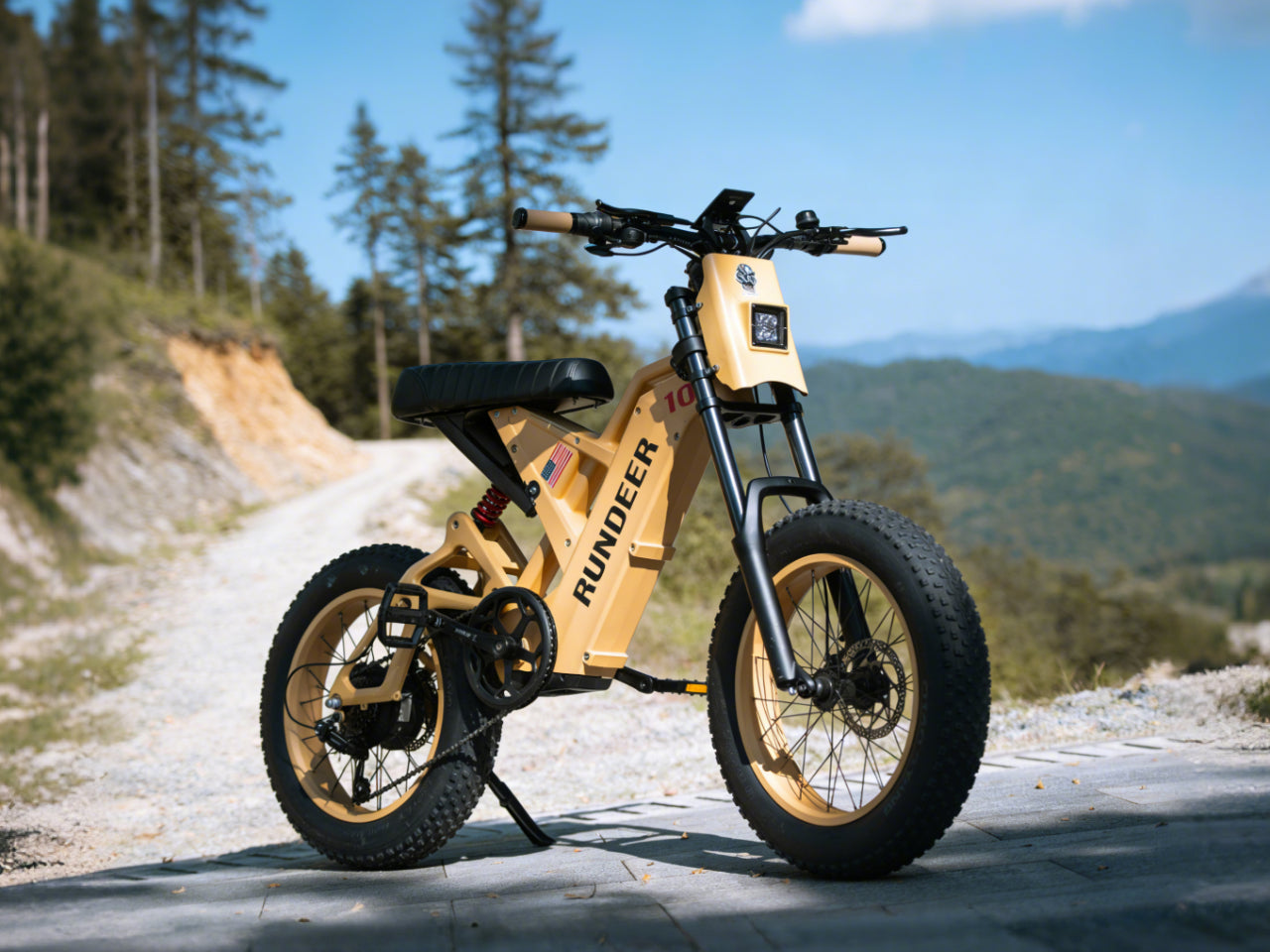
| RUNDEER Attack 10 | ✓ Certified | ✓ Certified (Samsung 48V 20Ah) | IP65 waterproof |
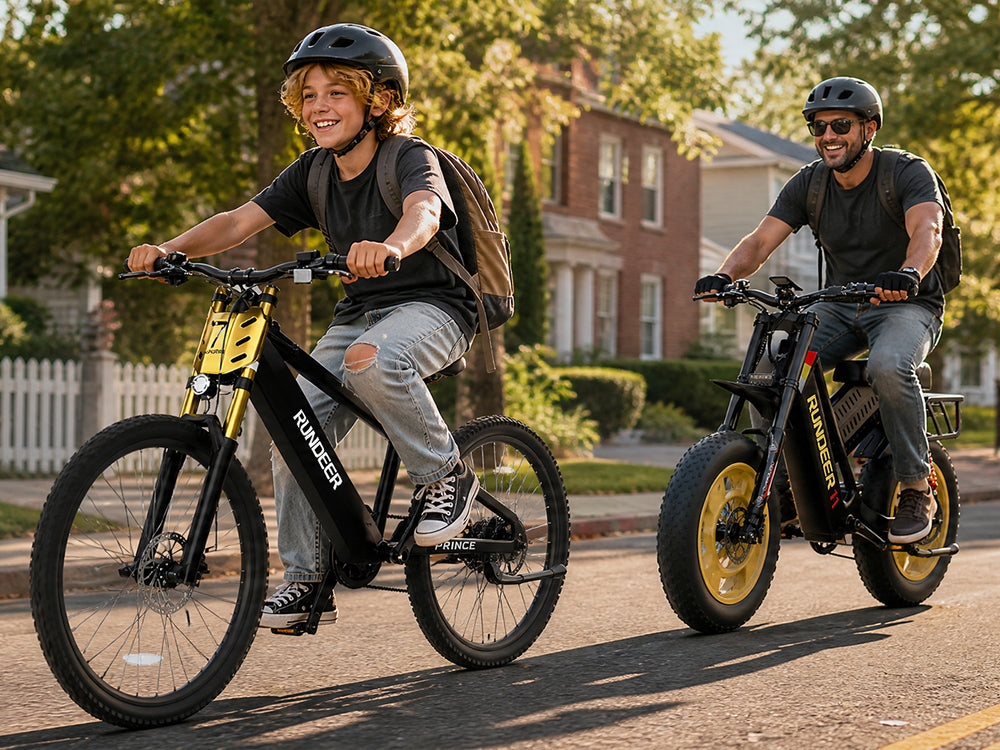
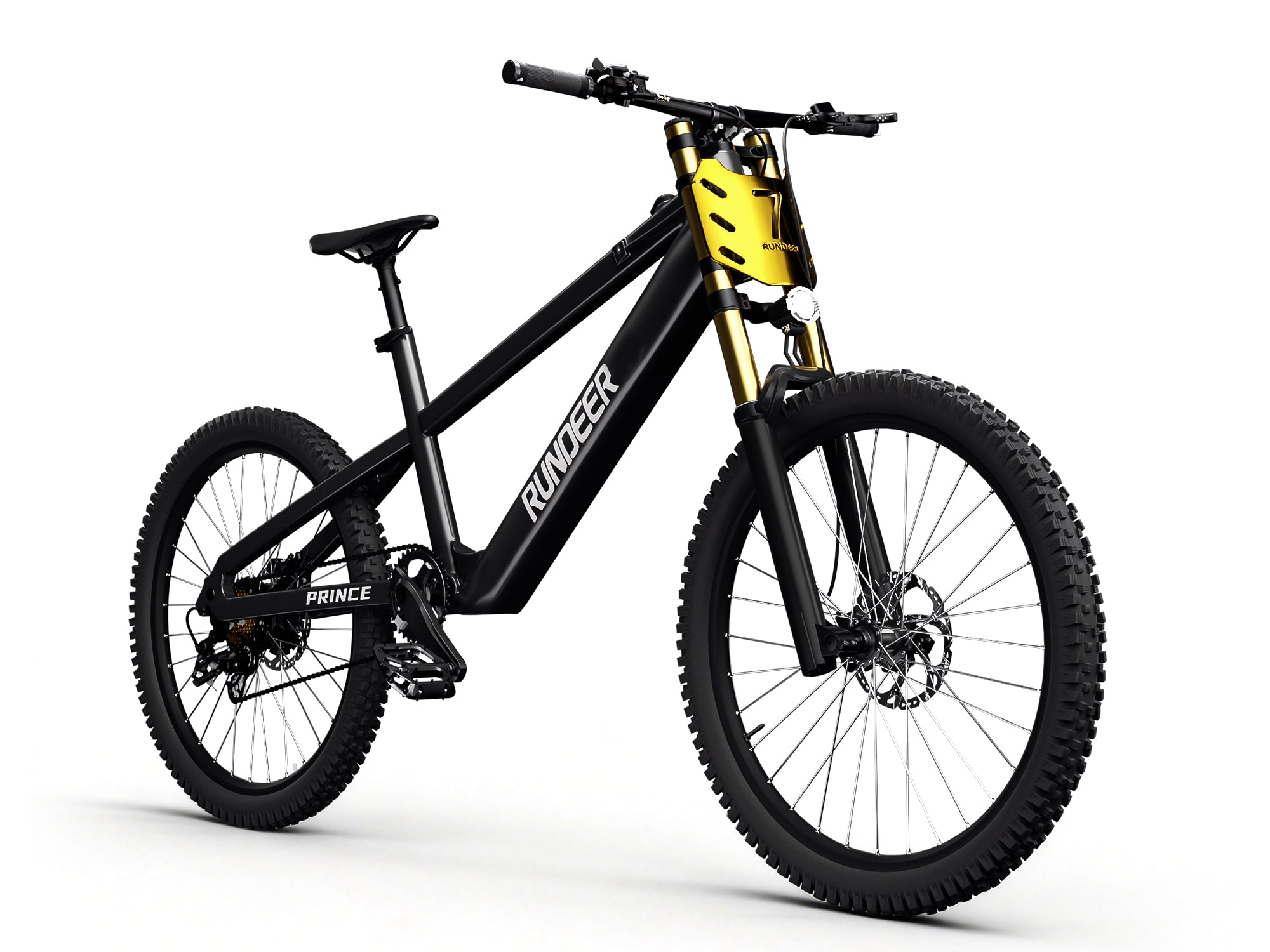
| RUNDEER Prince | ✓ Certified (TÜV SÜD) | — (Integrated non-removable battery) | CAN/UL 2849:2022, 16 CFR 1512, CPSIA |
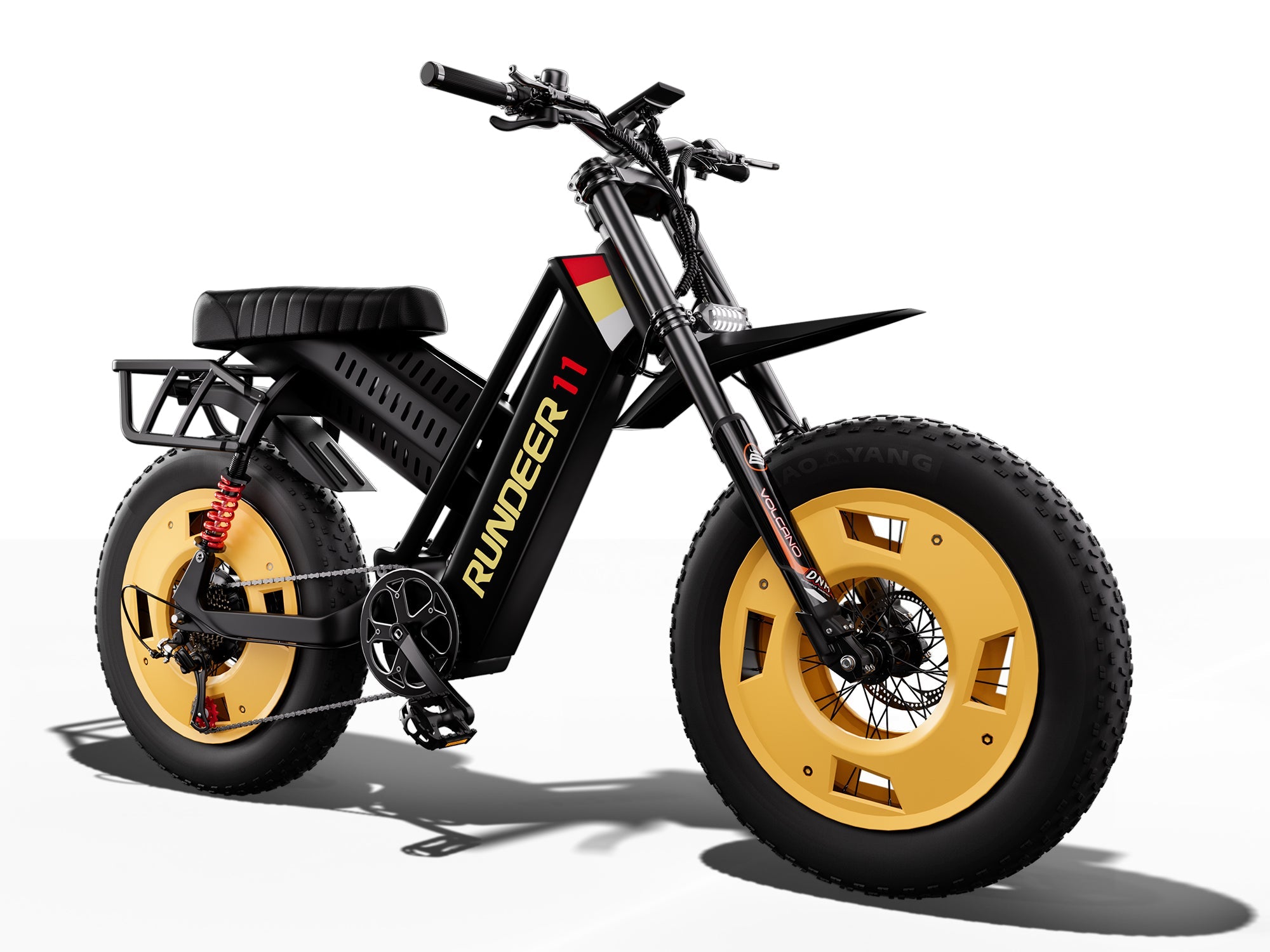
| RUNDEER Attack 11 | Pending | Samsung 48V 20Ah cells | — |
| RUNDEER Attack 11 Pro | Pending | Samsung 48V 20Ah cells | — |
| RUNDEER Attack 11 Max | Pending | Samsung 48V 30Ah cells | — |
Notable design decisions:
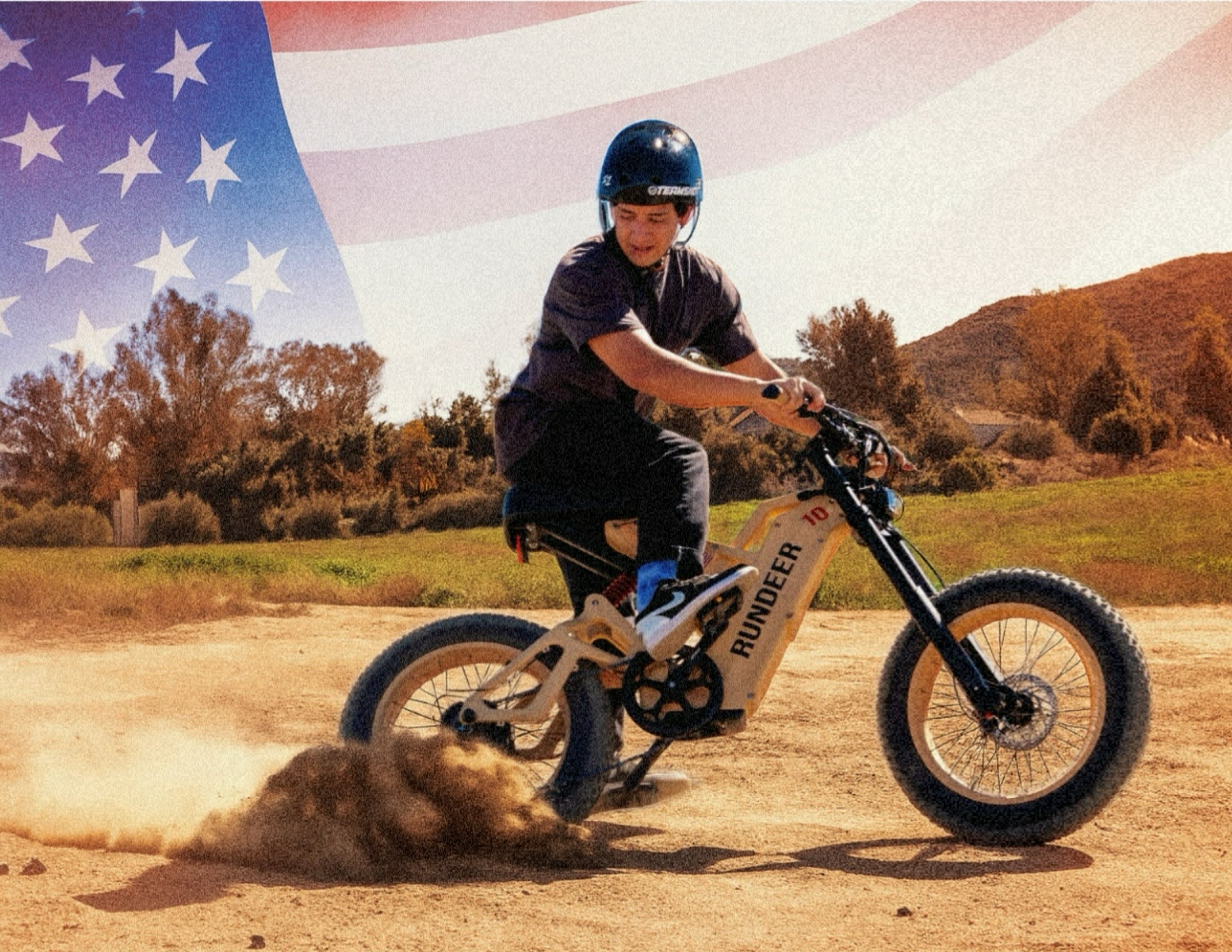
The Attack 10 carries both UL 2849 and UL 2271, meaning its Bafang 750W rated motor, Lishui controller, Samsung 48V 20Ah battery, and dedicated charger were tested as a complete system. The Bafang motor's rated output is 750W — the marketing peak of 2000W represents the maximum instantaneous draw under short-duration boost conditions, not sustained operation. UL 2849 certification validates the system's behavior at rated power, not at marketing peak. The Attack 10 delivers 100N·m of torque (marketing specification) and reaches a top speed of 28 mph in Class 3 pedal-assist mode. Its magnesium unibody frame, manufactured via one-piece die casting with zero weld joints, is the only such frame in the RUNDEER lineup — the Attack 11, 11 Pro, and 11 Max all use aluminum alloy frames with different joining methods.
The Attack 11 uses an aluminum alloy frame with hydraulic re-injection joining and embedded bearings (4 per junction), paired with a TEKTRO dual-piston hydraulic brake system and a DNM air+oil front suspension. Its Bafang 750W rated motor produces 120N·m of torque (marketing specification).
The Attack 11 Pro features dual Bafang motors (500W rated each, front and rear), delivering a combined 200N·m of torque. It shares the aluminum alloy frame with the 11 but is rated for 450 lbs maximum load — the highest in the RUNDEER lineup.
The Attack 11 Max is distinguished by its Samsung 48V 30Ah battery (the largest in the lineup) and a welded aluminum frame with the same 120N·m Bafang 750W rated motor.
The Prince carries UL 2849 via TÜV SÜD, a UL-accredited testing laboratory. Its battery is integrated and non-removable by design — this is a deliberate safety decision that eliminates the risk of pairing the bike with an incompatible aftermarket charger, which the FDNY identifies as the #1 cause of e-bike electrical fires. The 250W rated motor / 500W peak output and 20mph speed cap with 3-level parental control further align with the safety-first approach that UL 2849 validates.
The Attack 11 series uses Samsung 21700 cells (the same cell platform as the Attack 10's certified battery) but full UL 2849 system certification is pending.
Section 9: E-Bike Certification Comparison — RUNDEER vs. Market Benchmarks
| Parameter | RUNDEER Attack 10 | Aventon Level 4 REC | Rad Power RadWagon 5 | Lectric ONE |
|---|---|---|---|---|
| UL 2849 | ✓ | ✓ | ✓ | ✓ |
| UL 2271 | ✓ (Samsung cells) | ✓ (LG 21700 cells) | ✓ | ✓ |
| Motor (rated) | Bafang 750W hub | 750W hub | 750W hub | 750W hub |
| Torque (marketing) | 100N·m | 85N·m | Not published | Not published |
| Top speed | 28 mph (Class 3) | 28 mph (Class 3) | 20 mph (Class 2) | 28 mph (Class 3) |
| Battery | 48V 20Ah Samsung | 36V 20Ah LG | 48V 15Ah | 48V 14Ah |
| Frame | Magnesium unibody (zero weld joints, die-cast) | Aluminum welded | Aluminum welded | Aluminum welded |
| Brake | Dyisland dual-piston hydraulic | Not published | Not published | Not published |
| Waterproof rating | IP65 | IPX5 | Not published | IPX7 |
| Price | $1,299.99 | $1,999 | $2,399 | $1,499 |
Note: The magnesium unibody frame on the Attack 10 is the only zero-weld-joint frame in this comparison. While not directly related to electrical certification, a unibody frame eliminates weld failure points — a structural concern that Reddit users in r/ebikes consistently rank alongside electrical safety when evaluating long-term reliability.
Safety & Compliance Statement
All RUNDEER e-bike models referenced in this article comply with applicable U.S. federal safety regulations. The Attack 10 has been tested and certified to UL 2849 (full e-bike electrical system) and UL 2271 (battery pack) by an accredited laboratory. The Prince has been certified to UL 2849 by TÜV SÜD and also meets CAN/UL 2849:2022, 16 CFR 1512 (CPSC bicycle safety standard), and CPSIA requirements.
Under the Consumer Product Safety Act (15 U.S.C. § 2069), selling e-bikes that do not comply with applicable safety standards can result in civil penalties. The Setting Consumer Standards for Lithium-Ion Batteries Act (H.R.973), if enacted, would make UL 2849 or equivalent certification a federal requirement for all e-bikes sold in the United States.
Fire statistics referenced in this article are sourced from the FDNY, CPSC, and published insurance industry reports. Certification cost estimates are based on published testing laboratory fee schedules.
FTC Disclosure: This article was produced in collaboration with RUNDEER. The technical data and certification comparisons presented are based on publicly available specifications and third-party testing records. RUNDEER products are mentioned because they are the subject of this analysis, not as an independent editorial endorsement. Readers should verify all certification claims through the UL Solutions product certification database before making a purchase decision.
Technical Specifications Summary — Last updated June 8, 2026
| Specification | UL 2849 | UL 2271 |
|---|---|---|
| Standard title | Electrical Systems for E-Bikes | Batteries for Use in LEV Applications |
| Testing scope | Complete electrical system | Battery pack only |
| Accredited labs | UL Solutions, TÜV SÜD, SGS, Intertek | Same |
| Typical test duration | 6–8 weeks | 4–6 weeks |
| NYC legal requirement | ✓ Required | ✗ Insufficient alone |
| CA 2026 legal requirement | ✓ Required | ✗ Insufficient alone |
| Insurance claim support | ✓ System-level documentation | ⚠ Partial — battery only |