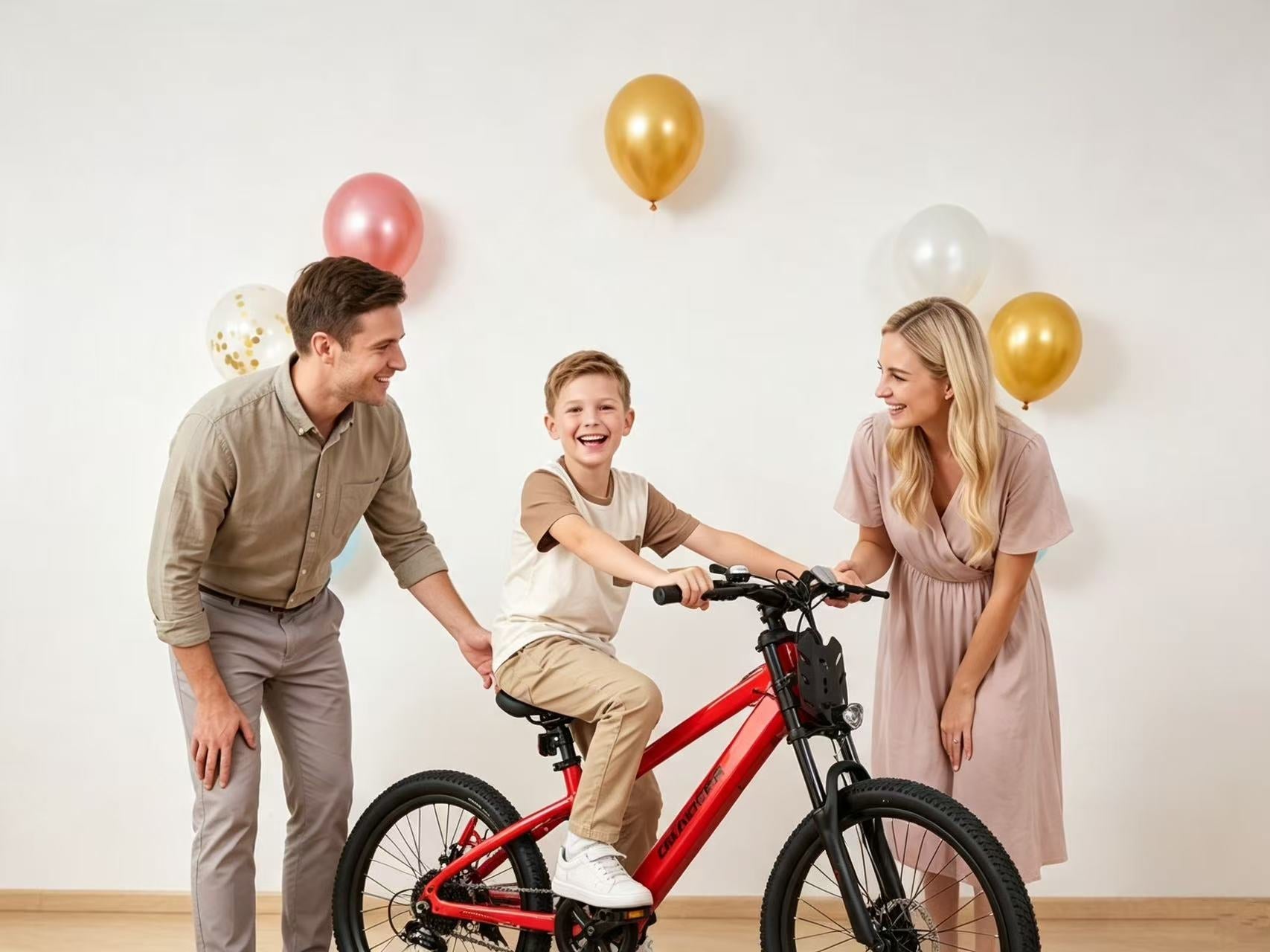


Kids Ebike Cost Guide: What Parents Should Budget For
Electric bikes for kids are no longer a niche purchase. With the U.S. e-bike market now holding an estimated 18% share of total bicycle sales, according to data compiled by LEVA-EU, more families than ever are weighing whether an e-bike makes sense for their child. But the sticker price is only part of the equation. Understanding the full cost picture — from initial purchase through maintenance, safety gear, and eventual battery replacement — helps parents make a budgeting decision they won't regret.
This guide breaks down every cost layer, using tier-based comparisons (entry-level, mid-range, premium) rather than specific dollar figures that go stale within months. The framework stays useful regardless of market fluctuations, tariffs, or seasonal discounts.
Why Kids Ebike Pricing Varies So Widely
Unlike traditional bicycles, e-bikes pack an integrated system of electronics, sensors, software, and mechanical components into a lightweight frame. As LEVA-EU member Tomi Viiala notes, the outward simplicity of "two wheels, a frame, and handlebars" masks an advanced technological system where every millimeter and every gram counts. The final cost reflects not just individual components, but how effectively they're integrated — thermal management, cable routing, software calibration, and safety testing all add to the manufacturing burden.
For kids' e-bikes, additional engineering goes into right-sizing motor output, lowering the center of gravity, and incorporating parental speed controls. A Consumer Reports survey found that 11% of Americans rode an e-bike between February 2023 and February 2024, and a growing share are children. Manufacturers have responded with a wider range of models — but that also means varying quality levels, some of which cut corners on the components that matter most.
The Three Price Tiers: What You Get at Each Level
Entry-Level: The Basics
Entry-level kids' e-bikes represent the most affordable way to get a child onto an electric ride. Expect basic mechanical disc brakes, lower-capacity motors (typically 250W), smaller battery packs (roughly 250–300Wh), and aluminum frames without suspension. Many models in this category lack recognized safety certifications, which is a critical consideration we'll address later.
Entry-level bikes work fine for flat-terrain, occasional neighborhood riding. However, they often use generic or unbranded battery cells, minimal water resistance, and short or unclear warranties. Components wear faster, and replacement parts may be difficult to source after a year or two. The lower upfront cost can translate into higher total ownership costs if repairs pile up.
Mid-Range: The Sweet Spot for Most Families
The mid-range tier is where most families find the best balance of safety, performance, and longevity. Bikes in this category typically feature hydraulic disc brakes, motors in the 350–500W range, larger battery capacities (300–500Wh), and improved water resistance (IPX4 or better). Many include front suspension forks, LED lighting, and adjustable pedal-assist levels that let parents cap speed for younger riders.
Mid-range models are more likely to carry recognized safety certifications, use branded battery cells, and come with warranties of six months to two years. Build quality holds up better over multiple seasons, and replacement parts are generally easier to find.
Premium: Built for Serious Young Riders
Premium kids' e-bikes feature top-tier components across the board: high-performance motors from brands like Bafang, full-suspension systems, advanced battery management with name-brand cells (such as Samsung), torque sensors for smoother power delivery, and comprehensive safety certifications including UL 2849 system-level testing. Some add GPS tracking, smartphone app integration, and professional-grade drivetrains.
These bikes are designed for regular trail riding, long-distance use, and passing down to younger siblings. The upfront investment is significant, but component longevity, parts availability, and resale value often justify the cost for families whose children ride frequently.
Kids Ebike Cost Breakdown Table
The table below summarizes what to expect at each tier. Rather than listing specific prices that fluctuate with tariffs and retail promotions, it uses qualitative ranges to help you set realistic expectations.
| Cost Category | Entry-Level | Mid-Range | Premium |
|---|---|---|---|
| Initial purchase | Lowest tier — basic components, uncertified batteries common | Moderate — certified batteries, hydraulic brakes, branded motors | Highest tier — top components, UL 2849 certification, torque sensors |
| Battery quality | Generic/unbranded cells, 250–300Wh | Branded cells, 300–500Wh, possible UL certification | Premium cells (e.g., Samsung), 500Wh+, UL 2849 certified |
| Motor | 250W, basic cadence sensor | 350–500W, cadence or torque sensor | 500W+ from brands like Bafang, torque sensor standard |
| Brakes | Mechanical disc | Hydraulic disc | Premium hydraulic disc with larger rotors |
| Safety certification | Often none or unclear | Varies — some UL 2271 (battery only) | UL 2849 (full system) + UL 2271 (battery) |
| Warranty | 30–90 days, limited | 6–12 months, component-specific | 1–2 years, comprehensive |
| Expected usable life | 1–2 seasons | 3–5 years with maintenance | 5+ years, often passed down |
Hidden Costs Parents Often Overlook
Charging Electricity
The good news: charging an e-bike is remarkably inexpensive. A typical kids' e-bike battery holds between 250Wh and 500Wh, and a full charge costs only a few cents at average U.S. residential electricity rates. Even with daily charging, annual electricity costs are negligible — well under the cost of a single tank of gas for a car. This is one expense parents genuinely don't need to worry about.
Safety Gear: Helmets, Pads, and Visibility
Safety equipment is a non-negotiable budget item. The U.S. Consumer Product Safety Commission (CPSC) emphasizes that all riders — especially children — should wear properly fitted bicycle helmets on every ride. Beyond a helmet, consider knee and elbow pads for newer riders, plus high-visibility accessories like reflective vests, LED lights, and a bell.
Budget for a quality MIPS-certified helmet — the single most important safety investment. Lights and reflective gear are essential if your child will ride during early morning or evening hours.
Maintenance and Routine Service
E-bikes are heavier and faster than traditional bikes, which means components like brake pads, chains, and tires wear out more quickly. Industry maintenance guides suggest budgeting for the following recurring items:
- Brake pads: May need replacement once or twice per year depending on riding frequency and terrain.
- Chain and drivetrain: Motor torque accelerates chain wear. Expect periodic chain replacement, with the cassette following every two to three chains.
- Tires and tubes: Puncture-resistant e-bike tires last longer but cost more upfront. Budget for at least one tire replacement per year for active riders.
- Annual professional tune-up: A shop visit for brake adjustment, gear indexing, bolt torque checks, and a general safety inspection is recommended at least once per year.
For families doing basic maintenance themselves (chain lubrication, tire pressure checks, brake pad swaps), annual maintenance stays on the lower end. Those relying entirely on bike shops for every service will spend more. Overall, annual maintenance for a kids' e-bike typically falls into a modest-to-moderate range — far less than car ownership, but more than a conventional bicycle.
Insurance
While not legally required in most states, e-bike insurance is worth considering. Standard homeowners or renters insurance often severely limits or excludes coverage for electric vehicles. Specialty e-bike insurance covers theft, accidental damage, and sometimes liability. Given that e-bikes are prime theft targets, the peace of mind may be worth the additional annual cost.
Battery Replacement: The Long-Term Wildcard
The battery is the single most expensive replaceable component on any e-bike. Lithium-ion batteries typically last 500–1,000 full charge cycles before capacity drops to 70–80% of the original — roughly three to five years for a child who rides regularly.
Replacement battery costs vary dramatically based on brand, capacity, and whether the pack is proprietary. Generic replacements are cheaper but risk incompatibility and safety issues. Branded replacements cost more but ensure proper BMS communication and thermal management. When budgeting, set aside a modest annual amount for eventual battery depreciation — a sinking fund that matures around year three or four.
This is also where brand choice matters. Established manufacturers maintain parts availability for years after a model discontinues. Budget brands may discontinue battery models within two to three years, leaving an e-bike unpowered.
Long-Term Ownership Cost Framework
When viewed across a multi-year ownership period, the total cost of a kids' e-bike extends well beyond the purchase price. Here's a framework for annual budgeting:
| Annual Cost Item | Casual Rider (weekends) | Regular Rider (school commute) | Frequent Rider (trails, daily) |
|---|---|---|---|
| Electricity | Negligible | Negligible | Negligible |
| Basic maintenance (DIY) | Low | Moderate | Higher |
| Replacement parts (tires, pads, chain) | Low | Moderate | Higher |
| Professional tune-up | Once a year | 1–2 times a year | 2+ times a year |
| Insurance (optional) | Optional | Recommended | Recommended |
| Battery depreciation (amortized) | Low annual set-aside | Moderate annual set-aside | Higher annual set-aside |
The key takeaway: a higher-quality bike with certified components may cost more upfront but often costs less per year of ownership because parts last longer, repairs are less frequent, and resale value holds better.
Buying a Used Kids Ebike: What to Watch For
The secondhand market for kids' e-bikes is growing as families upgrade or outgrow models. A well-maintained used e-bike can offer excellent value, but it requires careful inspection:
- Battery health: Ask the seller how many charge cycles the battery has been through and whether it still holds a full charge. If possible, test the range yourself on a short ride.
- Safety certification: Verify that the bike carries UL 2849 or at minimum UL 2271 certification. Uncertified batteries pose a genuine fire risk — the CPSC has documented hundreds of e-bike and e-scooter fires linked to uncertified or modified battery packs.
- Frame integrity: Look for cracks, dents, or weld repairs, particularly around the head tube and bottom bracket. Any structural damage is a deal-breaker.
- Parts availability: Research whether the brand still sells replacement batteries and common wear parts. If the model has been discontinued for several years, finding a replacement battery may be impossible.
- Charger compatibility: Ensure the original charger is included and functional. Using an incompatible charger is one of the leading causes of battery fires, as noted in CPSC safety guidance.
What's Worth Spending More On
Battery Brand and Certification
If there's one area where spending more pays off, it's the battery. Name-brand cells from manufacturers like Samsung have tighter quality control, better thermal management, and longer cycle life. More importantly, look for UL 2849 certification, which tests the entire electrical system — battery, motor, controller, charger, and wiring — as an integrated unit. According to UL Standards & Engagement, UL 2849 subjects e-bikes to overcharge, short-circuit, mechanical shock, water ingress, and thermal management tests. This is fundamentally different from UL 2271, which tests only the battery pack in isolation.
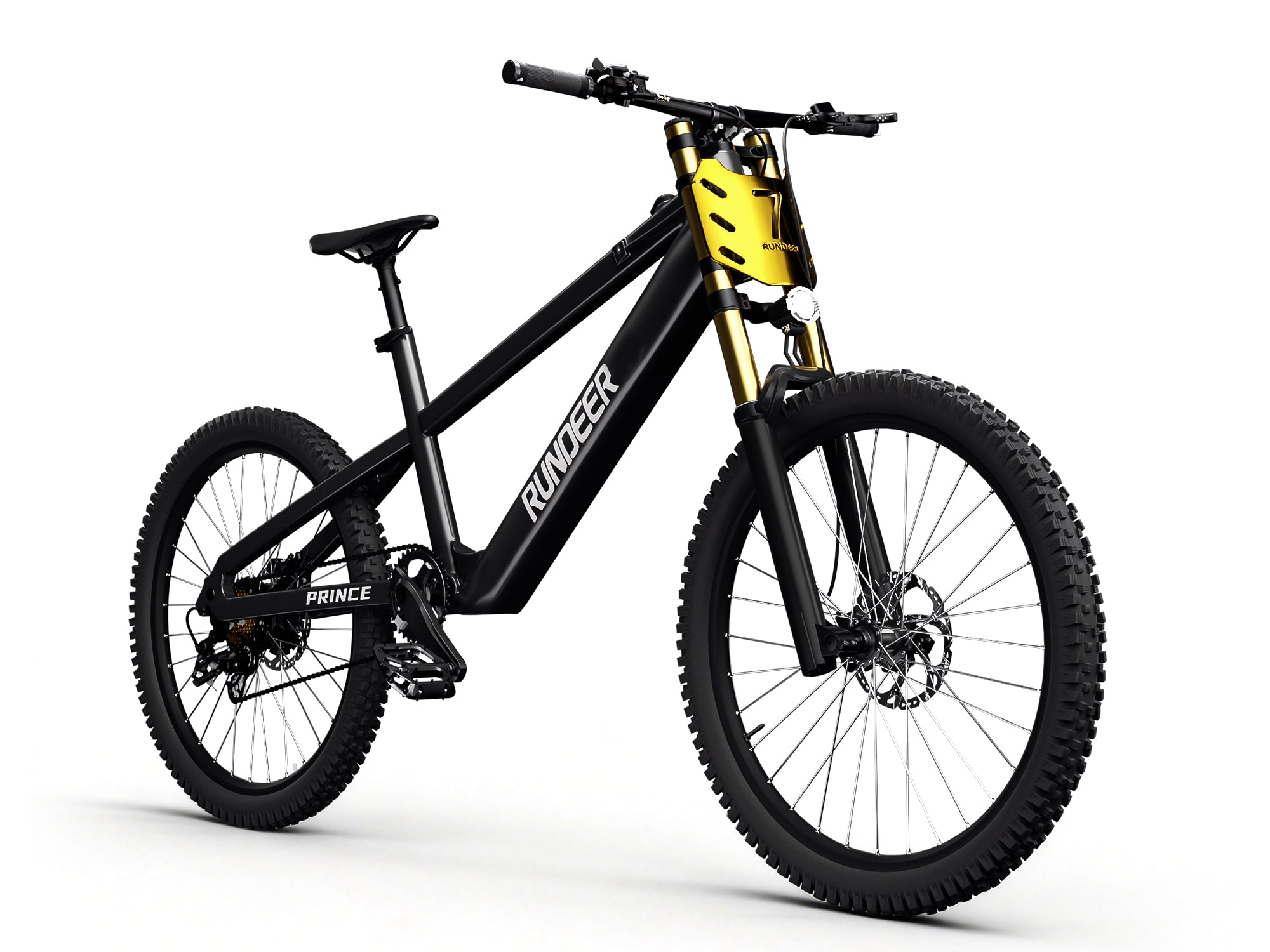
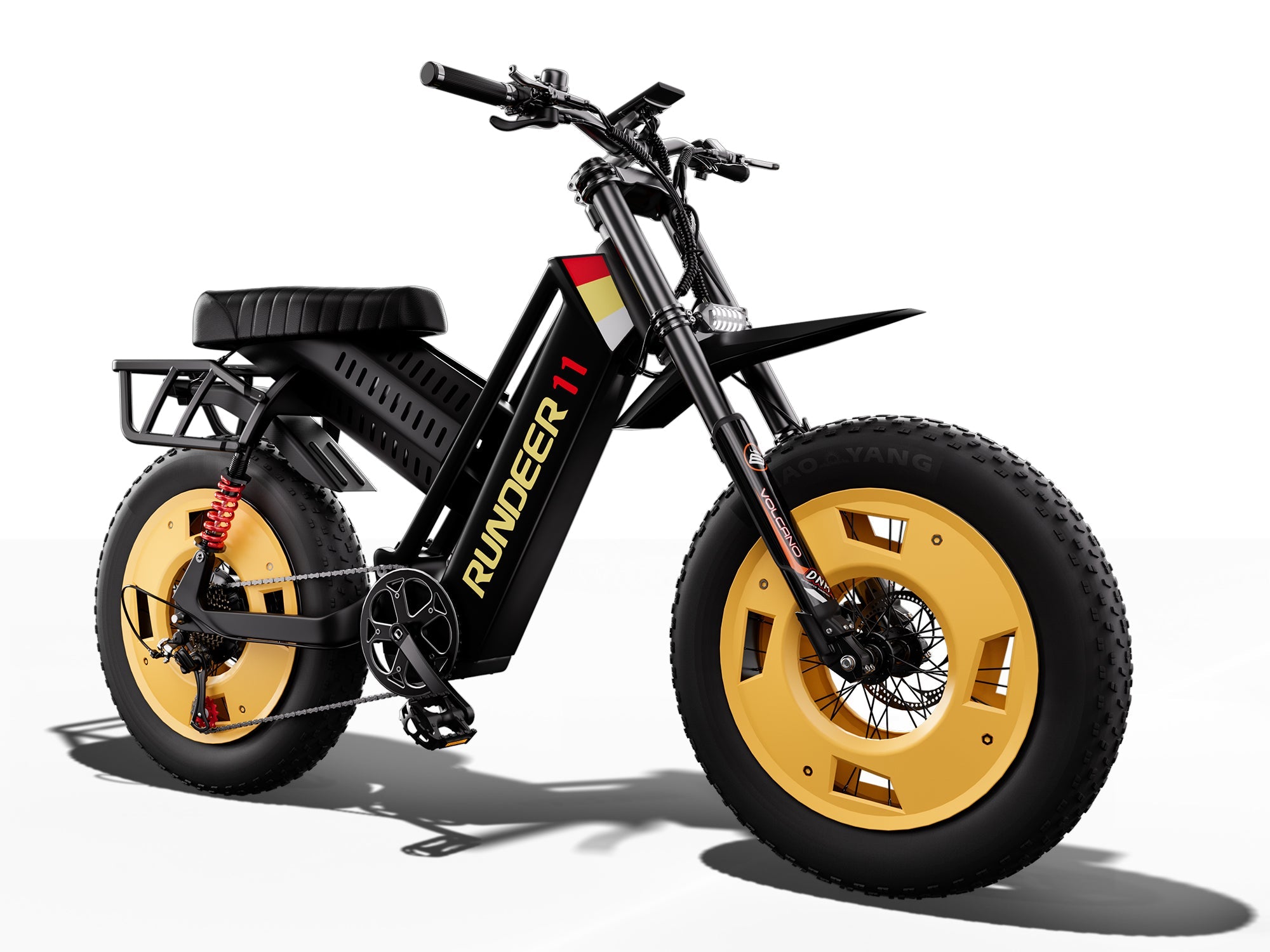
The distinction matters. Between 2021 and 2024, the FDNY recorded over 540 e-bike and e-scooter fires in New York City alone. New York City and California have since made UL 2849 a legal requirement for e-bikes sold in their jurisdictions, and a federal rule is pending. Brands like RUNDEER, whose Prince series carries UL 2849 certification from TÜV SÜD along with Samsung battery cells and a Bafang motor, represent the standard parents should look for — the certification proves the entire system has been tested together, not just individual parts.
Motor Quality
A motor from an established brand like Bafang offers better reliability, smoother power delivery, and easier access to replacement parts. For kids, smooth and predictable power delivery is especially important for safety — torque sensors that match motor output to pedal effort are gentler than cadence sensors that surge on abruptly.
Brake Quality
Hydraulic disc brakes provide significantly more stopping power than mechanical disc brakes, with less finger effort — critical for children whose hand strength is still developing. This is one upgrade that directly impacts safety and is worth prioritizing.
Where You Can Save Without Compromising Safety
Color and Cosmetic Options
Flashy colors, custom decals, and premium paint finishes add cost without affecting performance or safety. If your child is indifferent about color, choosing a standard option can save a meaningful amount.
Non-Essential Tech Features
Smartphone app integration, GPS tracking, and Bluetooth connectivity are nice-to-have features that add cost. For younger children, these may go unused. A bike with a simple LCD display and physical controls is perfectly adequate for most kids' riding needs.
Brand Premium vs. Value
Some brands charge a premium for their name without a proportional improvement in components. Focus on the actual specifications — battery brand, motor brand, certification status, brake type, and warranty terms — rather than the brand name alone. A lesser-known brand using Samsung cells, a Bafang motor, and UL 2849 certification may offer equivalent safety at a lower price point.
Tariffs and Market Dynamics
E-bike pricing in the U.S. has been affected by recent tariff policies. According to Consumer Reports, tariffs on imported bicycles and parts have raised prices across the industry, and elevated prices remain in place even after legal challenges. This is another reason to focus on tier-based comparisons rather than specific dollar figures. PeopleForBikes has also presented to the CPSC on battery safety, emphasizing the dangers of uncertified, low-cost imports that enter the U.S. market through trade loopholes.
Making the Right Budgeting Decision
The right budget depends on three factors: how often your child will ride, what terrain they'll tackle, and how long you expect the bike to last. For occasional neighborhood riding, an entry-level bike may suffice — but verify basic safety certification. For regular commutes or weekend trail rides, a mid-range bike with hydraulic brakes, a branded motor, and certified components offers the best value. For serious young riders, a premium bike with full UL 2849 certification, Samsung cells, and a Bafang motor delivers years of reliable service.
The most expensive mistake isn't buying too much bike — it's buying too little. An uncertified, bargain-priced e-bike with a generic battery can become a safety liability and may cost more in repairs than a quality mid-range model would have from the start. Approach the purchase as you would any significant investment: research specifications, verify certifications, factor in long-term ownership costs, and choose a bike that matches your child's needs. The right e-bike, properly maintained, can provide years of healthy outdoor activity — a return on investment that's hard to put a price on.
- How much does a kids' e-bike cost?
- Kids' e-bikes span three tiers. Entry-level models offer basic components and smaller batteries but may lack safety certifications. Mid-range bikes feature hydraulic brakes, branded motors, and certified batteries — where most families find the best value. Premium models include full UL 2849 certification, name-brand cells like Samsung, motors from brands like Bafang, and features such as torque sensors. Compare what each tier includes and match it to your child's riding needs.
- What hidden costs should parents budget for?
- Beyond the purchase price, plan for safety gear (helmet, pads, lights), routine maintenance (brake pads, chain, tires), an annual professional tune-up, optional e-bike insurance, and eventual battery replacement. Electricity costs are negligible — just a few cents per charge. The most overlooked cost is battery depreciation: set aside a modest annual amount so replacement in year three to five doesn't come as a surprise.
- Is UL 2849 certification worth paying more for?
- Yes. UL 2849 tests the entire e-bike electrical system — battery, motor, controller, charger, and wiring — as an integrated unit, subjecting it to overcharge, short-circuit, shock, vibration, and water ingress tests. This is more rigorous than UL 2271, which tests only the battery pack. New York City and California now require UL 2849 for legal sale, and a federal rule is pending. Brands like RUNDEER, whose Prince series carries UL 2849 certification from TÜV SÜD, show this level of safety verification is available without reaching the highest price tier.
- How long does a kids' e-bike battery last?
- Most quality lithium-ion batteries are rated for 500–1,000 full charge cycles before capacity drops to roughly 70–80% of original — typically three to five years for a child who rides regularly. Factors that extend life include charging to 80% for daily use, storing indoors during extreme cold, and avoiding prolonged full discharge. Name-brand cells from manufacturers like Samsung tend to maintain capacity longer than generics.
- Should I buy a used kids' e-bike?
- A well-maintained used e-bike can offer good value, but requires careful inspection. Check battery health by asking about charge cycles and testing range. Verify UL 2849 or UL 2271 certification — uncertified batteries pose a genuine fire risk documented by the CPSC. Inspect the frame for cracks, confirm the original charger is included, and research whether replacement parts are still available. If any check raises concerns, the savings aren't worth the risk.
- What components are worth upgrading?
- Prioritize battery quality and UL 2849 certification with name-brand cells like Samsung, motor brand (established names like Bafang offer better reliability and parts availability), and brake type (hydraulic disc brakes provide superior stopping power with less hand effort — critical for children). You can save on cosmetic options, non-essential tech features like smartphone apps, and brand-name premiums that don't translate to better specifications.