

Do You Need Insurance for a Kids E-Bike? A Parent's Guide
When you bought your child their first e-bike, you probably thought about helmets, knee pads, and maybe a solid lock. But did you think about insurance? As e-bike adoption among children skyrockets, so do emergency room visits, liability disputes, and state regulations that are reshaping what it means to own and ride an electric bike. Kids e-bike insurance is no longer a niche consideration — it is rapidly becoming a question every parent needs to answer.
According to the U.S. Consumer Product Safety Commission (CPSC), there were 310 e-bike-related deaths and an estimated 155,200 emergency department visits between 2017 and 2024 (CPSC Micromobility Report). In the first half of 2026 alone, children's e-bike injury rates jumped 150% year-over-year, according to data highlighted by The Ed Advocate. These are not abstract statistics — they represent real families facing real medical bills, property damage claims, and legal questions.
This guide walks you through everything you need to know about electric bike insurance for families: what it covers, whether your state requires it, how it differs from homeowners insurance, and how to choose a policy that protects both your child and your finances.
Why Kids E-Bike Insurance Matters Now More Than Ever
The surge in e-bike injuries among children is staggering. A 2026 analysis of health-system data found that emergency department visits for riders under 18 rose from 9.3 per 10,000 visits in early 2023 to 71.7 per 10,000 in early 2026 — a nearly sevenfold increase (Morning Overview). In San Diego County alone, trauma activations involving e-bike accidents at one pediatric hospital climbed from just 3 cases in 2021 to 262 cases by the end of 2025 (Times of San Diego).
When a child on an e-bike collides with a pedestrian, damages a parked car, or crashes into another cyclist, the financial consequences can be significant. Without e-bike liability coverage, parents may be personally responsible for medical bills, property repairs, and even legal fees. A single accident can cost thousands of dollars — an amount that most families are not prepared to pay out of pocket.
Insurance provides a critical safety net. It transfers the financial risk of an accident from your family to an insurer, covering everything from third-party injury claims to theft and accidental damage. As more states and cities begin regulating e-bikes like motor vehicles, having the right coverage is not just prudent — it may soon be legally required where you live.
What Does Electric Bike Insurance for Families Actually Cover?
Understanding the scope of electric bike insurance for families starts with knowing the types of coverage available. Most e-bike insurance policies fall into two broad categories, each protecting against different risks.
Basic Coverage
Basic policies typically cover theft and accidental damage. If your child's e-bike is stolen from a school bike rack or damaged in a crash, a basic policy will cover the repair or replacement cost. In the UK, where e-bike insurance is well-established, basic coverage costs approximately £5–£15 per month and covers theft and damage (MoneySuperMarket). While US pricing varies by provider and state, the structure is similar.
Comprehensive Coverage
Comprehensive policies go further, covering theft, accidental damage, personal injury, third-party liability, and even battery replacement. In the UK market, comprehensive e-bike insurance costs approximately £15–£30 per month (MoneySuperMarket). Battery coverage is particularly important: in 2024 alone, there were 170 e-bike fires reported in the UK, highlighting the unique fire risk that lithium-ion batteries pose (MoneySuperMarket).
Liability-Only Coverage
Some insurers offer standalone e-bike liability coverage, which protects you if your child injures someone else or damages their property while riding. This is the type of coverage that states like New Jersey now mandate for certain e-bike classifications. Liability-only policies are typically the most affordable option and focus exclusively on protecting you from third-party claims.
For families, comprehensive coverage is generally recommended. Children are still developing their motor skills, judgment, and road awareness, making them statistically more likely to be involved in accidents. A policy that covers both damage to the bike and liability for harm to others provides the broadest protection.
Understanding E-Bike Liability Coverage for Young Riders
E-bike liability coverage is the component of an insurance policy that protects you financially if your child causes harm to another person or damages someone else's property while riding. This is distinct from coverage that protects the bike itself — liability coverage protects your family's assets.
Consider these real-world scenarios:
- Your child swerves and hits a pedestrian, causing a wrist fracture. The pedestrian's medical bills could easily exceed $5,000.
- Your child loses control and crashes into a parked car, denting the door and shattering a window. Repair costs could run into thousands of dollars.
- Your child collides with another cyclist, who then files a claim for medical expenses, bike damage, and lost wages.
Without liability coverage, you as the parent would be responsible for these costs. With coverage, the insurer handles the claim, negotiation, and payment — up to your policy limits.
In New Jersey, where liability insurance is now mandatory for certain e-bike classes, the required minimum limits are $15,000 for bodily injury to one person, $30,000 per accident, and $5,000 for property damage (Bicycle Retailer). These limits mirror the minimum auto insurance requirements in many states, reflecting how seriously regulators are treating e-bike liability.
It is also worth noting that liability claims involving children can be particularly complex. In many states, parents can be held legally responsible for the actions of their minor children under doctrines such as "parental liability" or "vicarious liability." This means that even if your child is the one riding, you are the one who may be sued. E-bike liability coverage ensures that your family has professional legal representation and financial backing if a claim is filed.
State-by-State Insurance Requirements for Kids E-Bikes
E-bike regulations in the United States are a patchwork of state laws and local ordinances. Insurance requirements vary dramatically depending on where you live, what type of e-bike your child rides, and how the state classifies that e-bike.
New Jersey: The Most Restrictive E-Bike Law in the Country
New Jersey's new e-bike law, enacted as P.L. 2025, c. 285, took effect on January 19, 2026, with a compliance deadline of July 19, 2026. The law represents some of the most stringent e-bike regulations in the nation (The Ridgewood Blog).
Key provisions include:
- Minimum riding age of 15 for all e-bikes
- Mandatory registration with the New Jersey Motor Vehicle Commission for all e-bikes
- Liability insurance required for motorized bicycles — including throttle-equipped e-bikes (formerly Class 2) and pedal-assist e-bikes capable of exceeding 20 mph (formerly Class 3)
- Driver's license or a special e-bike license required to operate
- Annual premiums estimated at $75–$350 per bike (Skool/EBikingUS)
Standard homeowners and auto policies do not satisfy New Jersey's minimum liability requirements, meaning families must purchase dedicated e-bike insurance. For parents of younger children, the law effectively bans riders under 15 entirely — a significant shift that may influence other states considering similar legislation.
San Diego: Age Restrictions and Helmet Laws
In July 2026, San Diego became the latest California city to pass an ordinance banning children under 12 from riding e-bikes (Times of San Diego). The ordinance also reinforces California's existing requirement that anyone under 18 must wear a helmet while riding. Violations carry a $25 fine, though cited riders can complete an e-bike safety program to avoid the penalty.
San Diego joins Chula Vista, Coronado, and Carlsbad in tightening e-bike regulations for children. While San Diego's ordinance does not mandate insurance, the trend toward stricter age limits and safety requirements suggests that insurance mandates may follow in other jurisdictions.
Other States: A Mixed Landscape
Most US states currently do not require insurance for Class 1 e-bikes (pedal-assist only, max 20 mph). However, several states treat higher-speed or throttle-equipped e-bikes as mopeds or motor vehicles, which typically carry insurance requirements. California, for example, restricts Class 3 e-bikes to riders 16 and older, and some municipalities have begun exploring insurance requirements for throttle-equipped models.
Parents should check their state's Department of Motor Vehicles website and local city ordinances to understand the specific requirements that apply to their child's e-bike. The regulatory landscape is changing rapidly, and what is optional today may become mandatory tomorrow.
Does Your Homeowners Insurance Cover Your Child's E-Bike?
One of the most common questions parents ask is whether their existing homeowners or renters insurance policy covers their child's e-bike. The short answer: probably not adequately.
Most standard homeowners policies treat bicycles as personal property, which means:
- Theft coverage is often limited to the overall personal property deductible, which may be higher than the bike's replacement cost
- Liability coverage may exclude motorized vehicles, including e-bikes with throttle assistance
- Battery-related fire damage may not be covered, as some policies contain exclusions for lithium-ion battery incidents
- Coverage limits may fall well below the cost of replacing a quality e-bike
In New Jersey, the Department of Banking and Insurance has explicitly stated that standard homeowners and auto policies do not satisfy the state's new e-bike liability insurance requirements (Bicycle Retailer). This means families in regulated states have no choice but to purchase standalone e-bike insurance.
Even in states without mandates, relying on homeowners insurance for e-bike coverage is risky. A claim involving an e-bike accident can be complex, and insurers may deny coverage if the e-bike is classified as a motor vehicle under state law. This is particularly true for throttle-equipped e-bikes, which some insurers view differently from pedal-assist models. Standalone e-bike policies are specifically designed for the unique risks of electric bicycles — including higher speeds, heavier frames, battery fire potential, and the increased likelihood of third-party liability claims — and typically offer broader protection with fewer exclusions.
Parents should also be aware that filing an e-bike-related claim on a homeowners policy can lead to premium increases or even policy cancellation. Some insurers view e-bike claims as a signal of elevated risk, which can affect the pricing and availability of coverage for the entire household. A dedicated e-bike policy keeps those claims separate, protecting your homeowners insurance record.
How to Choose the Right Kids E-Bike Insurance
Selecting the right insurance for your child's e-bike requires evaluating several factors. Here is a step-by-step approach:
1. Determine your state's requirements. Check whether your state or city mandates e-bike insurance, registration, or licensing. If you live in or near New Jersey, compliance is essential — the law applies to all riders on public roads.
2. Choose the right coverage level. For most families, comprehensive coverage that includes theft, damage, liability, and personal injury is the best choice. If your state only requires liability, a liability-only policy may suffice, but consider adding theft and damage coverage for additional peace of mind.
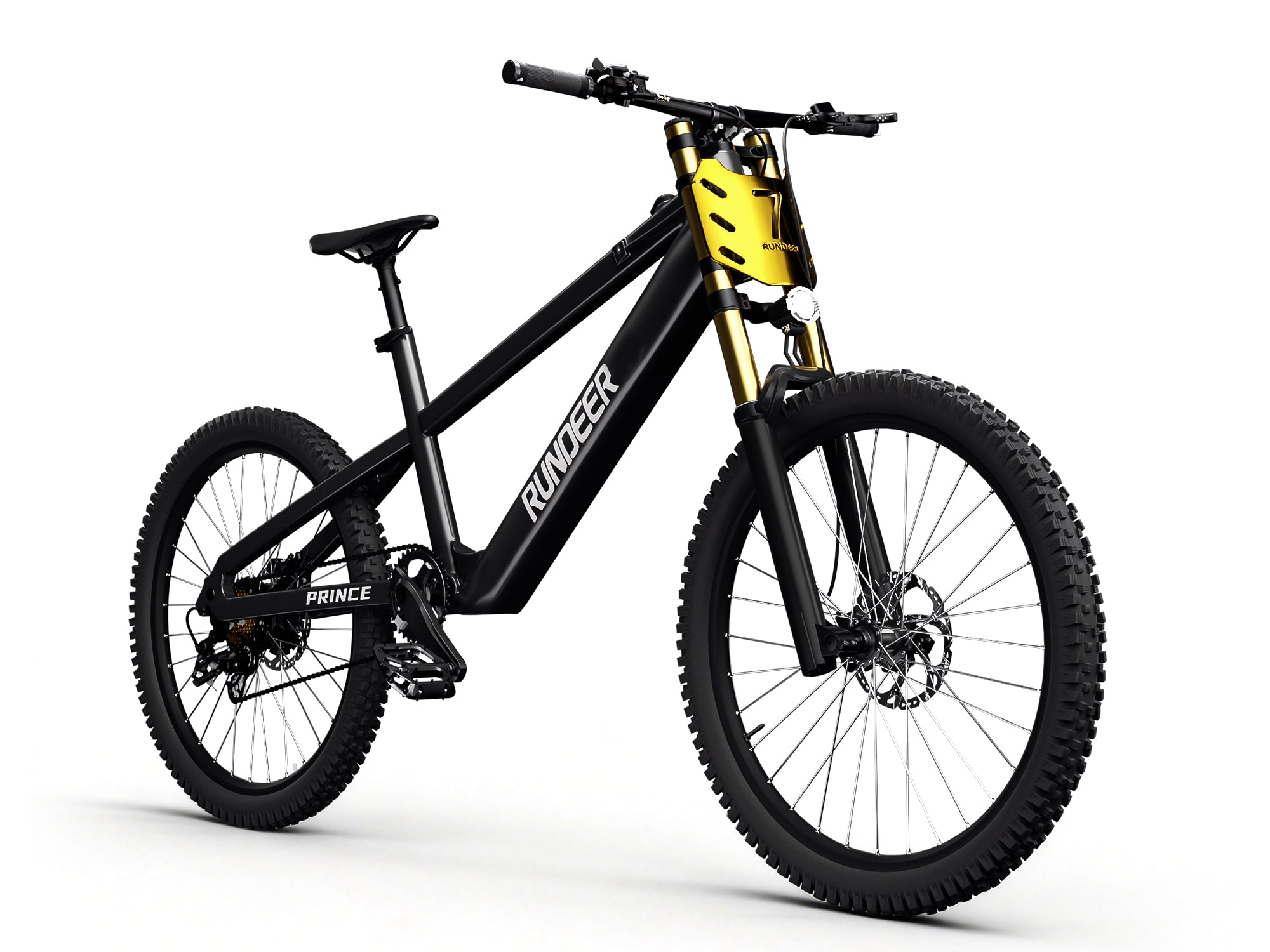
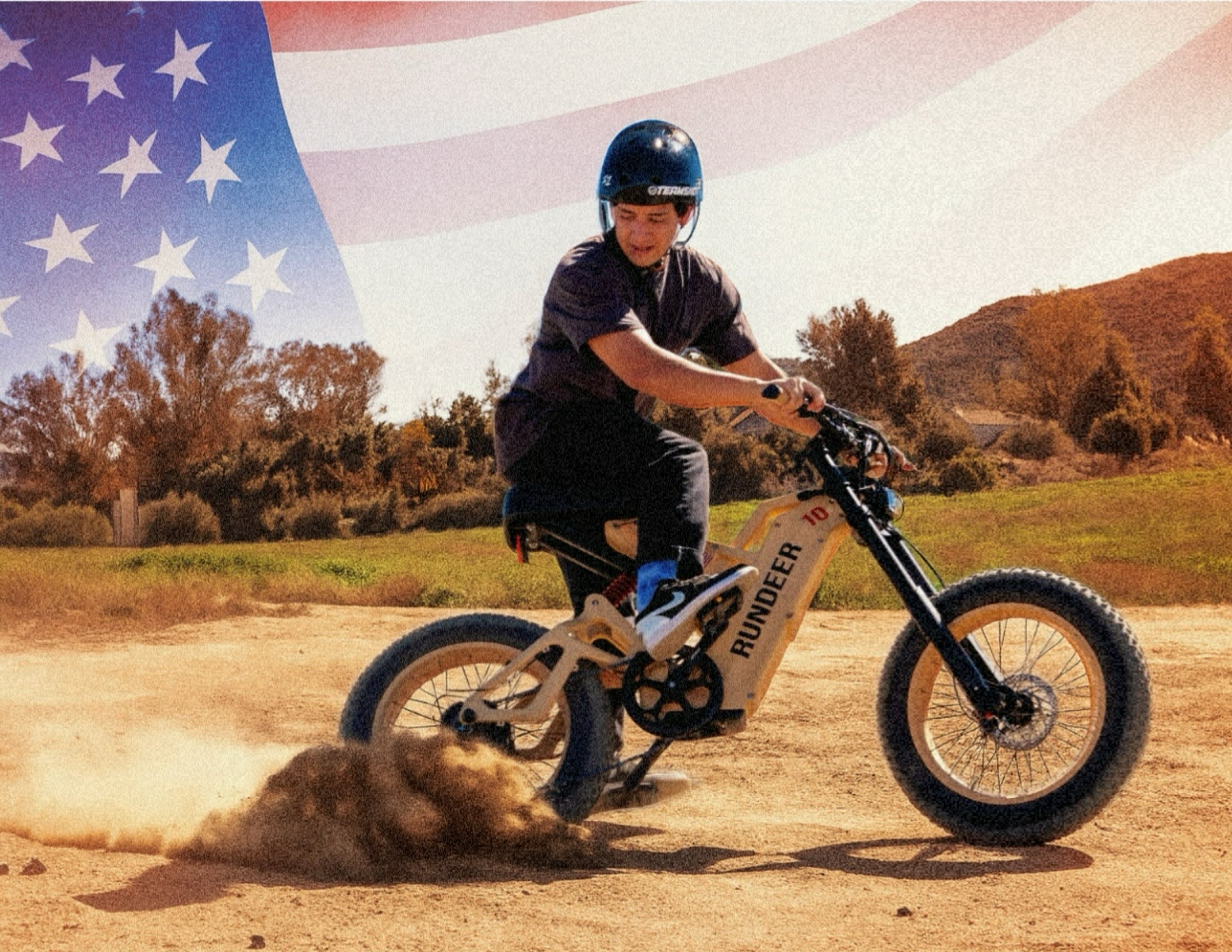
3. Verify the bike's classification. Insurance requirements often depend on whether the e-bike is classified as a low-speed electric bicycle, a motorized bicycle, or a moped. Know your bike's specifications — top speed, motor wattage, and whether it has a throttle. For instance, the RUNDEER Prince kids e-bike is a pedal-assist-only model with a 250W motor and a 20 mph top speed, certified to UL 2849 for complete e-bike system safety — a standard that insurers increasingly look for when underwriting policies.
4. Compare quotes from multiple insurers. E-bike insurance is a growing market, and pricing varies significantly between providers. Look for insurers that specialize in bicycle or e-bike coverage rather than simply adding an endorsement to your homeowners policy.
5. Check for safety certification discounts. Some insurers offer premium discounts for e-bikes with recognized safety certifications. Bikes certified to UL 2849 demonstrate compliance with rigorous electrical safety standards, which may positively influence both insurance eligibility and premium rates.
6. Read the fine print. Pay attention to deductibles, coverage limits, exclusions, and whether the policy covers your child when riding away from home. Some policies exclude riders under a certain age, so verify that your child is explicitly covered.
Frequently Asked Questions About Kids E-Bike Insurance
- Q: Is kids e-bike insurance legally required in the United States?
- A: It depends on your state and the type of e-bike. New Jersey now requires liability insurance for motorized e-bikes — including throttle-equipped models and pedal-assist bikes exceeding 20 mph — with annual premiums estimated at $75–$350 per bike. Most other states do not currently mandate insurance for Class 1 pedal-assist e-bikes, but local ordinances are changing rapidly. Always check your state's DMV and local city regulations to confirm current requirements.
- Q: Does my homeowners insurance cover my child's e-bike?
- A: In most cases, homeowners insurance provides inadequate coverage for e-bikes. Theft coverage may be subject to your personal property deductible, and liability coverage often excludes motorized vehicles. In New Jersey, the state has confirmed that standard homeowners policies do not satisfy the new e-bike insurance requirements. Standalone e-bike insurance is strongly recommended for comprehensive protection.
- Q: How much does e-bike insurance cost for a family?
- A: In the UK, basic e-bike insurance costs approximately £5–£15 per month, while comprehensive coverage runs £15–£30 per month. In the US, costs vary by state, bike value, and coverage level, with New Jersey-compliant liability policies estimated at $75–$350 per year per bike. Comprehensive policies that include theft, damage, and liability typically cost more but offer significantly broader protection.
- Q: What does e-bike liability coverage actually protect against?
- A: E-bike liability coverage protects you financially if your child injures another person or damages someone else's property while riding. It covers medical bills, property repair costs, and legal fees up to your policy limits. In New Jersey, the minimum required limits are $15,000 per person injured, $30,000 per accident, and $5,000 for property damage — mirroring minimum auto insurance requirements.
- Q: At what age can my child legally ride an e-bike?
- A: Age requirements vary by state and city. New Jersey sets the minimum at 15 years old and requires a license. San Diego's 2026 ordinance bans children under 12 from riding Class 1 and Class 2 e-bikes. California state law requires riders to be at least 16 for Class 3 e-bikes. Always verify your local regulations before allowing your child to ride, as new laws are being enacted frequently.
- Q: Does e-bike insurance cover battery fires?
- A: Battery fire coverage depends on your policy. Comprehensive e-bike insurance policies often include battery cover, particularly in the UK market. However, basic or liability-only policies may exclude lithium-ion battery incidents. Given that 170 e-bike fires were reported in the UK in 2024 alone, verifying battery fire coverage is essential when choosing a policy. Look for policies that explicitly mention battery coverage or fire damage protection.
The Bottom Line
Kids e-bike insurance is an emerging necessity, not a luxury. With e-bike injuries among children surging 150% year-over-year and states like New Jersey leading the charge on mandatory insurance, the question is no longer whether you should insure your child's e-bike — it is whether you can afford not to.
Start by understanding your state's requirements, evaluate whether your homeowners policy provides adequate protection, and compare dedicated e-bike insurance options. The right policy can mean the difference between a minor inconvenience and a major financial setback. As a parent, that is peace of mind worth investing in.