

Ebike vs Electric Scooter for Kids: Which Is Better and Safer?
If you're a parent standing in the middle of a big-box store—or scrolling through endless online listings—trying to decide between an ebike and an electric scooter for your child, you're not alone. Both options promise fun, freedom, and a break from the carpool lane. But when it comes to your child's safety, the choice is far more consequential than picking a color.
Electric mobility devices are now the fastest-growing category of youth transportation in the United States. The U.S. Consumer Product Safety Commission (CPSC) estimates that 698,500 micromobility-related injuries were treated in U.S. emergency departments between 2017 and 2024, with annual visits surging from 37,300 to 149,100 over that period. Understanding the real differences between ebikes and electric scooters—beyond the marketing copy—can help you make an informed, safety-first decision.
1. Injury Data: What the Numbers Say About Safety
The most recent CPSC report, Micromobility Products-Related Deaths, Injuries, and Hazard Patterns: 2017–2024, breaks down emergency department visits by product type. The data reveals a stark contrast:
- E-scooters: An estimated 380,000 injuries were treated from 2017 through 2024, with 79,300 in 2024 alone—a statistically significant increase.
- E-bikes: An estimated 155,200 ED visits over the same period, with 59,200 in 2024. While lower in total count, e-bike injuries surged sharply in recent years as adoption grew.
- Head injuries: More than 18% of e-scooter injuries in 2024 involved the head, according to NEISS data cited by the American Academy of Orthopaedic Surgeons.
A 2026 study published in the journal Injury by researchers at Johns Hopkins Children's Center examined pediatric e-scooter injuries specifically. Analyzing 2020–2024 NEISS data, they found 2,117 pediatric e-scooter injuries, with 42.2% occurring in 2024 alone. Children aged 11–14 accounted for 38.3% of cases, males represented 70.1%, and the most common injury types were fractures, dislocations, and sprains (40.4%) and soft tissue injuries (36.7%). About 13% involved internal injuries, and 4% resulted in head injuries.
"Males are consistently at higher risk of both minor and major injuries, including head injuries and traumatic brain injuries," said lead researcher Dr. Mary Beth Howard of Johns Hopkins. "This likely reflects a mix of behavioral and social factors, including greater risk-taking and lower use of protective equipment like helmets."
For e-bikes, the AAP reports that e-bike crashes have become the leading cause of injury for school-aged children seen in some emergency rooms, with injuries resembling motorcycle trauma rather than typical bicycle accidents. Cook Children's Health Care System in Texas documented a 500% increase in e-bike trauma cases in the first half of 2026 compared to all of 2025.
2. Stability and Handling: Why Frame Geometry Matters
Wheel Size and Contact Patch
The most fundamental engineering difference between an ebike and an electric scooter is wheel diameter. Electric scooters typically use wheels ranging from 8 to 11 inches, while ebikes use wheels between 20 and 29 inches. This isn't a minor spec difference—it directly affects how each vehicle interacts with the road.
Larger wheels produce a stronger gyroscopic effect that naturally stabilizes the vehicle at speed. They also have a better "approach angle," meaning they can roll over potholes, debris, and expansion joints instead of being stopped or deflected by them. Small scooter wheels, by contrast, are highly sensitive to road imperfections. A crack in the pavement that a 26-inch ebike tire rolls over without notice can cause an 8-inch scooter wheel to abruptly stop, pitching the rider forward.
Center of Gravity and Riding Posture
Electric scooters require the rider to stand upright on a narrow deck, which raises the center of gravity relative to the wheel axles. This standing position means the rider's legs and spine absorb all road shock directly, and sudden braking or steering inputs can more easily throw the rider off balance. Ebikes, with their seated riding position, lower the rider's center of gravity and distribute weight more evenly across two contact points (seat and pedals), resulting in greater inherent stability.
For younger riders still developing balance and coordination, this difference is amplified. A child who wobbles on an ebike can put a foot down; a child who loses balance on a scooter at speed has far less recovery margin.
3. Physical Activity: Pedaling vs. Standing Still
One often-overlooked factor in the ebike vs. electric scooter debate is the health and developmental impact on children. The American Academy of Pediatrics (AAP) emphasizes that physical activity is essential for children's cardiovascular health, motor skill development, and mental well-being.
Ebikes with pedal-assist systems (PAS) operate as hybrid vehicles: the motor supplements the rider's own pedaling power rather than replacing it entirely. This means the child remains physically active during the ride, engaging leg muscles, building cardiovascular endurance, and developing cycling skills that transfer directly to conventional bicycles. The motor only activates when the rider is actively pedaling, which encourages continued physical engagement.
Electric scooters, by contrast, rely entirely on throttle-based electric propulsion. The rider stands passively while the motor does all the work. While this may seem convenient, it removes the physical activity component entirely—turning what could be exercise into pure passive transport. For parents concerned about screen time and sedentary habits, the pedal-assist model offers a meaningful advantage: kids get the fun of electric power without sacrificing movement.
Research on adaptive cycling programs for children has demonstrated that regular pedaling activity improves muscle strength, gross motor function, and even classroom focus. While these studies focus on children with disabilities, the underlying principle—that active pedaling supports physical development—applies broadly.
4. Speed and Range: Power With Responsibility
Both ebikes and electric scooters for kids are typically speed-limited, but the regulatory frameworks and practical performance differ significantly:
- Ebike classes: Class 1 (pedal-assist only, up to 20 mph), Class 2 (throttle-assisted, up to 20 mph), and Class 3 (pedal-assist, up to 28 mph). The CPSC recommends that children under 12 should not operate any product capable of exceeding 10 mph.
- E-scooter speed caps: Many states cap e-scooter speeds at 15 mph on public roads. However, consumer models sold online can often exceed this, and there are fewer built-in safeguards for young riders.
- Range: Ebikes benefit from the hybrid pedal-assist model, which reduces continuous battery drain. This typically translates to longer effective range. E-scooters, relying purely on throttle power, deplete batteries faster, especially under load on hills or with heavier riders.
The CPSC explicitly recommends that children aged 9–12 should not operate any product traveling faster than 10 mph, meaning no standard e-bike for children under 12. For ages 12–15, the AAP advises considering only Class 1 e-bikes, and only with close adult supervision and proper safety instruction.
5. Regulations: A Patchwork of State Laws
The legal landscape for ebikes and electric scooters varies dramatically by state—and this matters enormously for families. In general, ebikes enjoy broader legal acceptance because they fit within established bicycle frameworks, while e-scooters face more restrictions.
Ebike Regulations
In over 40 states, e-bikes that comply with the three-class system (motor under 750W, functional pedals, capped speeds) are treated like traditional bicycles—no license, registration, or insurance required. However, age restrictions vary:
- California: No minimum age for Class 1/2; Class 3 requires riders to be 16+. Helmets mandatory for all riders under 18.
- New York: Riders must be at least 16 to operate any class of e-bike on public roads.
- Texas: No minimum age for Class 1/2; Class 3 requires riders to be 15+.
- Michigan: Class 3 riders must be at least 14; helmet required under 18.
Electric Scooter Regulations
E-scooters face a more fragmented and restrictive legal environment. In California, e-scooter riders must be at least 16 and hold a valid learner's permit or driver's license, with a maximum speed of 15 mph and no sidewalk riding. Many other states and municipalities impose similar age minimums or defer to local ordinances that can restrict where e-scooters may be ridden.
This regulatory asymmetry means that an ebike is more likely to be legally rideable by a younger teen on public roads, bike lanes, and multi-use paths, while an e-scooter may be restricted to private property or require the rider to be old enough to drive.
It's also worth noting that some states have begun tightening battery safety requirements. California's 2026 legislation now requires all e-bikes sold or leased in the state to have battery and electrical systems certified to UL 2849 or an equivalent standard by an accredited laboratory. This trend is expected to spread to other states, making certification an increasingly important factor—not just for safety, but for legal compliance.
6. Use Case Comparison: Where Each Device Shines
Different riding scenarios call for different capabilities. Here's how ebikes and electric scooters compare across common use cases for families:
| Factor | Ebike | Electric Scooter |
|---|---|---|
| Commuting to school | Excellent—longer range, pedal-assist keeps rider active, legal on bike lanes in most states | Limited—shorter range, standing fatigue on longer rides, restricted in some areas |
| Neighborhood recreation | Excellent—stable, seated, familiar bicycle feel | Good—fun for short trips, but stability concerns at speed |
| Off-road / trail riding | Excellent—larger tires handle rough terrain, suspension available | Poor—small wheels struggle with uneven surfaces, high tip-over risk |
| Portability & storage | Moderate—larger and heavier, some folding models available | Excellent—folds compactly, easy to carry and store |
| Physical activity | High—pedal-assist engages muscles and cardiovascular system | Minimal—passive standing, no physical exertion required |
| Hill climbing | Strong—motor + pedaling combined for efficient climbing | Moderate—motor-only strain leads to voltage sag on inclines |
| Legal accessibility (under 16) | Broader—Class 1/2 legal for younger teens in many states | Narrower—many states require 16+ and a driver's license |
7. Battery Safety: Why Certification Matters
Both ebikes and electric scooters are powered by lithium-ion batteries, which carry a fire risk if damaged, modified, or charged improperly. The Consumer Reports investigation into lithium-ion battery safety found that lack of regulation exposed consumers to fire hazards, and the organization has endorsed federal legislation for mandatory safety standards.
The most widely recognized safety certification for ebike electrical systems is UL 2849, the Standard for Electrical Systems for eBikes, developed by UL Solutions. This standard evaluates the entire electrical drive train—including the battery, charger, and motor controller—for fire and shock safety. The CPSC has called on all manufacturers, importers, and retailers to ensure their micromobility products are certified to UL 2849 or equivalent standards.
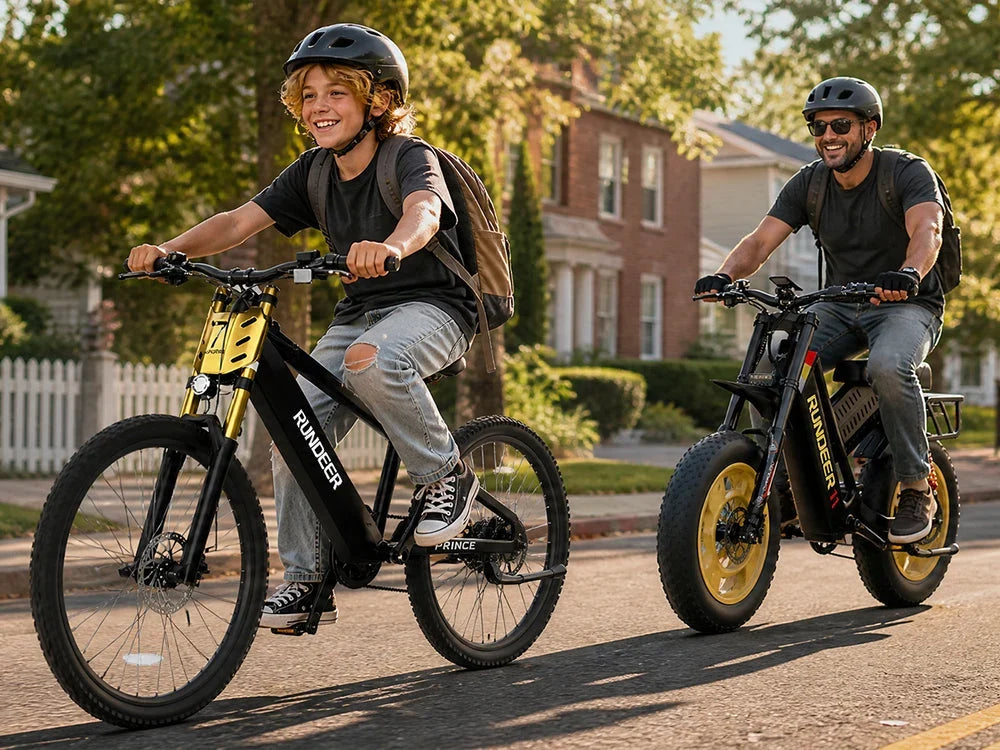
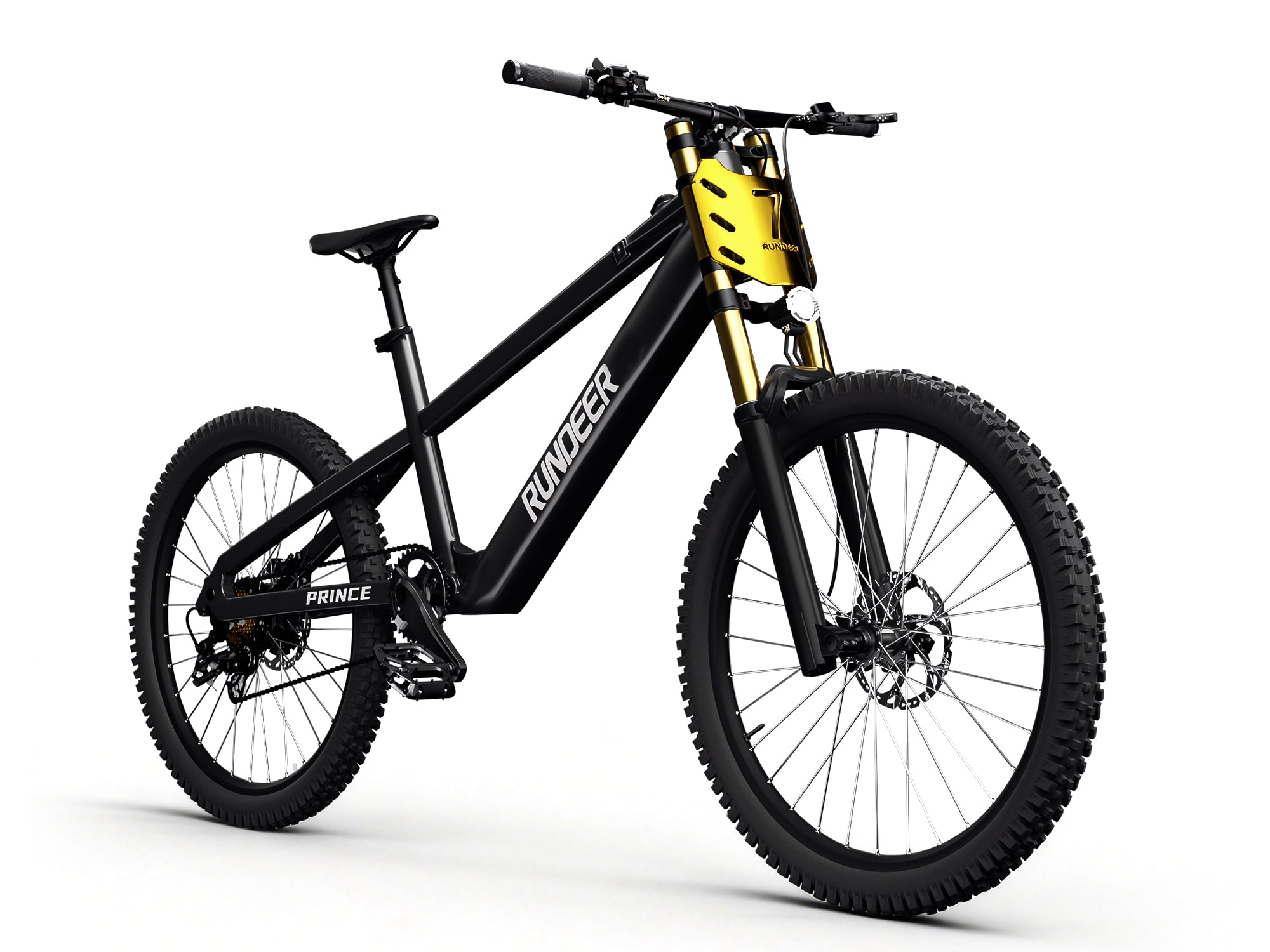
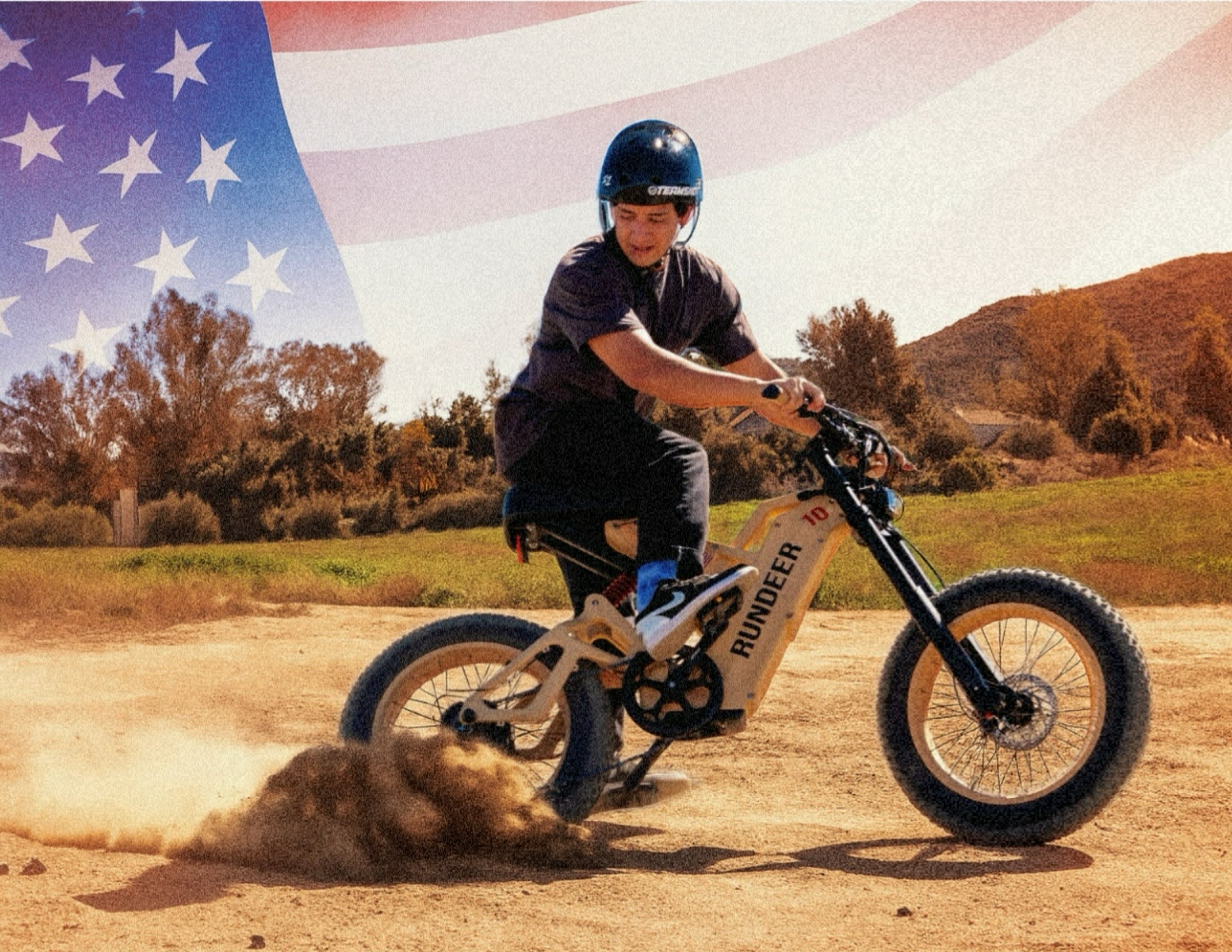
For parents, this is a critical purchasing criterion. A certified ebike provides assurance that the battery system has been independently tested for thermal runaway protection, overcharge safeguards, and electrical integrity. Brands like RUNDEER have built their Prince series around this principle, with UL 2849-certified electrical systems housed in a lightweight magnesium alloy frame that keeps the center of gravity low for improved stability—a combination that directly addresses both fire safety and riding dynamics for young riders.
8. The Verdict: Which Is Better for Kids?
When you weigh the evidence—from CPSC injury statistics to AAP age recommendations, from engineering physics to state law—ebikes emerge as the safer and more versatile choice for most families with children aged 12 and older. Here's why:
- Greater inherent stability: Larger wheels, lower center of gravity, and seated posture reduce fall risk.
- Physical activity benefit: Pedal-assist keeps kids moving and engaged, supporting health and development.
- Broader legal access: Ebikes are more widely permitted on bike lanes and paths for younger riders.
- Better range and hill capability: Hybrid human-electric power extends range and handles terrain more effectively.
- Certified safety frameworks: UL 2849 certification provides independent verification of electrical safety.
Electric scooters aren't without merit—they're compact, portable, and undeniably fun for short, flat, supervised rides on smooth pavement. But for parents prioritizing safety, developmental benefits, and long-term versatility, the ebike's advantages are substantial.
Regardless of which device you choose, the non-negotiable safety fundamentals remain the same: always wear a properly fitted helmet (the AAP recommends higher-speed-rated helmets for e-bike riders), follow all traffic laws, ride in designated bike lanes whenever possible, and ensure adult supervision for younger riders. A 2007 review published in Injury Prevention found that wearing a helmet can reduce the risk of serious head injury by 63 to 88 percent—making it the single most effective safety intervention available.
- At what age can a child safely ride an ebike?
- The CPSC recommends that children under 12 should not operate any product capable of exceeding 10 mph. The AAP advises that children aged 12–15 may consider only Class 1 (pedal-assist only, up to 20 mph) ebikes, with close adult supervision and proper safety training. Riders 16 and older can start with Class 1 or Class 2 models. Always check your state and local laws, as minimum age requirements vary.
- Is an electric scooter or an ebike safer for a 10-year-old?
- Neither device is recommended for a 10-year-old on public roads. The AAP recommends that children under 16 should not use e-scooters, and the CPSC advises against any motorized product exceeding 10 mph for children under 12. For younger children, a traditional pedal bicycle remains the safest option. If a motorized device is considered, a low-speed, pedal-assist ebike with appropriate speed limits under adult supervision is generally considered safer than a standing e-scooter due to better stability and larger wheels.
- Do kids need a driver's license to ride an ebike?
- In most U.S. states (over 40), compliant Class 1, 2, and 3 ebikes are legally treated as traditional bicycles and do not require a driver's license, registration, or insurance. However, a few states—such as New Jersey—have enacted stricter requirements. Electric scooters, by contrast, often require a driver's license or learner's permit in states like California, where riders must be at least 16. Always verify your local regulations before purchasing.
- What is UL 2849 certification and why does it matter for kids' ebikes?
- UL 2849 is the Standard for Electrical Systems for eBikes, developed by UL Solutions. It evaluates the complete electrical drive train—battery, charger, and motor controller—for fire safety, electric shock risk, and thermal runaway protection. The CPSC has urged all manufacturers to certify their products to this standard. For parents, choosing a UL 2849-certified ebike provides independent assurance that the battery system has been rigorously tested for safety, reducing the risk of battery fires—a concern highlighted by Consumer Reports and fire safety organizations nationwide.
- Can an ebike help my child get more exercise?
- Yes. Unlike electric scooters, which rely entirely on throttle-based propulsion, pedal-assist ebikes require the rider to actively pedal to engage the motor. This means the child is physically exercising during every ride—engaging leg muscles, elevating heart rate, and developing cycling skills. Studies on cycling interventions for children have shown improvements in muscle strength, gross motor function, and even classroom focus. The pedal-assist model ensures kids get the fun and freedom of electric power without sacrificing physical activity.
- What safety gear should my child wear on an ebike or e-scooter?
- Every ride, every time: a properly fitted helmet is the single most important piece of safety equipment. The AAP recommends a higher-speed-rated helmet (such as ASTM F1952 or NTA 8776) for e-bike riders, as standard bicycle helmets are designed for impacts up to 20 mph. Additional protective gear includes closed-toe shoes, knee and elbow pads, and bright or reflective clothing. Ensure the bike or scooter is equipped with front and rear lights, and never allow riding with headphones or while using a phone.