

How to Choose the Right Ebike Size for Your Child: A Complete Parent's Guide
Electric bikes have transformed how families ride together, commute to school, and explore the outdoors. But as e-bike popularity surges among children and teens, so do safety concerns. According to the U.S. Consumer Product Safety Commission (CPSC), e-bikes were associated with approximately 155,200 emergency department visits and 301 deaths between 2017 and 2024. The American Academy of Pediatrics (AAP) now warns that e-bike crashes have become a leading cause of injury for school-aged children in emergency rooms.
One of the most critical — and most overlooked — factors in preventing these injuries is choosing the correct ebike size. A bike that is too large or too heavy compromises your child's ability to balance, brake, and react in emergencies. This guide covers everything you need to know about kids' ebike sizing, from measuring your child to understanding wheel sizes, standover height, and weight considerations.
Why Proper Ebike Sizing Matters More Than You Think
Unlike traditional bicycles, e-bikes are faster, heavier, and more powerful. The AAP emphasizes that "being able to ride a regular bicycle does not automatically mean a child is ready for an e-bike." When a child rides an improperly sized e-bike, the risks multiply:
- Loss of control: An oversized frame puts the child's center of gravity too high, making the bike unstable during turns and stops.
- Inability to brake effectively: If brake levers are too far for small hands to reach, stopping distance increases dramatically — a life-threatening issue at motor-assisted speeds.
- Dismount injuries: If the standover height exceeds the child's inseam, they cannot safely plant both feet on the ground when stopped, increasing the risk of falls and groin injuries.
- Confidence erosion: The AAP's biking safety guidelines specifically warn parents to "avoid purchasing a larger bike for the child to 'grow into.'" An ill-fitting bike creates fear, not fun — and a child who loses confidence may refuse to ride altogether.
The bottom line: a properly sized e-bike is not just about comfort. It is a fundamental safety requirement.
Step 1: Measure Your Child Correctly
Before looking at any e-bike, you need two precise measurements: height and inseam length. Of these, inseam is the more critical because it determines whether your child can safely straddle the bike and reach the ground.
How to Measure Height
- Have your child stand barefoot against a flat wall with their heels, back, and head touching the surface.
- Place a hardcover book horizontally on top of their head, pressing gently against the wall.
- Mark the wall at the bottom of the book and measure from the floor to the mark.
- Record the measurement in both inches and centimeters.
How to Measure Inseam (Cycling Inseam)
- Have your child stand barefoot with feet about 6 inches apart.
- Slide a hardcover book firmly into their crotch with the spine pointing upward — this simulates the bike saddle.
- Hold the book level and measure from the top of the spine straight down to the floor.
- Repeat 2–3 times and use the average for accuracy.
Important: Do not use pants inseam measurements. Clothing inseams are taken differently and can be off by 1–3 inches. Always measure specifically for bike fitting.
Step 2: Use the Kids Ebike Size Chart
Kids' bikes — including e-bikes — are sized primarily by wheel diameter rather than frame size. Below is a comprehensive sizing chart that cross-references wheel size, age, height, and inseam to help you narrow down the right fit.
| Wheel Size | Recommended Age | Rider Height | Min. Inseam | Best For |
|---|---|---|---|---|
| 16" | 4–6 yrs | 39–48 in (99–122 cm) | 16–20 in (41–51 cm) | First pedal e-bike; neighborhood riding; beginner skill level |
| 20" | 5–9 yrs | 45–54 in (114–137 cm) | 18–22 in (46–56 cm) | Most versatile kids' size; light trails; multi-speed gearing |
| 24" | 8–12 yrs | 52–62 in (132–157 cm) | 22–26 in (56–66 cm) | Pre-teen riders; longer distances; trail and road cycling |
| 26" (Youth XS) | 10+ yrs | 57+ in (145+ cm) | 24+ in (61+ cm) | Transition to adult-style geometry; experienced young riders |
Note that these ranges overlap intentionally. If your child falls between two sizes, their riding experience and confidence level should guide your decision. A less experienced rider should always go with the smaller wheel size for better control.
Step 3: Understand Wheel Size and Its Impact
16-Inch Wheels: The Starter E-Bike
Sixteen-inch wheels are found on the smallest pedal e-bikes, designed for children aged 4 to 6. At this stage, the focus should be on fundamental balance and braking. The CPSC recommends that children under 12 should not operate any product that travels faster than 10 mph, so motor speed should be strictly limited or the child should ride a traditional pedal bike first.
For this age group, look for coaster brakes, a low standover height, and a bike weight that does not exceed 30–40% of the child's body weight.
20-Inch Wheels: The Sweet Spot
Twenty-inch wheels represent the most versatile size for kids' e-bikes, fitting children aged 5 to 9. Bikes in this category often feature multiple gears, hand brakes, and more capable motors. This is where the transition from toy to real cycling happens.
When choosing a 20-inch e-bike, pay close attention to total weight. Many entry-level kids' e-bikes weigh 35–45 pounds — a significant load for a child weighing 50–70 pounds. Look for frames made from lightweight materials such as aluminum or magnesium alloy to reduce weight without sacrificing structural integrity.
24-Inch Wheels: The Pre-Teen Performer
Twenty-four-inch wheels are designed for children aged 8 to 12 who have outgrown 20-inch bikes. These models often feature adult-style gearing, hydraulic disc brakes, and more powerful motors. Riders can handle longer distances and varied terrain, but still need a proper fit.
For pre-teens, the AAP advises that children aged 12–15 should only ride Class 1 e-bikes (pedal-assist only, maximum 20 mph). Throttle-powered bikes can accelerate unexpectedly, making them harder for inexperienced riders to control.
Step 4: Check Standover Height — The Critical Safety Metric
Standover height is the distance from the ground to the top tube of the bike frame when your child stands over it with both feet flat on the ground. This is arguably the single most important measurement for children's bike safety.
The formula is simple:
Standover Clearance = Child's Inseam − Bike Standover Height
For safe riding, the minimum clearance should be:
- 1 inch (2.5 cm) for neighborhood and paved-path riding
- 2–3 inches (5–7.5 cm) for trail riding or off-road use, where quick dismounts are more frequent
If your child cannot straddle the bike with both feet flat and clear the top tube, the bike is too big. The AAP states that "while standing, there should only be a few inches between the top center bar of the bike and the child's inner groin or crotch area." An oversized standover height can cause serious groin and abdominal injuries if the child falls forward onto the top tube.
Step 5: Evaluate Frame Weight and Motor Power
Weight is a factor many parents underestimate when shopping for a kids' e-bike. A traditional 20-inch pedal bike weighs roughly 20–25 pounds. Add a motor, battery, and reinforced frame, and that same bike can reach 40 pounds or more. For a 60-pound child, that means the bike weighs nearly 70% of their body weight.
Why Weight Matters for Control
When a child needs to stop suddenly or regain balance, they must manage the bike's weight with their own body. A heavier bike has more momentum, takes longer to stop, and is harder to pick up after a fall. The AAP notes that e-bikes are "faster, heavier, and more difficult to manage than regular bikes."
Frame Materials Make a Difference
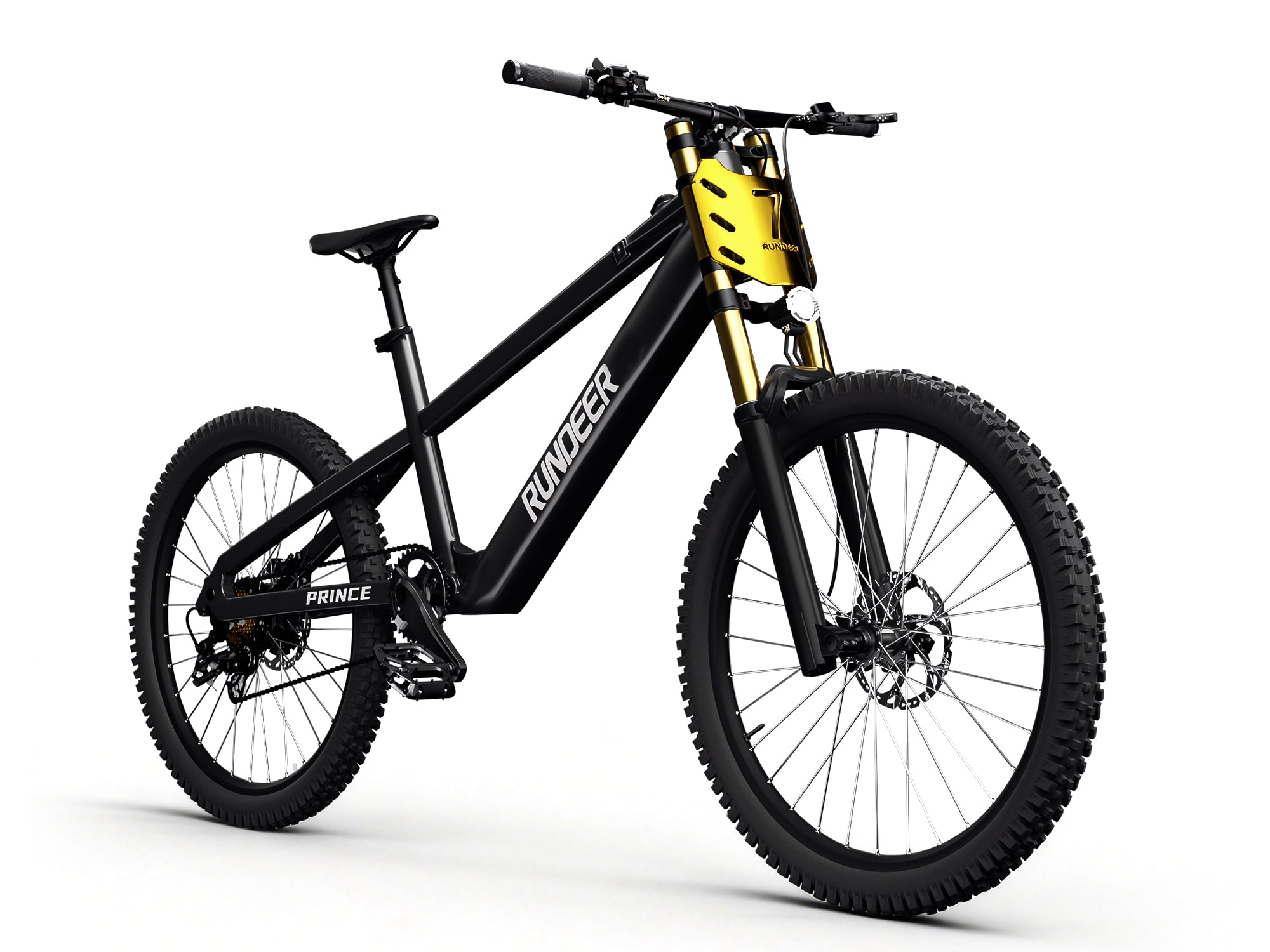
Frame material is one of the most effective levers for reducing a kids' e-bike's weight. Steel frames are durable but heavy. Aluminum frames are lighter and widely used. Magnesium alloy frames offer an excellent strength-to-weight ratio and are increasingly used in premium kids' e-bikes. For example, the RUNDEER Prince series utilizes a magnesium alloy frame that keeps the overall weight manageable while maintaining structural rigidity — a meaningful advantage when a young rider needs to control the bike in an emergency stop.
Motor Power and Speed Limits
The CPSC recommends that children under 12 should not operate any product faster than 10 mph. For children 12–15, the AAP recommends Class 1 e-bikes only (pedal-assist, max 20 mph). Always check state and local regulations, as age requirements and class restrictions vary widely.
Step 6: Verify Electrical Safety Certification
Battery safety is an essential consideration that goes hand in hand with sizing. The CPSC has called on all manufacturers, retailers, and importers of micromobility devices to comply with established UL safety standards. Specifically, UL 2849 is the Standard for Electrical Systems for eBikes, covering the electrical drive train, battery system, and charger system.
UL 2849 certification ensures the e-bike's electrical system has been tested for fire safety, electrical shock hazards, overcharging protection, thermal cycling, vibration resistance, and mechanical shock. According to UL Standards & Engagement, the standard simulates real-world conditions including high temperatures, water exposure, and drop impacts to verify the battery will not catch fire, explode, or leak electrolyte under foreseeable use.
When evaluating any kids' e-bike, look for a visible UL 2849 certification label. The RUNDEER Prince series, for instance, carries UL 2849 certification alongside its magnesium alloy construction — two attributes that directly address the safety priorities the CPSC and AAP have flagged for young riders. Parents should never purchase an e-bike that lacks third-party electrical safety certification.
Step 7: The Pre-Purchase Test Ride Checklist
Whenever possible, have your child test ride the e-bike before purchasing. Use this checklist to verify that the fit is correct and safe:
| Check Item | What to Look For |
|---|---|
| Standover clearance | Child can straddle the top tube with both feet flat on the ground and at least 1 inch of clearance above the tube. |
| Saddle height | With the saddle at its lowest position, the child can sit and place the balls of both feet on the ground. For experienced riders, the saddle can be raised so the leg is nearly extended at the bottom of the pedal stroke. |
| Brake lever reach | The child can fully squeeze both brake levers from a comfortable riding position without stretching. Look for adjustable-reach levers designed for small hands. |
| Handlebar reach | The child can grip the handlebars with a slight bend in the elbows — not fully stretched out and not cramped. |
| Weight management | The child can lift the bike upright from a leaned-over position without struggling. If they cannot pick the bike up, it is too heavy. |
| Motor response | The pedal assist engages smoothly and predictably. There should be no sudden lurching or delayed power cutoff when the child stops pedaling. |
| Balance and steering | The child can ride in a straight line, make controlled turns, and come to a complete stop without wobbling or losing balance. |
| Dismount | The child can stop, step off the bike smoothly, and stand over it with both feet flat on the ground. |
If any item fails, the bike is not the right size — regardless of what the manufacturer's age range suggests. Always prioritize fit over brand, aesthetics, or growth potential.
Common Sizing Mistakes Parents Make
1. Buying a Size Up "to Grow Into"
The AAP explicitly states that oversized bikes are especially dangerous because children "do not have the skills and coordination needed to handle a bigger bike and may lose control." A bike that is 2 inches too tall puts the saddle above the child's hip, makes brake levers unreachable, and shifts the center of gravity dangerously high.
2. Ignoring Inseam in Favor of Age
Children grow at different rates. A tall 7-year-old may need a 24-inch bike, while a petite 9-year-old may still ride a 20-inch model. Always use inseam as the primary sizing metric and age as a secondary reference only.
3. Overlooking Bike Weight
Many parents focus entirely on wheel size and forget to check total weight. An e-bike that weighs 60% or more of the child's body weight is difficult to control, especially at low speeds and during emergency stops. Prioritize lightweight frame materials and right-sized battery capacity.
4. Skipping the Test Ride
Online sizing charts are helpful, but geometry varies between brands — two 20-inch e-bikes can fit very differently. If you must buy online, choose a retailer with a generous return policy and measure carefully before ordering.
Age and Maturity: Beyond Physical Fit
Physical fit is necessary but not sufficient. The AAP stresses that safe e-bike riding requires "training, good judgment, and mature decision-making." Before purchasing, honestly assess whether your child follows traffic rules consistently, maintains situational awareness while riding, understands that e-bike speeds require longer stopping distances, and demonstrates impulse control. Many school districts and community organizations now offer e-bike safety training — the AAP recommends checking with your city for available courses.
Helmet and Safety Gear Requirements
The CPSC requires all bicycle helmets sold in the United States to meet federal safety standards. For e-bike riders, the AAP recommends a helmet designed for higher speeds — look for NTA 8776 certification or MIPS technology. Remember the AAP's simple rule: No helmet, no ride.
State and Local E-Bike Laws to Know
E-bike regulations vary significantly by state and city. Before purchasing, research minimum rider age for each e-bike class, helmet requirements, where e-bikes may be ridden (bike lanes, sidewalks, trails), Class 3 restrictions, and speed limits on shared-use paths. A bike that fits perfectly is still unsafe if your child is not legally permitted to ride it where you live.
- What size ebike does my child need?
- Start with your child's inseam. For 16-inch wheels, the minimum inseam is about 16–20 inches. For 20-inch wheels, look for 18–22 inches. For 24-inch wheels, aim for 22–26 inches. Always verify that the standover height allows at least 1 inch of clearance when your child straddles the bike with both feet flat on the ground.
- At what age can a child ride an ebike?
- The CPSC recommends that children under 12 should not operate any product faster than 10 mph, effectively ruling out most e-bikes for children under 12. The AAP advises that children aged 12–15 should only ride Class 1 e-bikes (pedal-assist only, max 20 mph), and riders 16 and older may use Class 1 or Class 2. Always check your state and local laws, as age requirements vary.
- How do I measure my child's inseam for an ebike?
- Have your child stand barefoot with feet about 6 inches apart. Slide a hardcover book firmly into their crotch with the spine pointing upward to simulate the saddle. Hold the book level and measure from the top of the spine straight down to the floor. Repeat 2–3 times and use the average. Do not use pants inseam measurements, as they can be off by 1–3 inches.
- What is standover height and why does it matter?
- Standover height is the distance from the ground to the top tube when your child stands over the bike. Your child should straddle it with both feet flat on the ground and have at least 1 inch of clearance for paved riding, or 2–3 inches for trail riding. Insufficient standover clearance can cause serious injuries if the child falls forward onto the frame.
- How much should a kids' ebike weigh?
- As a general rule, a kids' e-bike should not weigh more than 30–40% of the child's body weight. Many kids' e-bikes weigh 35–45 pounds, which can be too heavy for smaller riders. Look for lightweight frames made from aluminum or magnesium alloy. The child should be able to lift the bike upright from a fallen position without struggling.
- Is UL 2849 certification important for kids' ebikes?
- Yes. UL 2849 is the safety standard for electrical systems in e-bikes, covering the battery, motor, and charger. The CPSC has urged all manufacturers and retailers to comply. UL 2849 certification means the e-bike has been tested for fire safety, overcharging protection, thermal cycling, vibration, and mechanical shock. Never purchase a kids' e-bike that lacks third-party UL 2849 certification — uncertified batteries pose serious fire and explosion risks.
Final Thoughts
Choosing the right ebike size for your child is one of the most important safety decisions you will make as a parent. The correct fit — based on inseam, standover height, wheel size, and bike weight — directly affects your child's ability to control the bike, brake effectively, and dismount safely. Combine proper sizing with age-appropriate motor power, UL 2849 certification, a CPSC-compliant helmet, and thorough training for the best foundation for safe riding.
Remember: a bike that fits today is safer than one your child will "grow into" next year. Measure carefully, test ride whenever possible, and never compromise on safety standards.