

Kids E-Bike Battery Safety and Charging Guide: What Parents Need to Know in 2026
Why Kids E-Bike Battery Safety Matters More Than Ever in 2026
The U.S. e-bike market is on a steep upward trajectory. According to Mordor Intelligence, the market grew from $3.78 billion in 2025 to an estimated $4.06 billion in 2026, driven by commuter demand, environmental awareness, and a surge in youth ridership. With more children than ever hopping on electric bikes, parents face a pressing question: how safe are the batteries powering these machines?
In 2026, the conversation around kids e-bike battery safety has reached a tipping point. Medical professionals, federal regulators, and state legislatures are all sounding alarms about lithium-ion battery risks. From fire hazards in living rooms to new laws on the books, this guide breaks down everything parents need to know to keep their children safe while enjoying the ride.
Understanding Your Kids Electric Bike Battery: What Parents Should Know
Most kids electric bike batteries are lithium-ion packs, prized for their high energy density and relatively light weight. A typical kids' e-bike battery operates at 36 volts and stores between 8 and 10 amp-hours of energy. For context, a well-engineered kids' model for ages 6–13 might use a 36V 10Ah battery that delivers a range of approximately 32 miles (50 km) on a single charge, with a recharge time of about 5 hours.
But what makes these batteries powerful also makes them potentially dangerous. Lithium-ion cells store a tremendous amount of energy in a compact space. When damaged, overheated, or charged improperly, they can enter a state called "thermal runaway" — a self-sustaining chemical reaction that produces intense heat, toxic gases, and in extreme cases, explosions or fires that are extraordinarily difficult to extinguish.
Key factors that influence battery safety include:
- Cell quality and manufacturing standards: Not all lithium-ion cells are created equal. Premium cells undergo rigorous testing for consistency and safety margins.
- Battery Management System (BMS): A quality BMS monitors voltage, temperature, and current to prevent overcharging, over-discharging, and short circuits. It is the brain that keeps the battery operating within safe parameters.
- Certification: Third-party testing to standards like UL 2849 verifies that the entire electrical system — battery, charger, and motor controller — has been independently evaluated for safety.
- Physical integrity: Drops, impacts, and punctures can compromise internal cell structure, sometimes with delayed consequences.
Parents should understand that the battery is the single most critical safety component of any kids' e-bike. Choosing a certified, well-engineered battery system is the foundation of safe riding.
E-Bike Battery Fire Prevention: What Parents Must Know
The Growing Fire Risk
E-bike battery fire prevention has become a national priority. In July 2026, OSF HealthCare physicians issued an urgent warning comparing e-bike battery fires to the hoverboard fires that plagued households in the mid-2010s. These doctors emphasized that lithium-ion battery fires burn at extreme temperatures, release toxic gases, and can spread rapidly through a home within minutes — often too fast for a smoke alarm to provide adequate warning.
The American Academy of Pediatrics (AAP) reinforced this concern on July 15, 2026, publishing guidance specifically addressing the fire and explosion risks of e-bike rechargeable batteries. The AAP urged parents to treat e-bike batteries with the same caution as any high-energy electrical device in the home and to follow manufacturer guidelines without exception.
Common Causes of Battery Fires
According to battery safety experts, e-bike battery fires typically stem from a handful of preventable causes:
- Using non-original or third-party chargers: Aftermarket chargers may not communicate properly with the battery's management system, leading to overcharging — one of the most common triggers for thermal runaway. OSF HealthCare doctors specifically warned that third-party chargers can cause explosions.
- Physical battery damage: Drops, crashes, or impacts can damage internal cell structure, creating internal short circuits that may not manifest until days or weeks later.
- Overcharging: Leaving a battery plugged in beyond full charge, especially with a non-smart charger, stresses the cells and increases fire risk.
- Charging in high-temperature environments: Charging in direct sunlight, enclosed garages without ventilation, or near heat sources accelerates chemical degradation and raises the risk of thermal runaway.
Warning Signs Parents Should Never Ignore
OSF HealthCare physicians highlighted several red flags that should prompt immediate action:
- Smell of smoke or burning plastic during charging or riding
- Circuit breaker tripping when the e-bike is plugged in
- Battery feeling unusually hot to the touch
- Swelling or deformation of the battery casing
- Unusual hissing or popping sounds from the battery pack
If any of these signs appear, parents should immediately unplug the charger, move the e-bike outdoors away from combustible materials, and contact the manufacturer. Do not attempt to use the battery again until it has been professionally inspected.
Essential E-Bike Charging Safety Tips for Families
Safe charging ebike practices are the single most effective way to prevent battery incidents. Here are the essential e-bike charging safety tips every parent should follow:
Rule 1: Never Charge While Sleeping or Away from Home
Both the AAP and OSF HealthCare are unequivocal on this point: never charge an e-bike battery while sleeping or when no one is home. Charging must be actively supervised. If a problem develops, someone needs to be present to respond immediately — disconnect the charger and move the bike to a safe location.
Rule 2: Always Use the Original Charger
The charger that comes with your child's e-bike is specifically matched to the battery's voltage, current, and communication protocol. Third-party or replacement chargers may look similar but can deliver the wrong voltage or fail to stop charging at the right time. This mismatch is a leading cause of battery fires. If the original charger is lost or damaged, contact the manufacturer directly for a replacement — never buy a generic substitute.
Rule 3: Charge in a Well-Ventilated Area
Charging generates heat. Always charge in a well-ventilated space — never in a tightly enclosed closet, under a bed, or on a flammable surface. A garage with the door cracked open or a well-ventilated mudroom is ideal. Keep the e-bike at least three feet away from furniture, bedding, curtains, and other combustible materials.
Rule 4: Follow Optimal Charging Levels
Battery experts recommend charging when the battery reaches 20–30% capacity rather than waiting for a full discharge. For daily use, charging to 80–90% rather than 100% extends battery life and reduces stress on the cells. Deep discharging — letting the battery run completely flat — accelerates degradation and increases the risk of cell imbalance, which can lead to safety issues over time.
Rule 5: Inspect Before Every Charge
Before plugging in, parents should visually inspect:
- The battery casing for cracks, swelling, or discoloration
- The charging port for debris, corrosion, or bent pins
- The charger cable for fraying, kinks, or exposed wires
- The area around the charging spot for flammable materials
Rule 6: Store Batteries Properly When Not in Use
When the e-bike won't be used for extended periods, store the battery at approximately 50% charge in a cool, dry location. Avoid leaving a fully charged or fully depleted battery sitting for weeks, as both extremes accelerate chemical degradation and reduce the battery's safe operating life.
Federal and State Regulations Shaping Safe Charging E-Bike Practices
CPSC Proposes Federal Safety Standard (16 CFR 1265)
In June 2026, the U.S. Consumer Product Safety Commission (CPSC) proposed a landmark federal safety rule under 16 CFR 1265 that would make UL 2849 certification mandatory for all e-bikes sold in the United States. According to reporting by Electrek, the proposed rule would elevate UL 2849 — the Standard for Electrical Systems for Personal e-Mobility Devices — from a voluntary standard to a mandatory federal requirement.
This move comes after years of rising e-bike battery fire incidents in cities like New York, where uncertified batteries have caused dozens of fires and multiple fatalities. If adopted as proposed, the CPSC rule would close the gap between voluntary and mandatory compliance, ensuring that all e-bikes — including kids' models — meet baseline electrical safety requirements before reaching consumers.
California Cracks Down on Non-Compliant E-Bikes
In a parallel enforcement action, California moved to halt the sale of e-bikes that exceed legal speed limits through major online retailers. According to CBS News, Amazon agreed to stop selling certain over-speed e-bikes in California that violated state Class 1, 2, and 3 speed regulations. This action underscores a broader trend: regulators are increasingly holding manufacturers and platforms accountable for selling non-compliant products that may also carry uncertified batteries.
Illinois Passes New E-Bike Law (Effective January 2027)
Illinois passed a new e-bike law that takes effect in January 2027. Under the legislation:
- Class 1 and Class 2 e-bikes are limited to 20 mph, with a minimum rider age of 15
- Class 3 e-bikes require a driver's license and a minimum age of 16
While this law primarily affects older teens and adults, it signals a regulatory direction that parents nationwide should watch closely. As states tighten e-bike rules, parents of young riders should stay informed about local classifications and age requirements, and ensure their child's e-bike complies with applicable speed and class definitions.
Choosing a Certified Kids E-Bike: Why UL 2849 Matters
When selecting an e-bike for your child, certification is one of the most important safety indicators. UL 2849 is the recognized standard for complete e-bike electrical systems, evaluating the battery, charger, motor controller, and wiring as an integrated unit. It tests for overcharge protection, short-circuit safety, thermal management, and mechanical robustness — exactly the failure modes that lead to battery fires.
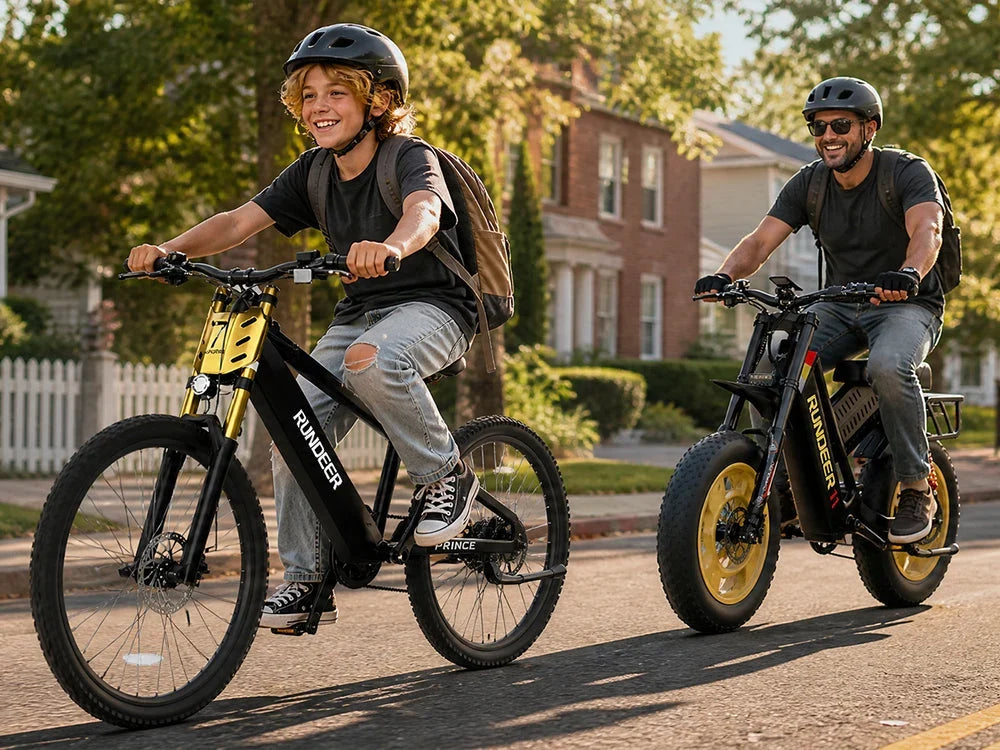
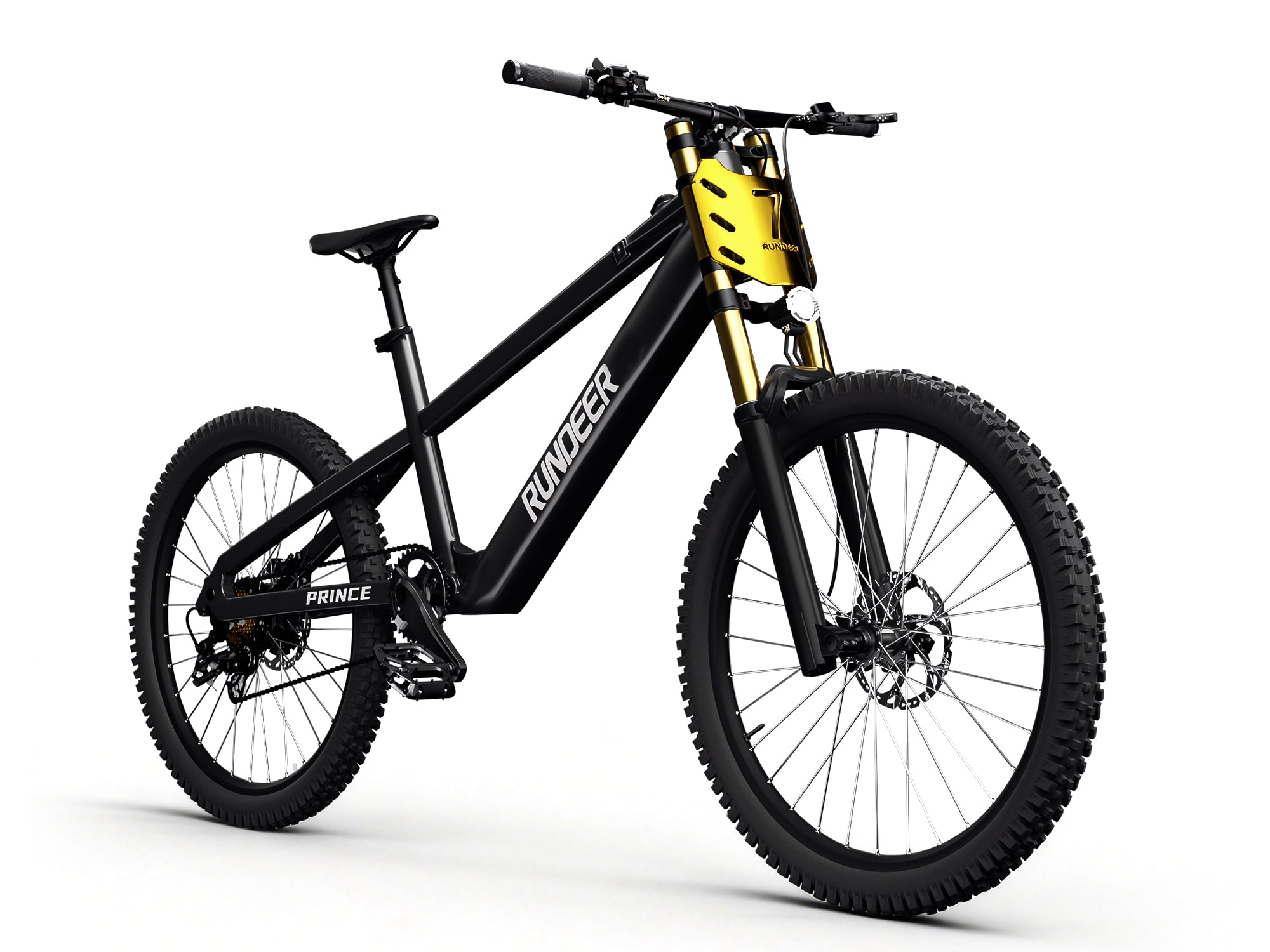
The RUNDEER Prince series, designed for riders aged 6–13, carries UL 2849 certification, providing parents with third-party assurance that the electrical system has undergone rigorous safety testing. The bike's 36V 10Ah battery, paired with its original matched charger, is engineered to operate as a coordinated system — which is precisely what safety experts recommend.
Beyond certification, other safety features parents should prioritize include:
- Pedal-assist only (no throttle): Throttle-equipped e-bikes can accelerate unexpectedly, posing risks for young riders. Pedal-assist models require active pedaling, which gives children more control and keeps them engaged with the riding experience.
- Multiple speed modes with age-appropriate limits: Look for bikes that offer graduated speed settings. A three-mode system — Green (≤10 mph), Yellow (≤16 mph), and Red (≤20 mph) — lets parents match speed to their child's skill level and gradually increase it as proficiency grows.
- Reasonable weight: A lighter bike is easier for a child to control and maneuver. At approximately 35 pounds (16 kg), a well-designed kids' e-bike should be manageable for the intended age range.
- Quality drivetrain components: Reliable shifting, such as a 7-speed Shimano system, reduces mechanical failures that could distract a young rider and lead to accidents.
Battery Maintenance Best Practices for Long-Term Safety
Proper maintenance extends both battery life and safety. Here is a practical maintenance checklist for parents:
Monthly Checks
- Inspect the battery casing for any signs of damage, swelling, or discoloration
- Clean charging contacts with a dry cloth to ensure good electrical connection
- Verify that the charger indicator lights are functioning correctly
- Check that the battery securely locks into the bike frame without excessive play
Seasonal Care
- In winter, store batteries indoors at room temperature — cold temperatures reduce capacity and can damage cells
- Before long storage periods (such as the winter off-season), charge the battery to approximately 50%
- Avoid leaving the battery on the bike in direct sunlight for extended periods
- Have the battery professionally inspected if it has been involved in a crash or significant impact, even if no external damage is visible
Charging Do's and Don'ts at a Glance
| Do | Don't |
|---|---|
| Use only the original charger | Use third-party or universal chargers |
| Charge in a well-ventilated area | Charge under a bed or in a closet |
| Supervise charging at all times | Charge while sleeping or away from home |
| Charge at 20–30% battery level | Wait for a complete discharge |
| Store at ~50% for long periods | Store fully charged or fully depleted |
| Inspect before each charge | Ignore warning signs like heat or odor |
Frequently Asked Questions
- Are kids e-bike batteries safe?
- Yes, kids e-bike batteries can be safe when they are certified to standards like UL 2849, used with the original charger, and charged according to manufacturer guidelines. The key is choosing a certified product and following proper charging and storage practices. The CPSC's 2026 proposal to make UL 2849 mandatory under 16 CFR 1265 reflects the importance of certification in ensuring battery safety.
- Can I charge my child's e-bike overnight?
- No. Both the AAP and OSF HealthCare strongly advise against charging e-bike batteries while sleeping or when no one is home. Charging should always be supervised so that any warning signs — such as smoke smell, excessive heat, or a tripped circuit breaker — can be addressed immediately. Charge during waking hours and unplug once charging is complete.
- What should I do if the e-bike battery feels hot during charging?
- Immediately unplug the charger and move the e-bike to a safe, open area away from combustible materials. Do not attempt to use the battery again. Contact the manufacturer for guidance and, if necessary, arrange for a professional inspection or replacement. Overheating is a serious warning sign that should never be ignored.
- Is it safe to use a third-party charger for my child's e-bike?
- No. Using a third-party or universal charger is one of the leading causes of e-bike battery fires. The original charger is specifically matched to the battery's voltage, current, and safety communication protocol. If your original charger is lost or damaged, contact the manufacturer directly for an exact replacement.
- What is UL 2849 certification and why does it matter for kids' e-bikes?
- UL 2849 is a safety standard that evaluates the entire electrical system of an e-bike — including the battery, charger, motor controller, and wiring — as an integrated unit. It tests for overcharge protection, short-circuit safety, thermal management, and mechanical durability. The CPSC proposed in June 2026 to make UL 2849 a mandatory federal standard under 16 CFR 1265, underscoring its critical role in preventing battery fires and ensuring consumer safety.
- How can I extend the life of my child's e-bike battery while keeping it safe?
- Charge the battery when it reaches 20–30% capacity rather than waiting for a full discharge. For daily use, charge to 80–90% instead of 100% to reduce cell stress. Always use the original charger in a well-ventilated area. Store the battery at approximately 50% charge in a cool, dry place during extended periods of non-use. Perform monthly visual inspections and have the battery professionally checked after any crash or impact.
Conclusion
As the U.S. e-bike market surges past $4 billion in 2026, battery safety has never been more relevant for families. The warnings from OSF HealthCare and the AAP, the CPSC's push for mandatory UL 2849 certification, California's enforcement against non-compliant e-bikes, and Illinois's upcoming age and speed regulations all point to the same conclusion: parents must take an active role in understanding and managing their child's e-bike battery.
By choosing a certified e-bike, using only the original charger, following proper charging and storage practices, and staying alert to warning signs, parents can dramatically reduce the risk of battery-related incidents. The technology is safe when used correctly — and that safety starts with informed, proactive parenting.