
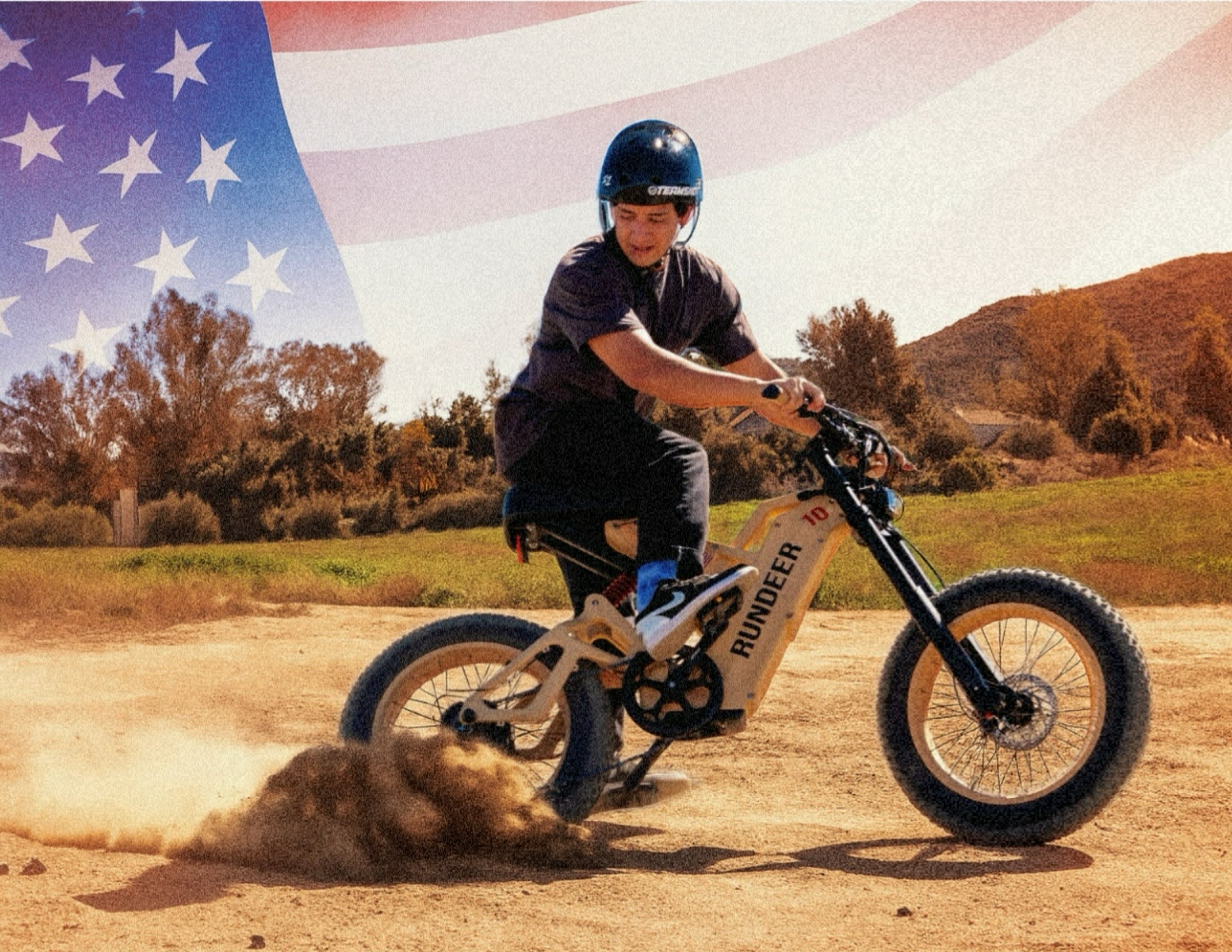

How to Choose Your Kid's First Electric Bike: A Complete Parent's Guide
Choosing the first electric bike for kids is one of the most important gear decisions a parent can make. Whether you're researching a kids ebike buying guide or wondering how to choose kids ebike models that balance fun with safety, this guide walks you through every factor — from age-appropriate sizing and speed control to battery certifications and brake systems — so you can make an informed decision when buying first ebike child riders will love and parents will trust.
Key Takeaways
- Age and height matter most: Match the bike to your child's physical development, not just their enthusiasm.
- Speed control is non-negotiable: Look for bikes with adjustable speed modes that grow with your child's confidence.
- Certifications protect your child: UL 2849 certification ensures the electrical system meets rigorous safety standards.
- Weight affects control: A lighter bike is easier for kids to handle, especially when the battery runs out.
- Pedal-assist builds skills: Bikes without a throttle encourage proper cycling habits from day one.
Why Choosing the First Electric Bike for Kids Matters
When it comes to the first electric bike for kids, the stakes are higher than choosing a regular bicycle. An ebike introduces motorized power into the equation, which means parents need to think about speed management, electrical safety, and skill development simultaneously.
Safety Comes First
The U.S. Consumer Product Safety Commission (CPSC) has noted a rise in ebike-related injuries among children in recent years, prompting increased scrutiny of the kids' electric bike market. According to the American Academy of Pediatrics (AAP), children's cognitive and motor skills are still developing through adolescence, making them more vulnerable to misjudging speed, stopping distance, and road hazards. This is precisely why choosing the right first electric bike for kids — one with built-in safety features like speed governors and pedal-assist-only operation — is critical rather than optional.
Building Lifelong Cycling Skills
A well-chosen ebike does more than get your child from point A to point B. It teaches balance, traffic awareness, and responsible riding habits that last a lifetime. Bikes that rely on pedal-assist rather than a hand throttle encourage kids to pedal actively, building cardiovascular fitness and muscle memory that transfer seamlessly to traditional cycling. When a child learns to ride an ebike that responds to their pedaling effort, they develop an intuitive sense of how power, momentum, and braking interact — skills that make them safer riders on any bicycle.
Growing With Your Child
The best kids ebikes are designed to adapt. Adjustable speed settings, a wide age range suitability, and a sturdy build mean a single bike can serve your child through multiple growth spurts — delivering significantly better long-term value than a bike they outgrow in a single season. This adaptability is what separates a thoughtfully designed kids ebike from a cheap novelty.
How to Choose Kids Ebike by Age and Height
Understanding how to choose kids ebike models starts with matching the bike's specifications to your child's age and height. Getting this right is the foundation of every other safety decision.
Age-Based Recommendations
| Age Range | Recommended Wheel Size | Key Considerations |
|---|---|---|
| 6–8 years | 16"–20" | Focus on low speeds, lightweight frames, and easy reach to brake levers |
| 9–11 years | 20" | Can handle more power with proper speed controls; introduce longer rides |
| 12–13 years | 20"–24" | Ready for higher speeds and longer range; reinforce traffic safety education |
Height-Based Sizing
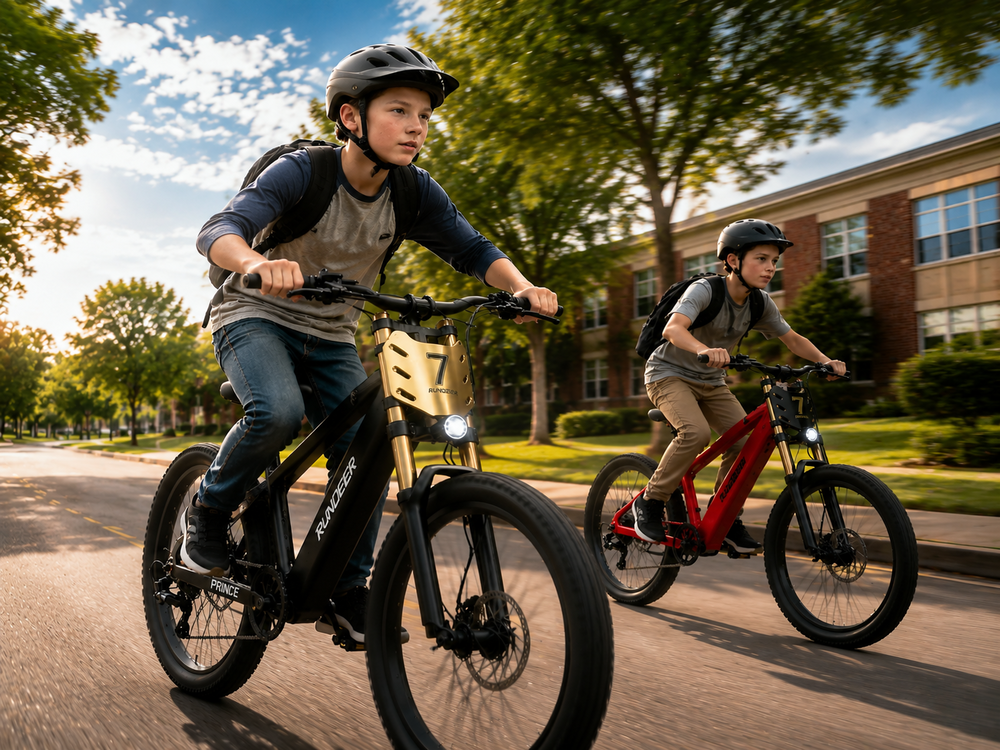
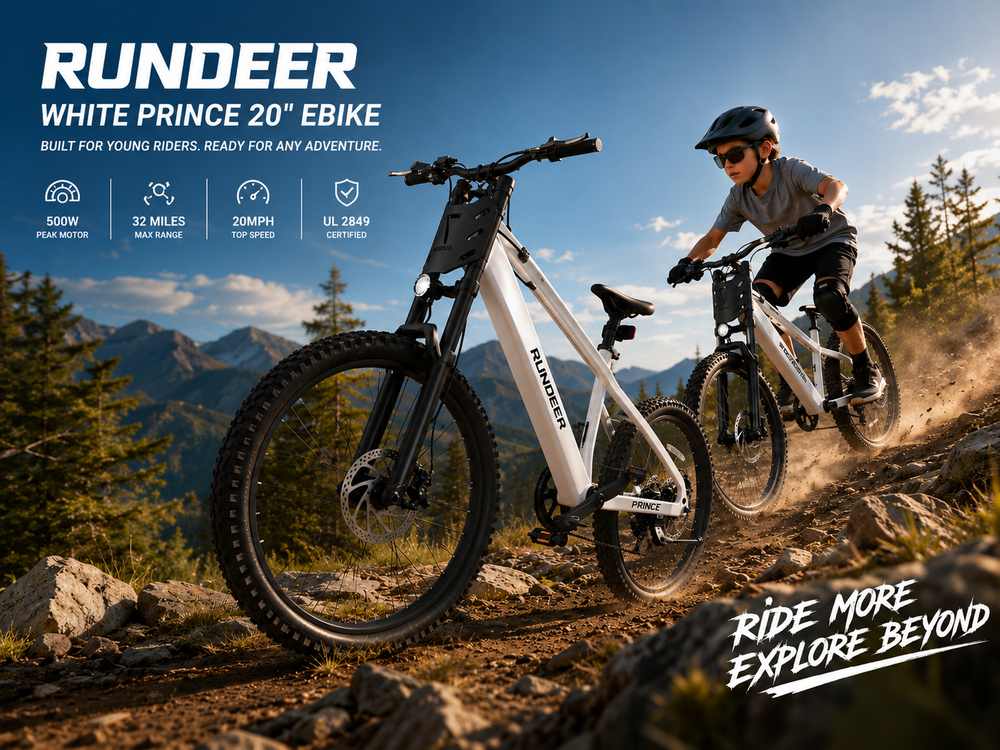
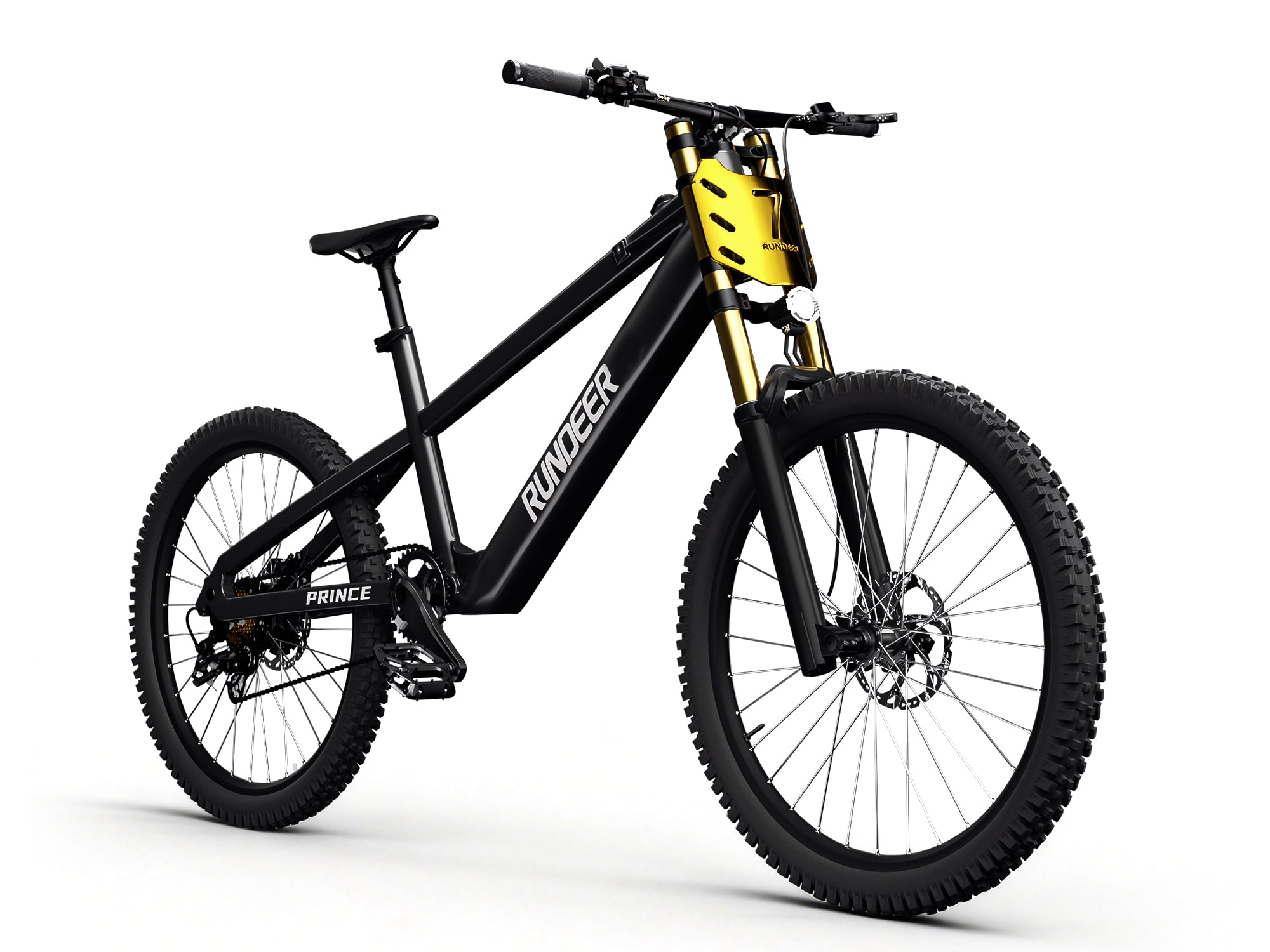
Your child's inseam and overall height determine whether they can safely mount, dismount, and control the bike at stops. For reference, the RUNDEER Prince is designed for children aged 6–13 years with a height range of 4'3" to 5'7" (130–170cm), making it one of the most age-versatile options in the kids' ebike category.
A properly fitted bike allows your child to place both feet flat on the ground when stopped — a critical safety consideration for young riders who may need to catch themselves quickly. If your child is on the lower end of the height range, look for bikes with adjustable seat posts and low stand-over heights.
Kids Ebike Buying Guide: Key Dimensions to Compare
This kids ebike buying guide section breaks down the five most important dimensions parents should evaluate. We've structured a comprehensive comparison table so you can assess any model — including the Prince — against industry benchmarks.
Comparison Table: Key Ebike Specifications
| Dimension | Why It Matters | Industry Typical | Prince |
|---|---|---|---|
| Weight | Lighter bikes are easier to control and safer when battery depletes | 40–55 lbs | 35 lbs / 16 kg |
| Max Speed | Must be age-appropriate; too fast = danger | 15–20 MPH | 20 MPH (32 km/h) |
| Speed Control | Allows parents to limit speed as kids learn | Often single-speed or 2 modes | 3 modes: Green ≤10 MPH, Yellow ≤16 MPH, Red ≤20 MPH |
| Throttle Type | Pedal-assist builds cycling skills; throttle can be unsafe for beginners | Mixed (throttle + assist) | Pedal-assist only (no throttle) |
| Motor Power | Sufficient power for hills without overwhelming new riders | 250W typical | 250W rated / 500W peak |
| Torque | Higher torque = smoother starts and better hill climbing | 30–45 N·m | 40 N·m |
| Battery | Capacity determines range and ride duration | 36V 7–10Ah | 36V 10Ah |
| Max Range | Longer range means fewer mid-ride stops | 20–30 miles | 32 miles / 50 km |
| Charge Time | Shorter charging = more riding time | 4–6 hours | 5 hours |
| Max Load | Must accommodate growing kids safely | 200–220 lbs | 240 lbs / 108 kg |
| Tires | Wider tires = better grip and stability | 20×1.75"–2.125" | 20×2.0" |
| Drivetrain | More gears = versatility across terrains | 6–7 speed | 7-speed (Shimano) |
| Certification | Electrical safety standard | Varies widely | UL 2849 (TÜV-certified) |
| Price | Value for safety and features | $500–$800 | $599.99 (White/Pink/Red), $699.99 (Black) |
Weight: Lighter Is Safer
At 35 pounds (16 kg), a lighter ebike gives your child better handling and maneuverability on every ride. This matters enormously when the battery is depleted and the bike effectively becomes a standard bicycle — a heavy ebike without power assist is difficult for a child to pedal uphill, accelerate from stops, or carry if needed. Lighter weight also reduces the risk of injury if the bike tips over or the child loses balance.
Speed Control: The Most Overlooked Feature
Many parents focus on top speed but overlook how that speed is managed. A bike that can hit 20 MPH but offers no speed limitation is dangerous for a 6-year-old who's still learning to balance. Look for bikes with at least two speed modes, ideally three, so you can match the bike's capabilities to your child's developing skills. The color-coded three-tier system — with distinct Green, Yellow, and Red modes — lets parents start their child at a walking-pace speed and gradually unlock higher speeds as confidence and competence grow.
Brakes: Stopping Power Saves Lives
Disc brakes are the gold standard for kids' ebikes. Hydraulic disc brakes offer the best modulation and stopping power, but mechanical disc brakes are also effective and easier for parents to maintain at home. Ensure the brake levers are sized for smaller hands and that your child can comfortably reach and fully squeeze them without straining. Test this before every ride — if your child struggles to engage the brakes, the bike is not yet safe for them to ride.
Certification: UL 2849 Explained
UL 2849 is the comprehensive safety standard for the entire electrical system of an ebike — covering the battery, motor, charger, and wiring harness as an integrated system. It's administered by Underwriters Laboratories and verified by independent testing organizations like TÜV. This certification is not optional in a well-designed kids' ebike; it's the baseline.
When a bike carries UL 2849 certification (especially when TÜV-certified), it means the battery has passed thermal runaway testing, the electrical system won't overheat during charging or operation, short-circuit protection is built in, and the charger meets fire safety standards. The Consumer Product Safety Commission has increasingly urged consumers to only purchase ebikes with certified electrical systems, making this a top-tier safety criterion for any parent.
Range: How Far Is Far Enough?
For most kids, a typical ride lasts 30–60 minutes. A range of 20+ miles is more than sufficient for neighborhood rides, trips to school, or weekend trail adventures. The Prince's 32-mile range provides a comfortable buffer, meaning your child won't be stranded far from home if they use more power than expected on hills or headwinds. Remember that real-world range varies with rider weight, terrain, assist level, and temperature — always plan for 60–70% of the advertised range in real conditions.
Why Speed Control Matters When Buying First Ebike Child Riders Will Use
When buying first ebike child riders will depend on daily, speed control should be at the top of your checklist — above motor power, above range, above aesthetics. Here's why this feature deserves special attention.
The Three-Speed System Explained
The Prince features a color-coded three-speed control system that's intuitive for both parents and children:
- Green Mode (≤10 MPH): Perfect for absolute beginners. At this speed, a child can develop basic balance, steering, and braking skills without being overwhelmed. It's comparable to a brisk jog, giving parents time to walk or jog alongside and provide real-time guidance. Start here for the first several rides, especially in areas with pedestrians or other cyclists.
- Yellow Mode (≤16 MPH): Once your child demonstrates consistent control, safe braking habits, and basic traffic awareness, Yellow mode unlocks more freedom and range. This speed is similar to an average adult cyclist's cruising pace, making it appropriate for bike paths and quiet neighborhood streets.
- Red Mode (≤20 MPH): Reserved for experienced, confident riders in open, safe environments. At 20 MPH, the bike reaches its maximum assisted speed — comparable to a fast adult recreational cyclist. Only unlock this mode when your child has logged significant riding hours and consistently demonstrates sound judgment.
Why No Throttle Is Actually Better
The pedal-assist-only design means the motor provides power only when the child is actively pedaling. This has several developmental and safety benefits:
- Skill development: Kids learn to pedal properly rather than relying on motor power to do the work
- Physical fitness: Pedaling keeps them active and engaged, supporting cardiovascular health
- Speed management: Without a throttle, there's no temptation to gun it impulsively in traffic or crowded areas
- Regulatory compliance: Many jurisdictions classify pedal-assist-only ebikes more favorably than throttle-equipped models, often allowing them on bike paths where throttle ebikes are restricted
The American Academy of Pediatrics emphasizes that children ages 6 and older need at least 60 minutes of daily physical activity, and a pedal-assist ebike supports this goal while adding the fun factor that keeps kids coming back for more.
What UL 2849 Certification Means for Your Child's Safety
Understanding how to choose kids ebike models means understanding what keeps them safe. Certification is one of the most critical — and most frequently overlooked — factors in that decision. Here's a deep dive into what UL 2849 actually means and why it matters specifically for children.
The Standard
UL 2849 is the Standard for Safety of Electrical Systems for Personal e-Mobility Devices. It evaluates the entire electrical system as a whole, not just individual components in isolation. This holistic approach is essential because interactions between the battery, charger, and motor can create risks that aren't visible when testing parts separately. A battery might pass individual cell testing but fail when integrated with a poorly designed charger — UL 2849 catches these systemic vulnerabilities.
What Gets Tested
- Battery cells and pack: Thermal stability, overcharge protection, short-circuit resistance, and vibration endurance
- Motor controller: Prevents overheating, manages power delivery, and includes fault detection
- Charger: Fire safety compliance, overcurrent protection, thermal cutoff, and connector integrity
- Wiring and connectors: Insulation integrity, water resistance, and strain relief at connection points
- System integration: How all components interact under various load conditions, temperatures, and charge states
Why TÜV Certification Adds Confidence
TÜV is an independent, internationally recognized testing and certification organization with a reputation for technical rigor. When a product is TÜV-certified to UL 2849, it means the testing was performed by a neutral third party — not the manufacturer's own laboratory. This provides an extra layer of assurance that the certification is legitimate, the testing was thorough, and the results can be trusted.
The Consumer Product Safety Commission has specifically highlighted the importance of third-party testing for ebike electrical systems. The CPSC has noted that uncertified batteries and chargers have been linked to fires, thermal events, and injuries — risks that are simply unacceptable when the user is a child. For parents, insisting on TÜV-certified UL 2849 compliance is one of the most concrete steps you can take to protect your child from electrical hazards.
FAQ: Common Questions About Kids Ebikes
- Q: How do I choose an electric bike for my child?
- A: Start with age and height matching — ensure the bike fits so your child can place both feet flat on the ground when stopped. Then evaluate five key dimensions: weight (lighter is better for control), speed control (look for adjustable speed modes), braking system (disc brakes preferred), certification (UL 2849 minimum), and battery range. A bike like the Prince, designed for ages 6–13 with a 35-pound frame, three-speed control system, and UL 2849 certification, covers all these essential bases in a single package.
- Q: What should I look for in a kids ebike?
- A: Prioritize safety features over flashy specifications. Key things to look for include: (1) adjustable speed modes that let you limit speed for beginners, (2) pedal-assist rather than throttle operation, (3) UL 2849 electrical certification, (4) a lightweight frame under 40 pounds, (5) disc brakes sized for small hands, and (6) an appropriate weight capacity of at least 200 pounds for longevity. Also check for a Shimano or comparable drivetrain for reliable gear shifting across varied terrain.
- Q: Best first electric bike for kids?
- A: The best first electric bike for kids depends on your child's age and size, but key benchmarks include: a weight under 40 lbs, speed control with at least two modes, pedal-assist-only operation, UL 2849 certification, and a price point that reflects genuine safety engineering rather than marketing hype. Bikes meeting these criteria — like the Prince with its 250W motor, three-speed system, 32-mile range, and TÜV-certified UL 2849 compliance — represent the current sweet spot of safety, performance, and value in the kids' ebike market.
- Q: What age is appropriate for a kids ebike?
- A: Most experts agree that children as young as 6 can safely ride an electric bike — provided the bike is properly sized and speed-controlled. The American Academy of Pediatrics recommends that children under 12 should be supervised when riding, and speed should be limited for beginners. A bike with a Green mode capped at 10 MPH is appropriate for a 6-year-old, with higher modes unlocked as the child demonstrates maturity, skill, and sound judgment over time.
- Q: How fast should a kids ebike go?
- A: For beginners, speeds should be capped at 10–12 MPH. As children develop confidence and skill, speeds of up to 16 MPH are reasonable for intermediate riders (ages 9–11), and up to 20 MPH for experienced older riders (ages 12–13). The key is that speed should be adjustable and controlled by parents, not just available at maximum from day one. A three-tier speed system like the Prince's Green/Yellow/Red modes is ideal for this progressive approach to skill development.
- Q: Are electric bikes safe for kids?
- A: Electric bikes can be safe for children when the right precautions are taken. According to the CPSC, the most important safety factors are: (1) a certified electrical system (UL 2849), (2) speed controls appropriate for the child's age, (3) proper protective gear including a CPSC-certified helmet, (4) active parental supervision, and (5) rider education covering traffic rules and emergency procedures. Pedal-assist-only bikes are generally considered safer than throttle-equipped models because they require active riding and naturally limit impulsive acceleration.
Conclusion
Choosing the first electric bike for kids doesn't have to be overwhelming. By focusing on the fundamentals — proper sizing, speed control, certification, weight, and braking — you can find a bike that's both genuinely safe and genuinely fun for your child.
The most important takeaway from this kids ebike buying guide is that safety features should drive your decision, not top speed or motor wattage. A bike with adjustable speed modes, pedal-assist-only operation, and UL 2849 certification (ideally TÜV-verified) will give you peace of mind while giving your child the freedom, confidence, and joy of riding.
When you're ready to make a purchase, use the comparison table above as your checklist. Whether you choose the RUNDEER Prince or another model, make sure it meets these benchmarks — because when it comes to buying first ebike child safety comes first, always.