


Kids E-Bike Laws by State in 2026: Age Limits, Helmet Rules, and New Regulations
The landscape of kids ebike laws is shifting rapidly across the United States in 2026. With e-bike injuries among children soaring and several states enacting sweeping new legislation, parents face a patchwork of age requirements, helmet mandates, and classification rules that can be difficult to navigate. Whether you are wondering "can kids ride ebike" legally in your state or trying to understand the latest state ebike regulations 2026, this comprehensive guide breaks down everything you need to know — from the ebike age limit in your jurisdiction to the federal safety standards on the horizon.
Understanding E-Bike Classifications and Why They Matter for Kids
Before diving into state-specific laws, it is essential to understand the three-class e-bike system that most U.S. states have adopted. This framework, originally developed by PeopleForBikes and modeled on California's AB 1096, categorizes electric bicycles based on how the motor engages and the maximum assisted speed.
- Class 1: Pedal-assist only, motor stops assisting at 20 mph
- Class 2: Throttle-assisted, motor can propel the bike without pedaling, limited to 20 mph
- Class 3: Pedal-assist only, motor stops assisting at 28 mph; most states require riders to be at least 16 years old
The classification of your child's e-bike directly determines whether it is legal for them to ride, where they can ride it, and what safety gear is required. As we will see, several states are now moving beyond this three-class system entirely, creating new categories that could reshape kids ebike legal standards across the country.
 Can Kids Ride E-Bikes? Age Limits by State in 2026
One of the most common questions parents ask is: can kids ride ebike in their state? The answer depends heavily on where you live. The ebike age limit varies dramatically from state to state, and in some cases, from city to city within the same state.
Major State Age Requirements
Here is a breakdown of age limits in key states as of mid-2026:
| State | Class 1/2 Minimum Age | Class 3 Minimum Age | Helmet Requirement |
|---|---|---|---|
| California | No statewide minimum (local bans under 12 in some cities) | 16 | Under 18 (all classes) |
| New York | 16 (strictly enforced, all classes) | 16 | All minors |
| Texas | No minimum age | 15 | Under 18 |
| Florida | No minimum age | 16 | Under 16 |
| Washington | No statewide minimum (new e-moto rules apply) | 16 | Under 18 |
| New Jersey | 15 (all e-bikes, new law) | 15 (with special license) | All riders |
Sources: California Vehicle Code §312.5, §21213; New York Vehicle & Traffic Law §1239; Texas Transportation Code §551.107; Florida Statutes §316.20655; Washington RCW 46.04.169; New Jersey N.J.S.A. 39:1-1. Age data also compiled from Anycom Bike (June 8, 2026) and Philodo Bikes (May 15, 2026).
California: Local Cities Lead the Charge
While California sets no statewide minimum age for Class 1 and Class 2 e-bikes, the situation on the ground is more restrictive. Under a 2024 state law, cities in San Diego County gained the authority to set their own minimum ages. Carlsbad, Chula Vista, Coronado, La Mesa, Poway, San Marcos, and Santee have all banned children under 12 from riding e-bikes. San Diego joined this list in mid-2026, with the city council voting unanimously to prohibit riders 11 and younger. For Class 3 e-bikes, California requires riders to be at least 16 years old under CVC §21213.
New York: Strict Enforcement at 16
New York takes a harder line. The state requires all e-bike riders to be at least 16 years old, and this rule is strictly enforced. Riders under 18 must wear helmets regardless of e-bike class, according to New York Vehicle & Traffic Law §1239.
Texas: The Most Permissive Major State
Texas has no minimum age requirement for Class 1 and Class 2 e-bikes. For Class 3, the minimum age is 15 — lower than the 16-year threshold adopted by most other states under the PeopleForBikes model bill, as noted in Texas Transportation Code §551.107(c).
Florida: Class 3 Requires 16+
Florida sets no minimum age for Class 1 and Class 2 e-bikes but requires riders to be at least 16 for Class 3. Helmets are mandatory for riders under 16 under Florida Statutes §316.20655.
 New State E-Bike Regulations Taking Effect in 2026
The 2026 legislative session has produced some of the most significant changes to state ebike regulations 2026 in years. Three states in particular have enacted sweeping reforms that parents need to understand.
Washington State: New Law Redefines E-Bikes vs. Electric Motorcycles
Effective June 11, 2026, Washington's Senate Bill 6110 drew a sharp line between e-bikes and electric motorcycles. Under the new law, any vehicle capable of exceeding 20 mph on motor power alone is classified as an "electric motorcycle" rather than an electric-assisted bicycle. Electric motorcycles require a valid driver's license, vehicle registration, insurance, and a motorcycle endorsement.
The law also clarifies that youth under 16 may not ride Class 3 e-bikes or any electric motorcycles. The Clark County Sheriff's Office warned that parents and guardians may be held responsible if a child unlawfully operates an electric motorcycle. According to KIRO7 News (June 9, 2026), communities across Washington reported increasing incidents of young riders operating high-powered electric vehicles on streets, sidewalks, and trails at dangerous speeds.
Importantly, the new law preserves Washington's three-class system for genuine e-bikes. Class 1 and Class 2 e-bikes that cannot exceed 20 mph under motor power alone remain regulated as bicycles, not motorcycles. The distinction targets devices marketed as e-bikes but capable of motorcycle-level performance.
California: Amazon Halts Sales of Over-Speed E-Bikes
On May 11, 2026, Amazon confirmed it would stop selling e-bikes in California that exceed state speed limits, according to CBS News. The decision followed a consumer alert from California Attorney General Rob Bonta, who warned that vehicles exceeding 28 mph with pedal assist or 20 mph on throttle alone are legally mopeds or e-motorcycles — not e-bikes.
"Sometimes, what looks like an e-bike or is marketed as an e-bike is not a bike at all," Bonta stated. "We are seeing a surge of safety incidents on our sidewalks, parks, and streets."
The enforcement action came after several deadly crashes in Southern California and a 430% spike in e-bike injuries over four years. Parents shopping for kids ebike legal options should be aware that marketplace listings may not always reflect the true classification of a product. California's three-class system, established under AB 1096, sets clear boundaries: Class 1 and 2 cap at 20 mph, Class 3 caps at 28 mph, and anything faster falls into moped or motorcycle territory with licensing, registration, insurance, and age requirements.
New Jersey: Abandoning the Three-Class System
New Jersey has enacted what many observers call the most restrictive e-bike law in the country. Effective January 19, 2026, the state abolished the standard three-class system used by 46 other states. Under the new framework, as documented by Philodo Bikes (May 15, 2026):
- Low-speed electric bicycles (pedal-assist only, up to 20 mph): Riders must be at least 15 years old and registered with the NJ Motor Vehicle Commission. No insurance required.
- Motorized bicycles (any e-bike with a throttle or pedal assist up to 28 mph): Treated as mopeds, requiring registration, a special license, and liability insurance.
- Electric motorized bicycles (over 750W or over 28 mph): Classified as motorcycles, requiring full motorcycle licensing and registration.
No one under 15 may operate any e-bike in New Jersey. Riders aged 15–16 must obtain a special motorized bicycle license through the MVC, which involves a knowledge test, vision test, 45-day practice period, and road test. All riders must wear helmets with no exceptions, and all e-bikes must be registered. The grace period for compliance closed in July 2026, after which law enforcement can issue citations.
CPSC Proposes First Federal E-Bike Safety Standard
On June 24, 2026, the U.S. Consumer Product Safety Commission (CPSC) published a Notice of Proposed Rulemaking in the Federal Register that would establish the first mandatory federal safety standard for lithium-ion batteries used in micromobility products, including e-bikes. The proposed rule (16 CFR 1265) would make compliance with UL safety standards mandatory rather than voluntary.
The proposed rule incorporates UL 2849 (e-bike electrical systems), UL 2272 (personal e-mobility devices), and UL 2271 (replaceable battery packs) by reference, but adds several critical modifications that go beyond the current voluntary standards:
- Tamper-resistant battery enclosures to prevent consumers from accessing battery cells, adopted from UL 2272 into UL 2849
- Enhanced BMS (Battery Management System) testing to prevent charging overheated batteries
- Reverse-polarity protection to reduce risks from incompatible chargers
- Expanded warning labels covering unsafe charging practices and homemade battery packs
According to Electrek (June 29, 2026), the CPSC determined that existing voluntary UL standards were insufficient to address all identified battery-related hazards, noting that manufacturers had not achieved substantial compliance on their own. The proposed rule would also extend to e-bike conversion kits, aftermarket chargers, and replacement batteries — not just complete e-bikes.
The public comment period runs through August 24, 2026. If finalized, the rule could preempt certain state and local battery safety requirements, requiring both regulators and businesses to reassess existing compliance frameworks.
Helmet Rules for Young E-Bike Riders: What the Experts Say
Helmet laws for young e-bike riders vary by state, but medical experts are unanimous: every child should wear a helmet every time. Here is what the latest research and expert guidance reveal.
The Rady Children's Health Findings
Research from Rady Children's Hospital in San Diego has become a wake-up call for parents nationwide. According to data reported by KIRO7, the hospital's emergency department saw e-bike trauma cases surge from just 3 in 2021 to 262 in 2025, making e-bike injuries the leading cause of pediatric trauma visits — ahead of falls, car crashes, and pedestrian strikes.
The Rady Children's research team found that crashes above 20 mph produce significantly more severe head, neck, and internal injuries, with children being disproportionately affected. Matt Derkrikorian, director of the emergency department at Rady Children's Health, stated: "We see much more severe injuries, including fractures, internal organ damage, traumatic brain injury."
American Academy of Pediatrics Recommendations
The American Academy of Pediatrics (AAP) recommends that children under 16 should not operate motorized e-bikes at all. For younger children, the AAP advises that children aged 9–12 should not use any product reaching speeds above 10 mph, meaning they should not use e-bikes before age 12. For children aged 12–15 who are permitted to ride, parents should choose only Class 1 e-bikes with pedal-assist-only operation.
Helmet Standards: Why Standard Bike Helmets Are Not Enough
The CPSC's bicycle helmet standard was developed before e-bikes became common, when typical cycling speeds topped out at 10–15 mph. According to the Bicycle Helmet Safety Institute and Children's Hospital Colorado, standard bike helmets are designed to protect at maximum speeds of 12–15 mph. E-bikes routinely travel at 20 mph or faster, creating crash forces that exceed what standard helmets can absorb.
Children's Hospital Colorado reported that only 45% of children suffering significant e-bike trauma were wearing a helmet at the time of their crash. Experts recommend helmets certified to the Dutch NTA 8776 standard, which was specifically developed for e-bike speeds, or lightweight motorcycle helmets for Class 3 e-bikes capable of 28 mph. At minimum, every helmet should carry the CPSC certification label for bicycle helmets.
NFPA Battery Fire Safety Guidelines
The National Fire Protection Association (NFPA) has issued guidelines for e-bike battery safety, emphasizing the use of only manufacturer-approved chargers, avoiding charging overnight or in escape routes, and never modifying battery packs. The NFPA reports that lithium-ion battery fires in e-bikes and e-scooters can spread rapidly and produce toxic gases, making prevention critical for households with children.
Battery Safety and Certification: What Parents Should Look For
With the CPSC's proposed federal rule making UL certification mandatory, parents should prioritize e-bikes that already meet the UL 2849 standard for electrical system safety. This certification covers the complete electrical system — including the battery, charger, and motor controller — and represents the current gold standard for e-bike safety.
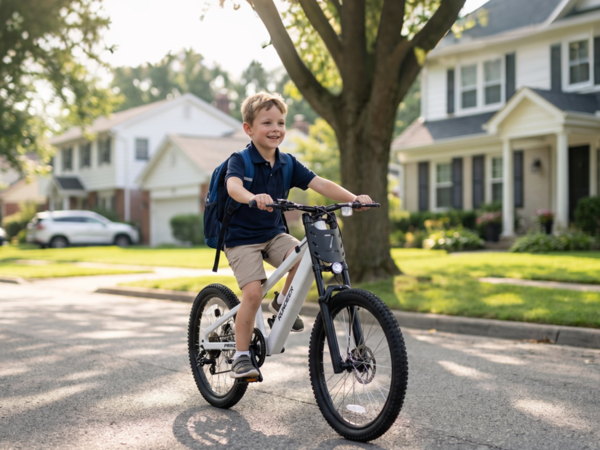
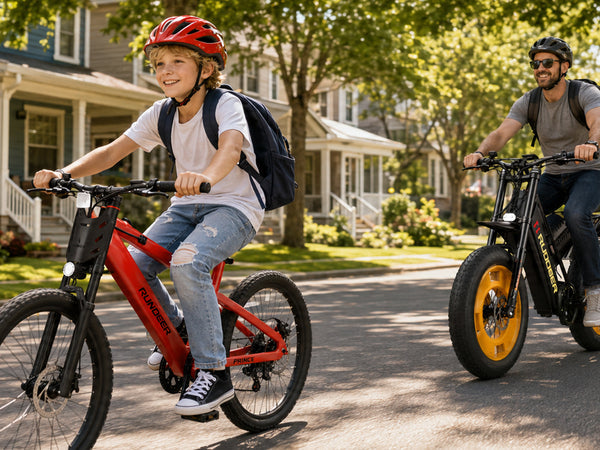
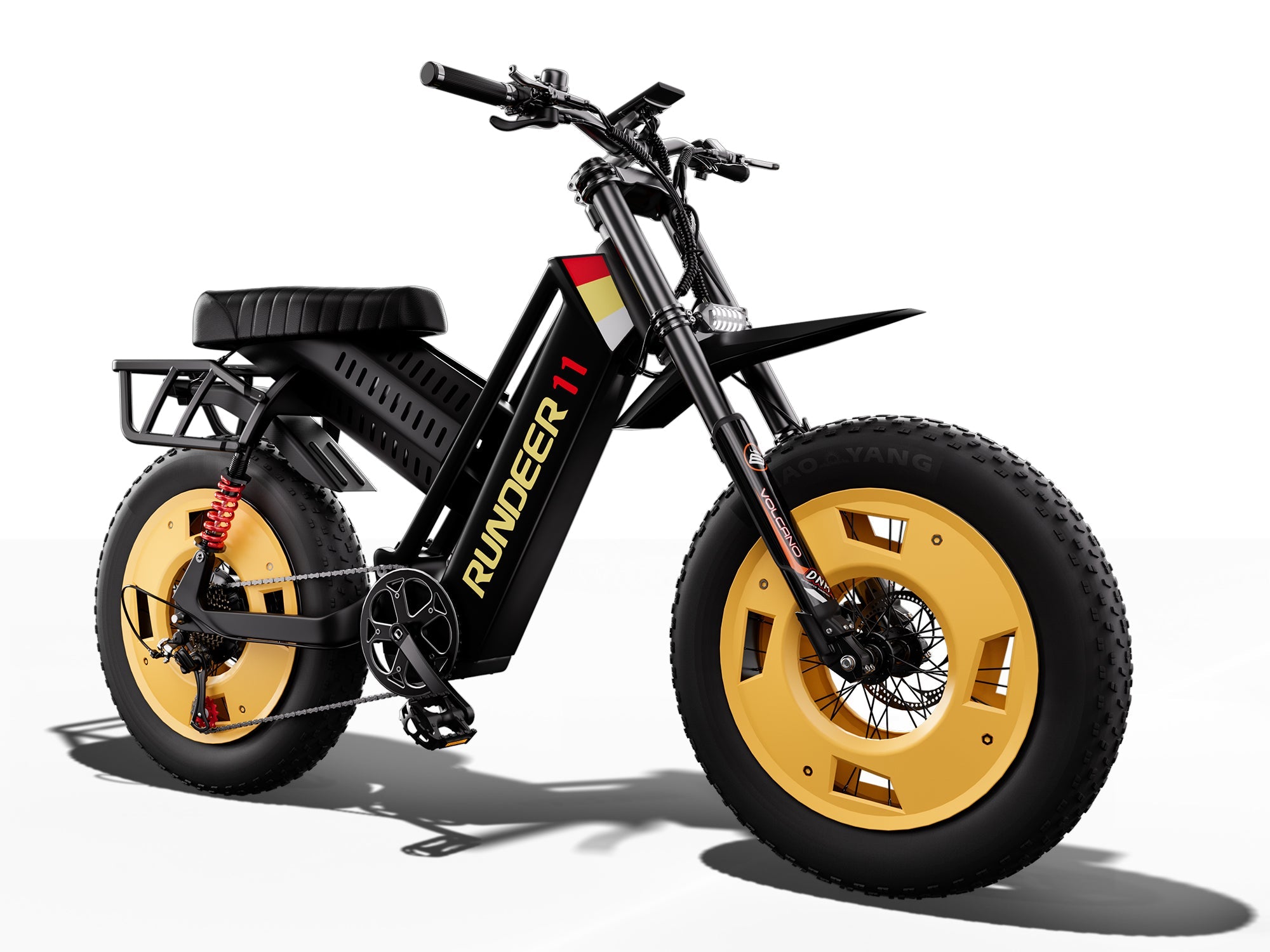
The RUNDEER Prince series, designed for riders aged 6–13, carries TÜV-certified UL 2849 compliance, ensuring its 36V battery system meets rigorous electrical safety requirements ahead of potential federal mandates. With a 250W motor (500W peak) capped at 20 mph and pedal-assist-only operation, it aligns with Class 1 e-bike definitions in most states — making it a legally compliant choice for young riders.
How to Choose a Compliant E-Bike for Your Child
When shopping for a children's e-bike, compliance with state law should be your top priority. Here are the key factors to consider:
- Class classification: Choose a Class 1 (pedal-assist only, 20 mph cap) for maximum legal flexibility across states. Avoid throttle-equipped bikes in states like New Jersey where they trigger moped classification and additional licensing requirements.
- Speed limiting features: Look for e-bikes with adjustable speed modes. The Prince series offers three speed settings — Green (≤10 mph), Yellow (≤16 mph), and Red (≤20 mph) — allowing parents to match the bike's capabilities to their child's skill level and local laws.
- Weight and fit: A lightweight e-bike is easier for children to control. At just 35 pounds with 20×2.0" tires and a 7-speed Shimano drivetrain, a properly sized e-bike helps young riders maintain balance and confidence.
- UL certification: Prioritize e-bikes with UL 2849 certification to ensure battery safety, especially given the CPSC's proposed federal mandate that would make this standard mandatory.
- Pedal-assist only: Throttle-equipped e-bikes face increasing restrictions nationwide. A pedal-assist-only design keeps you compliant in the broadest range of jurisdictions, including New Jersey and Washington's new rules.
Frequently Asked Questions About Kids E-Bike Laws
- What is the minimum age to ride an e-bike in the United States?
- There is no single federal minimum age. The ebike age limit ranges from no minimum (Texas, for Class 1/2) to 16 years old (New York, all classes). New Jersey recently set 15 as the minimum for any e-bike, while several California cities ban riders under 12. Always check your state and local laws before allowing your child to ride.
- Can my child ride a Class 3 e-bike?
- In most states, Class 3 e-bikes require riders to be at least 16 years old. Texas is an exception, allowing Class 3 riders at 15. Given the AAP's recommendation that children under 16 should not operate motorized e-bikes, Class 1 e-bikes are the safer and more legally flexible choice for younger riders. Additionally, Washington's new law prohibits anyone under 16 from riding Class 3 e-bikes.
- Are helmets required for kids on e-bikes?
- Helmet requirements vary by state. California requires helmets for riders under 18 on all e-bike classes. New York requires helmets for all minors. Texas requires helmets for riders under 18. Florida requires them for riders under 16. New Jersey now requires helmets for all e-bike riders regardless of age. Medical experts strongly recommend e-bike-specific helmets (NTA 8776 certified) for all young riders, as standard bike helmets are not designed for e-bike speeds.
- What happens if my child rides an e-bike that is actually classified as an electric motorcycle?
- Under Washington's new law effective June 11, 2026, operating an electric motorcycle without proper licensing, registration, and insurance is illegal. Parents and guardians may be held responsible. In California, vehicles exceeding 28 mph pedal-assist or 20 mph throttle are legally mopeds or motorcycles. Always verify your e-bike's true classification before letting your child ride.
- Is UL 2849 certification mandatory for e-bikes?
- Currently, UL 2849 is a voluntary standard. However, the CPSC's proposed rule published June 24, 2026 would make it mandatory at the federal level, with additional requirements for tamper-resistant enclosures and enhanced BMS testing. The public comment period closes August 24, 2026. Parents should choose UL 2849-certified e-bikes now to stay ahead of the regulatory curve.
- Can kids ride e-bikes on sidewalks?
- Sidewalk rules vary widely. Many states prohibit Class 3 e-bikes on sidewalks, and some cities ban all e-bikes from sidewalks entirely. Electric motorcycles are universally prohibited from sidewalks and most pedestrian areas. Check your local ordinances, as cities increasingly set their own rules independent of state law.
 Conclusion
The regulatory landscape for kids' e-bikes is evolving faster than ever in 2026. From Washington's e-motorcycle reclassification to New Jersey's abandonment of the three-class system, from California's marketplace crackdown to the CPSC's proposed federal safety standard, parents face a complex web of kids ebike laws that demand careful attention.
The good news is that the trend toward regulation also brings greater clarity. By choosing a Class 1, pedal-assist e-bike with UL 2849 certification, adjustable speed limits, and proper helmet gear, parents can keep their children both legal and safe. As state ebike regulations 2026 continue to develop, staying informed is the best way to ensure your young rider enjoys the freedom of e-biking within the bounds of the law.