


When Is Your Child Ready for an E-Bike? A Parent's Readiness Guide
Every parent remembers the day their child first pedaled away on two wheels without training wheels. That moment of wobbly independence is thrilling — and a little terrifying. But when the bike in question is an e-bike capable of reaching 20 mph, the stakes change dramatically.
E-bike injuries among school-age children have become the leading cause of emergency room visits for this age group, according to the American Academy of Pediatrics (AAP). In the first half of 2026 alone, child e-bike injuries have already matched the entire total from 2025, with injury rates surging 150% year over year. The message from experts is clear: just because a child can ride a bicycle does not mean they are ready for an e-bike.
This guide walks you through a comprehensive ebike readiness checklist — covering maturity, physical ability, emotional regulation, and progressive training — so you can make an informed decision about whether your child is truly ready for an e-bike.
Age vs. Maturity: Why Knowing How to Ride Isn't Enough
The CPSC Age Recommendation
The U.S. Consumer Product Safety Commission (CPSC) advises that children ages 9–12 should not use products capable of exceeding 10 mph. This recommendation reflects a growing body of evidence that speed, combined with still-developing judgment, creates significant risk for young riders.
Yet age alone is an imperfect yardstick. A mature 10-year-old who consistently follows rules and demonstrates strong impulse control may be more ready than a 13-year-old who tends to act first and think later. The AAP explicitly cautions parents that riding ability does not equal readiness — a child may have the physical skills to pedal and balance but lack the cognitive maturity to manage the added speed, weight, and decision-making demands of an e-bike.
Eight Questions Every Parent Should Ask
Child safety experts recommend that parents evaluate their child against eight critical questions before allowing e-bike use:
- Can my child consistently make good decisions, even when excited or under pressure?
- Can my child resist the urge to show off or compete with peers?
- Does my child reliably follow rules — at home, at school, and on the road?
- Does my child wear a helmet every single time, without being reminded?
- Can my child stay focused and attentive for the entire duration of a ride?
- Does my child understand and respect traffic signs, signals, and right-of-way rules?
- Can my child judge the speed and distance of approaching vehicles accurately?
- Does my child remain calm and make reasonable choices in unexpected situations?
If you find yourself answering "sometimes" or "not yet" to more than two of these questions, your child likely needs more time and practice on a standard bicycle before transitioning to an e-bike. These questions are not about intelligence or athletic ability — they assess the executive function and emotional regulation that e-bike riding demands.
The Ebike Readiness Checklist: A Four-Domain Assessment
Physical Readiness
Physical readiness goes beyond height and weight. An e-bike is heavier than a standard bicycle, and that weight affects handling, balance, and the ability to stop safely. Consider whether your child can:
- Mount and dismount confidently without wobbling or losing balance
- Control and stop a heavier bike — e-bikes typically weigh 30–50 lbs, significantly more than a standard child's bike
- Maintain proper posture and grip for the duration of a ride
- Reach the ground comfortably when seated, allowing for quick stabilization at stops
- Sustain physical effort — even on pedal-assist e-bikes, the rider must actively pedal, which requires leg strength and cardiovascular stamina
A child who struggles to control a standard bicycle on hills or in windy conditions is not physically ready for the additional demands of an e-bike. Remember that an e-bike's added weight — often 30 to 50 lbs — means that a child who can handle a 20-lb pedal bike may find the same maneuvers significantly more challenging. The bike's momentum at speed also increases stopping distance, so physical strength in the hands and arms matters just as much as leg power.
Skill Readiness
Before introducing motorized assistance, your child should have mastered fundamental cycling skills on a non-electric bike:
- Confident starting and stopping in various settings, including hills and intersections
- Smooth, controlled braking using both brakes simultaneously — not grabbing the front brake alone
- Turning and cornering with proper body positioning and speed control
- Hazard awareness — the ability to scan for pedestrians, vehicles, road debris, and other obstacles while riding
- Hand signals for turning and stopping, used automatically and without losing balance
- Riding in traffic-adjacent environments with supervision, demonstrating awareness of cars, driveways, and intersections
If your child still relies on instinct rather than deliberate skill in any of these areas, spend more time on a pedal bike before adding the complexity of motorized power.
Emotional Readiness
Emotional regulation may be the most overlooked dimension of e-bike readiness — and arguably the most critical. The AAP's 2026 warning that e-bike accidents have become the leading cause of ER visits for school-age children underscores what happens when speed outpaces judgment.
Ask yourself whether your child can:
- Resist peer pressure — will they refuse to race friends or attempt risky maneuvers to impress others?
- Maintain discipline — will they stick to agreed-upon speed limits and routes, even when unsupervised?
- Manage frustration — can they handle a close call or a difficult situation without panicking or retaliating?
- Accept correction — do they respond constructively when a parent or adult points out unsafe behavior?
Children who are impulsive, easily frustrated, or strongly influenced by peer behavior are at higher risk on an e-bike, where the consequences of poor judgment are amplified by speed. A momentary lapse in focus at 8 mph on a pedal bike might mean a scraped knee; the same lapse at 15 mph on an e-bike can mean a collision with a vehicle, a pedestrian, or a fixed obstacle. The margin for error shrinks dramatically as speed increases, which is why emotional readiness is not optional — it is foundational.
Environmental Readiness
Your child's readiness also depends on where and how they will ride:
- Will they ride on bike paths, neighborhood streets, or high-traffic roads?
- Are there safe, supervised practice areas nearby?
- Does the local environment have separated bike lanes or shared-use paths?
- Are there specific state or local e-bike laws that restrict where children can ride?
Understanding the legal landscape is essential. The Fairfax County Police Department (FCPD) notes that different classes of e-bikes — Class 1, Class 2, and Class 3 — carry different legal requirements and restrictions. Some jurisdictions prohibit younger riders from operating certain classes on public roads. Before purchasing, research your state and local regulations thoroughly.
The CPSC Data: Understanding the Real Risks
The CPSC's comprehensive reporting paints a stark picture of e-bike safety. Between 2017 and 2024, e-bikes were associated with an estimated 155,200 emergency department visits and 301 deaths. The two leading causes of these incidents were loss of control and collisions with motor vehicles.
For parents, this data translates into two clear takeaways:
- Speed management is critical. Most loss-of-control incidents occur at higher speeds where riders have less time to react and less margin for error.
- Traffic awareness saves lives. Collisions with motor vehicles are the deadliest category of e-bike incidents, meaning a child must be able to navigate around cars with sound judgment.
These statistics are not meant to frighten — they are meant to inform. The goal is not to prevent children from ever riding e-bikes, but to ensure they are genuinely prepared before they do.
A Progressive Training Plan: From Pedal Bike to E-Bike
If your child has passed the readiness assessment above, the next step is a structured, gradual training progression. Do not hand over an e-bike and let them figure it out. Instead, follow a phased approach:
Phase 1: Refresh Standard Bike Skills (1–2 Weeks)
Before introducing any motorized assistance, have your child spend one to two weeks riding their standard bicycle daily. Focus on:
- Braking drills — stopping quickly and safely from various speeds
- Obstacle courses — navigating around cones, debris, and tight turns
- Traffic simulation — practicing hand signals, scanning, and right-of-way decisions in a controlled environment
Phase 2: Introduce the E-Bike at Lowest Speed Setting (1–2 Weeks)
Once standard bike skills are sharp, introduce the e-bike with the speed limiter set to its lowest level. For reference, the CPSC recommends that children 9–12 not exceed 10 mph. An e-bike with a three-tier speed-limiting system — such as a green mode capped at 10 mph — allows parents to enforce this guideline directly.
During this phase:
- Practice in empty parking lots or quiet bike paths only
- Ride alongside your child to model safe behavior and provide real-time feedback
- Focus on how the added power changes braking distance and acceleration
- Require a helmet on every single ride — no exceptions
Phase 3: Supervised Road Practice (2–4 Weeks)
Gradually introduce riding in real-world conditions with close adult supervision:
- Start on low-traffic neighborhood streets
- Practice intersection navigation, including left turns across traffic
- Discuss specific scenarios: What would you do if a car pulls out? If a dog runs across the path? If another rider swerves?
- Gradually increase the speed setting only when your child demonstrates consistent, safe decision-making
Phase 4: Independent Riding with Check-Ins
Before allowing fully independent riding, establish clear rules and expectations:
- Define approved routes and off-limits areas
- Set speed limits and require adherence to the lowest appropriate setting
- Mandate helmet use on every ride — and enforce it
- Require check-in calls or location sharing
- Periodically ride with your child to observe and reinforce good habits
How Speed Limiting Supports Gradual Empowerment
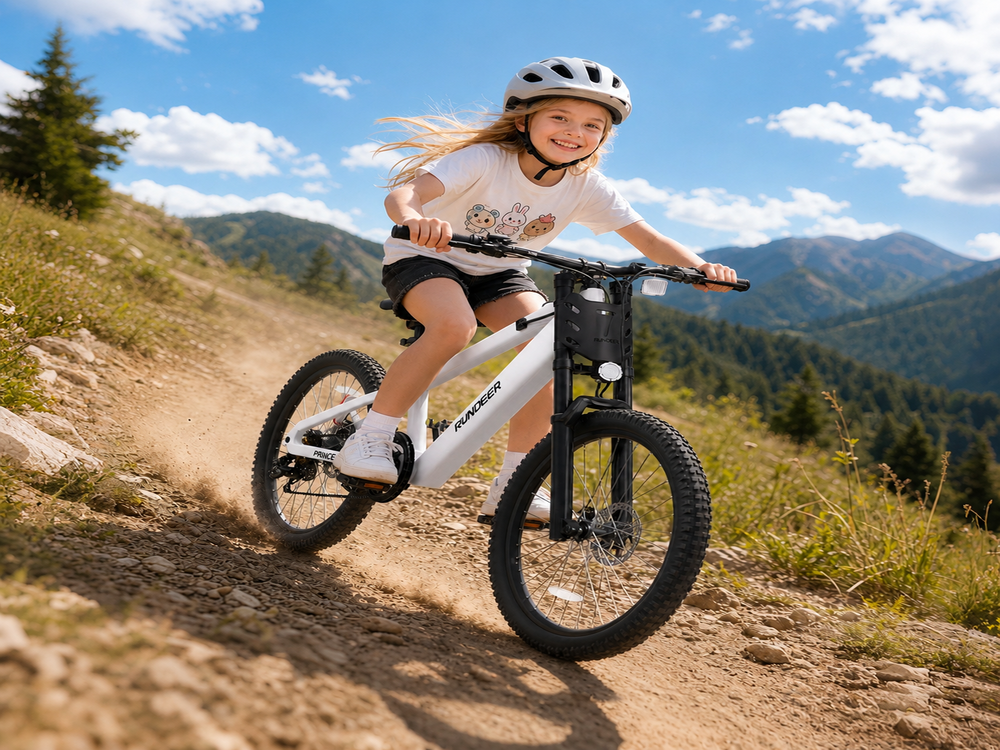
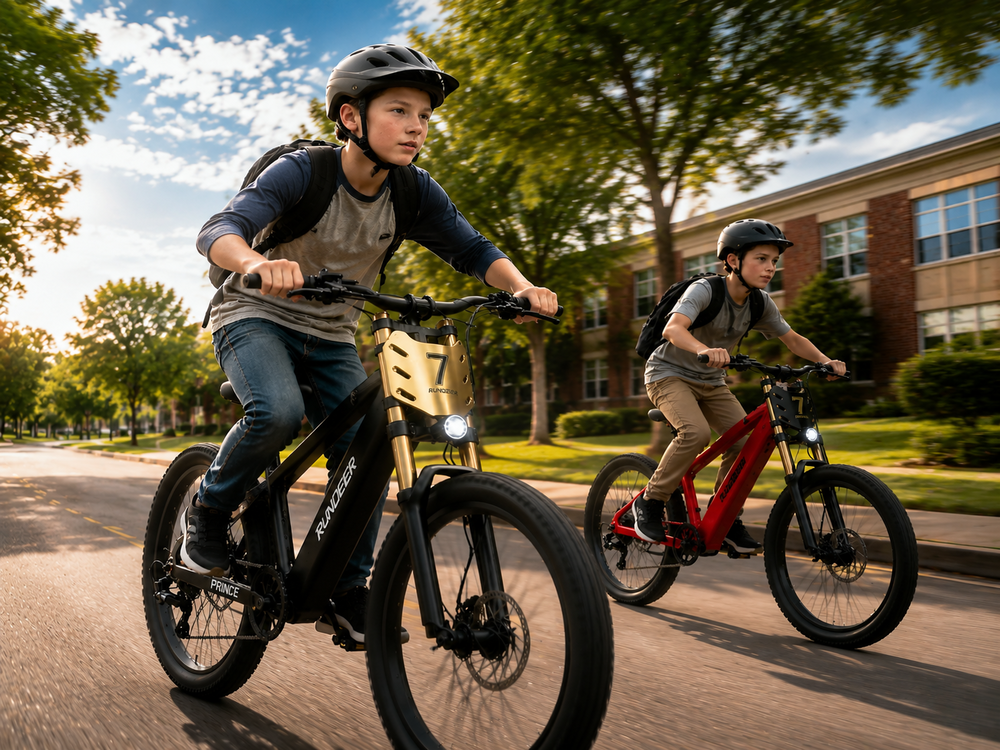
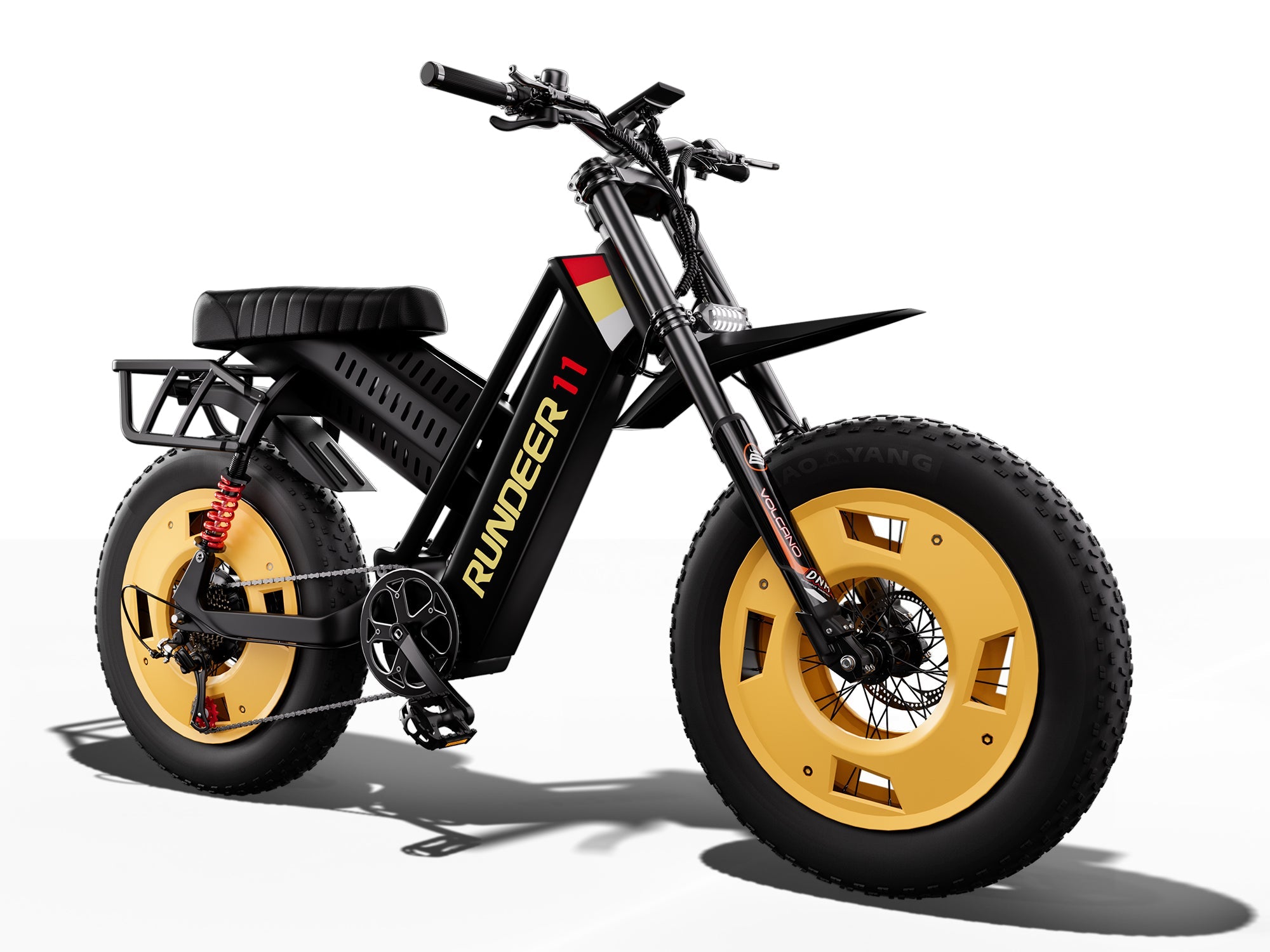
One of the most valuable features for parents evaluating e-bike readiness is a multi-level speed limiter. E-bikes like the RUNDEER Prince series offer three speed tiers — green (≤10 mph), yellow (≤16 mph), and red (≤20 mph) — giving parents a built-in tool for progressive empowerment.
This tiered approach aligns directly with the CPSC's age-based speed guidance. A parent can start a younger or less experienced rider in green mode, where the e-bike behaves much like a standard bicycle with a gentle boost. As the child demonstrates maturity and skill over weeks and months, the parent can incrementally raise the limit — always with the option to dial it back if behavior or circumstances change.
Additionally, pedal-assist-only e-bikes (those without a throttle) require the child to actively pedal to engage the motor. This design means the rider must possess genuine cycling skill — the motor amplifies effort rather than replacing it — which naturally filters out riders who have not yet mastered basic pedaling and balance.
Safety Certifications and What They Mean
When selecting an e-bike for a child, safety certifications matter. Look for e-bikes that carry UL 2849 certification, the standard for complete e-bike electrical systems. This certification indicates that the battery, motor controller, and charging system have been tested for fire and electrical safety.
The RUNDEER Prince series is UL 2849 certified and weighs just 35 lbs — light enough for a child to manage while still providing the structural integrity needed for safe riding. With a maximum weight capacity of 240 lbs and a recommended rider height range of 4'3"–5'7", it accommodates children ages 6–13 as they grow.
Frequently Asked Questions
- Q: At what age is a child ready for an e-bike?
- A: There is no universal age, but the CPSC recommends that children 9–12 should not use products exceeding 10 mph. More important than age is maturity — a child should demonstrate consistent decision-making, impulse control, rule-following, and strong cycling skills on a standard bike first. Use the ebike readiness checklist above to assess your child individually.
- Q: My child is a great bike rider. Doesn't that mean they're ready for an e-bike?
- A: Not necessarily. The AAP specifically warns that riding ability does not equal e-bike readiness. An e-bike adds speed, weight, and power that change braking distances, acceleration, and the margin for error. A child who excels on a pedal bike may still lack the judgment to handle 15–20 mph in traffic or the emotional regulation to resist showing off.
- Q: What's the safest type of e-bike for a child?
- A: Pedal-assist e-bikes without a throttle are generally safer for children because they require active pedaling — the motor only amplifies the rider's own effort. This means the child must have genuine cycling skills. Additionally, look for an e-bike with a multi-level speed limiter so you can restrict speed to the CPSC-recommended 10 mph for younger riders. UL 2849 certification ensures the electrical system has been safety-tested.
- Q: How do I know if my child is emotionally ready for an e-bike?
- A: Ask the eight key questions in this guide: Can they consistently make good decisions? Resist showing off? Follow rules? Wear a helmet every time? Stay focused? Understand traffic rules? Judge vehicle speed and distance? Stay calm in unexpected situations? If you answer "not yet" to more than two, your child needs more time. Emotional readiness is about judgment and self-regulation, not intelligence or athletic ability.
- Q: What are the legal requirements for kids riding e-bikes?
- A: E-bike laws vary by state and locality. The Fairfax County Police Department highlights that Class 1, Class 2, and Class 3 e-bikes have different legal requirements — some jurisdictions restrict younger riders from operating certain classes on public roads. Research your state's e-bike classification system, age minimums, helmet laws, and where each class is permitted before allowing your child to ride.
- Q: How long should training take before my child rides an e-bike alone?
- A: A structured training plan typically spans 4–8 weeks: 1–2 weeks refreshing standard bike skills, 1–2 weeks on the e-bike at the lowest speed setting in controlled environments, 2–4 weeks of supervised road practice, and then independent riding with ongoing check-ins. The timeline should be driven by your child's demonstrated readiness, not a calendar. If your child struggles at any phase, spend more time there before advancing.
Conclusion
Deciding when your child is ready for an e-bike is one of the most important safety decisions a parent can make. With child e-bike injuries surging 150% year over year and the AAP identifying e-bike accidents as a leading cause of ER visits for school-age children, this is not a decision to rush.
Use the four-domain readiness checklist — physical, skill, emotional, and environmental — to evaluate your child honestly. Follow a progressive training plan that starts on a pedal bike and gradually introduces motorized power at controlled speeds. Choose an e-bike with safety features like a multi-level speed limiter and UL 2849 certification. And above all, remember that readiness is not a milestone to be reached — it is a standard to be maintained through ongoing supervision, communication, and adjustment as your child grows.
Your child's safety is worth more than any convenience an e-bike offers. Take the time to get it right.