
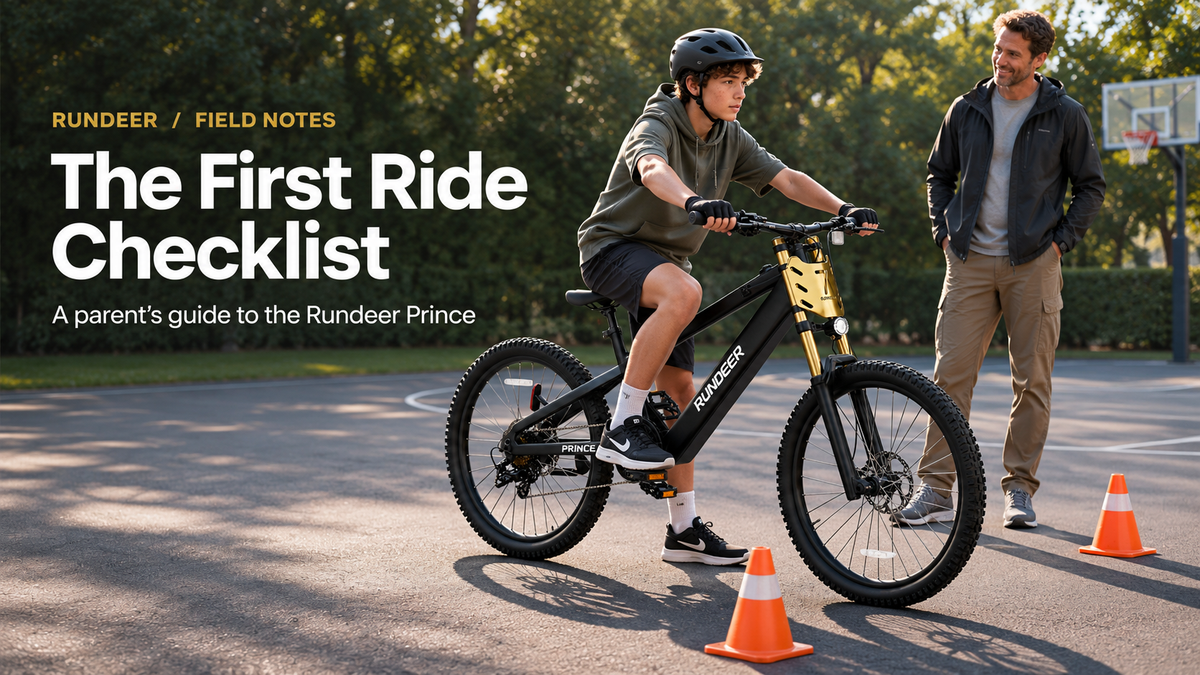
Pick a stopping point before you pick a destination. On a first practice ride, a chalk line on a quiet stretch of pavement gives your child a clear task: start smoothly, look ahead, slow down, and stop where they planned. It also gives you something concrete to observe before introducing pedal assist.
This session is for a rider who meets the bike’s requirements and can already balance, steer, and brake on a conventional bicycle. Choose a dry, level area where e-bike riding is permitted, with room to stop and no traffic or bystanders in the practice lane.
Before you switch on the bike
Complete assembly and the pre-ride checks in the manual for your exact Prince. An adult should verify wheel security, tire condition and pressure, steering, and brake operation. If a wheel is loose or a brake is not working properly, resolve the issue before practice.
Fit the rider’s helmet and secure loose laces and clothing. With the power off and the bike supported, ask the rider to take their normal position and reach both brake levers. Watch their hands. They should be able to operate the levers while keeping a secure grip and looking ahead.
Agree on one spoken cue, such as “slow and stop.” Explain it before the bike moves so the child knows what you mean when they hear it.
Practice 1. Walk the bike and use the brakes
With the power still off, have the rider walk beside the Prince in a straight line, gently apply the brakes, and bring it to a stop. Then try a wide turn while walking.
Watch how the child manages the bike’s weight when it leans slightly or comes to rest. If they need you to hold it upright each time, pause and reassess fit and readiness before moving on.
Practice 2. Ride to a planned stop with the power off
Mark a broad stopping zone with chalk or two cones placed outside the rider’s path. Give the child enough space to pedal a short distance and slow down gradually. Stand to one side where you can observe without becoming an obstacle.
Ask the rider to look toward the stopping zone and apply both brakes progressively. On the next pass, watch for three things: eyes looking ahead, hands ready at the levers, and a controlled stop without your help. Repeat while the child is comfortable. There is no need to complete every stage in one session.
Practice 3. Introduce the lowest assist setting
Once unassisted starts and stops are consistent, stop the bike and identify the lowest pedal-assist setting using the Prince manual. Explain that the bike may feel different when the motor begins helping. Keep the route, starting gear, and stopping zone familiar so the rider has only one new sensation to manage.
Have the child start gently, travel straight, stop pedaling as they approach the stopping zone, and brake smoothly. Watch whether they keep looking ahead when assistance begins. If they look down at the display, tense up, or repeatedly pass the stopping zone, return to unassisted practice or finish for the day.
Know when the first ride is complete
A good first session can end after a few calm starts and stops. Ask your child two questions while the experience is fresh: “When did you feel the bike start helping?” and “Where did you begin slowing down?” Their answers can help you decide what to practice next.
If straight-line control feels comfortable, the next session can add wide turns in the same clear area. Familiar surroundings make it easier for both of you to notice progress.
Share:
Kids’ E-Bike or Regular Bike? How to Choose for Family Rides